
Lunéville
Lunéville is a commune in northeastern France, historically renowned as a resort and the capital of Lorraine in the 18th century. Its grand Château de Lunéville, built in 1702, served as the ducal residence and was known as the "Versailles of Lorraine." The town also gained prominence for its faience production, glassmaking, and embroidery techniques, and it was the site of significant historical treaties.
Key Facts
- ›The Château de Lunéville was built in 1702 and served as the ducal residence until 1766.
- ›Lunéville faience, established in 1723, became a Royal Factory in 1749.
- ›The Treaty of Lunéville was signed here on February 9, 1801.
- ›The town became a border town after the 1871 Treaty of Frankfurt.
- ›Lunéville Point, a distinctive embroidery technique, originated here.
- ›The first aerial victory by a fighter aircraft armed with a synchronized machine gun occurred near Lunéville in 1915.

Baroque
ChâTeau De LunéVille, Parterre Gardens, LunéVille Faience, LunéVille Point Embroidery
LüNstadt, Leneinvile
Leopold, Duke of Lorraine, éLisabeth Charlotte D'OrléAns, Stanislaus I, Voltaire, Jean-Jacques Rousseau, André Morellet, Montesquieu, Joseph Bonaparte, Count Ludwig Von Cobenzl, Jacques Chambrette, MüLler Brothers, Louis Ferry-Bonnechaux, Georges De La Tour, éMilie Du ChâTelet, Nicolas Beatrizet, Joseph De Ferraris, Ernest Bichat, Prince Charles Alexander of Lorraine, FrançOis Nicolas BenoîT, Baron Haxo, René Basset, Marie Bobillier, Louis éMile Gratia, Henri Basset, André Basset, Jean Bastien-Thiry, Claude Ponti, Kurt Wintgens
- Construction of the ChâTeau De LunéVille
- Annexation of the Duchy of Lorraine By France
- Signing of the Treaty of LunéVille
- First Aerial Victory By A Fighter Aircraft With Synchronized Machine Gun Near LunéVille
- Impact of the Treaty of Frankfurt
About Lunéville
Lunéville is a commune in the northeastern French department of Meurthe-et-Moselle, historically significant as a prominent resort and the capital of Lorraine during the 18th century. Its most enduring landmark is the grand Château de Lunéville, constructed in 1702 for Leopold, Duke of Lorraine. Designed in the style of Versailles, it was intended to emulate the grandeur of the French royal court and became known as the "Versailles of Lorraine." The château served as the ducal residence until the duchy was annexed by France in 1766.
History and Cultural Significance
Under Duke Stanislaus I, the former King of Poland, Lunéville flourished as a center of culture and Enlightenment thought. Stanislaus, a devout Catholic and patron of the arts and sciences, commissioned a church and garden follies, attracting notable figures such as Voltaire, Jean-Jacques Rousseau, and Montesquieu to his court. Following the annexation of Lorraine by France in 1766, the château was repurposed as barracks, though much of its original structure and its meticulously designed parterre gardens, now a public park, have been preserved.
The town also established a reputation for its crafts and industries. Lunéville faience, a type of unglazed earthenware, began production in 1723 and was later sponsored by Stanislaus, becoming the "Royal Factory of the King of Poland." In the 20th century, it gained fame for its Art Deco designs. The glass factory established in 1858 became renowned for its Art Deco creations by the Müller brothers. Furthermore, Louis Ferry-Bonnechaux developed the "Lunéville Point" embroidery technique, which continues to influence haute couture.
Lunéville has been the site of significant historical agreements, including the Treaty of Lunéville signed in 1801 between the French Republic and the Austrian Empire. The town's history also includes a notable event in early aviation when, in 1915, the first aerial victory by a fighter aircraft equipped with a synchronized machine gun occurred over the nearby Parroy Forest. The 1871 Treaty of Frankfurt transformed Lunéville into a border town, attracting French nationals from annexed territories and contributing to a period of economic revival known as the Belle Époque.
Source: Wikipedia ↗
Frequently Asked Questions
What is Lunéville historically known for?
Lunéville was a renowned resort and the capital of Lorraine in the 18th century. It is famous for its grand Château de Lunéville, which was the residence of the dukes of Lorraine and was nicknamed the "Versailles of Lorraine."
What notable industries originated in Lunéville?
Lunéville is known for its faience production, which began in 1723 and later became a Royal Factory. The town also developed famous glassmaking techniques and the Lunéville Point embroidery style.
What significant treaties were signed in or related to Lunéville?
The Treaty of Lunéville was signed in the town on February 9, 1801, between the French Republic and the Austrian Empire. The 1871 Treaty of Frankfurt also had a significant impact, making Lunéville a border town.
What is the historical significance of the Château de Lunéville?
The Château de Lunéville, built in 1702, was the primary residence of the Dukes of Lorraine until the duchy's annexation by France in 1766. It was designed in the style of Versailles and became a symbol of ducal power and culture.
What role did Lunéville play in early aviation history?
Near the Parroy Forest east of Lunéville, the first aerial victory by a fighter aircraft armed with a synchronized machine gun occurred on July 1, 1915, during World War I.
Related Monasteries
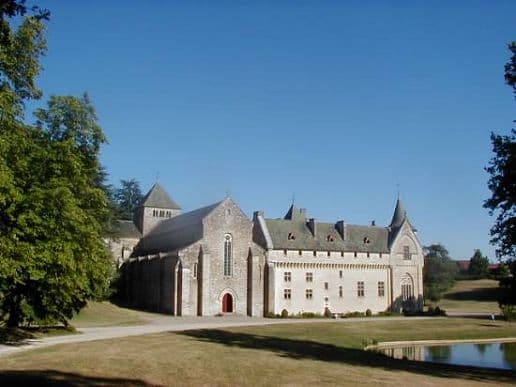
Abbey of Loc-Dieu
Abbey of Loc-Dieu is a Cistercian abbey situated in Aveyron, France, founded in 1123 on a site historically known as "devil's place" before being renamed "place of God" by its monastic inhabitants. Despite facing destruction and rebuilding, it became a significant Gothic architectural site and, during World War II, served as a safe haven for artworks from the Louvre, including the Mona Lisa. Today, the abbey and its park are open to the public.

Abbey of Saint-Germain-des-Prés
The Abbey of Saint-Germain-des-Prés, originally a Benedictine abbey founded in 558, is one of the oldest churches in Paris. It served as a significant center for scholarship, producing illuminated manuscripts, and was a royal necropolis. Despite destruction by Vikings and damage during the French Revolution, the church has undergone numerous rebuilds and restorations, incorporating Romanesque, Gothic, and later decorative styles, and remains an active Catholic parish church.

Abbey of Sénanque
Sénanque Abbey is a Cistercian monastery founded in 1148 in Provence, France, renowned for its remarkably preserved Romanesque architecture. Initially thriving, it experienced decline and was suppressed during the French Revolution, only to be re-established in 1854 and later reactivated in 1988. Today, it houses an active monastic community and is known for its lavender fields and spiritual retreats.