
Ligugé Abbey
Ligugé Abbey, officially the Abbey of St. Martin of Ligugé, is a Benedictine monastery in France recognized as the oldest in western Europe, initially founded in 361. Despite destruction during the French Revolution, monastic life was restored in 1853, and it now belongs to the Solesmes Congregation. The abbey is known for its historical significance, its connection to Saint Martin of Tours, and its role in preserving monastic traditions.
Key Facts
- ›Founded in 361 AD, making it the oldest monastery in Western Europe.
- ›Originally established by Saint Martin of Tours.
- ›Has a history marked by destruction and re-foundation, most recently in 1853.
- ›Currently part of the Solesmes Congregation.
- ›The current monastic community consists of approximately 25 monks (as of 2013).
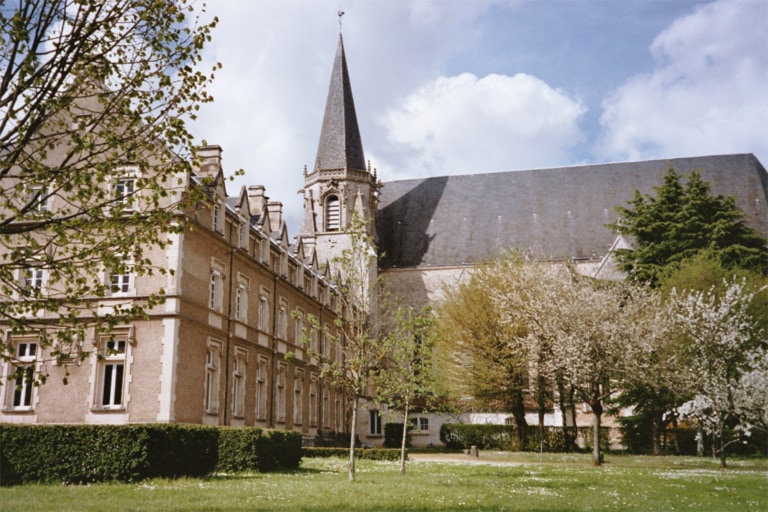
- Site of A Gallo-Roman Villa
- Historical Connection To Saint Martin of Tours
- the Church Built By Geoffrey D'Estissac
- Printing Press Established By the Community
Abbey of St. Martin of Ligugé, Abbaye Saint-Martin De Ligugé
Hilary of Poitiers, Martin of Tours, Gregory of Tours, Savin, Defensor, Adalemode of Limoges, William V, Duke of Aquitaine, Geoffrey D'Estissac, Rabelais, Prosper GuéRanger, Louis-Edouard-FrançOis-Desiré Pie, Joris-Karl Huysmans, Paul Claudel, Robert Schuman, Amadou-Mahtar M'Bow, Aimé Lambert
- Founded In 361 Ad.
- Destroyed During the French Revolution.
- Re-Established In 1853.
- Monks Driven Out By the 'Ferry Laws' In 1880.
- Monks Driven Out By the 'Association Laws' In 1902.
- Sheltered Robert Schuman and Amadou-Mahtar M'Bow During World War Ii.
About Ligugé Abbey
Ligugé Abbey: A Millennium of Monastic Tradition
Ligugé Abbey, known formally as the Abbey of St. Martin of Ligugé, stands as a significant Benedictine monastery in France, holding the distinction of being the oldest monastery in western Europe. Its origins trace back to 361 AD when Saint Martin of Tours, a protégé of Hilary of Poitiers, was granted a site to establish a monastic community. The early monks lived according to the practices of the Desert Fathers, with each residing in a small hut, a dwelling type from which the name "Ligugé" is thought to have evolved.
Throughout its long history, Ligugé Abbey has faced numerous challenges, including invasions and conflicts that led to its near destruction on several occasions. By the 11th century, it had been reduced to a dependent priory. A revival occurred in 1003 with the re-establishment of a shrine to Saint Martin, attracting pilgrims. Despite periods of decline and damage, including during the Wars of Religion and the French Revolution when its buildings were sold as national property, the spirit of monastic life persisted.
The current monastic community at Ligugé dates from a re-foundation in 1853, initiated by Prosper Guéranger, the renowned restorer of the French Benedictine Congregation. This new foundation became the first daughter house of Solesmes Abbey. The monks were temporarily expelled in 1880 and again in 1902 due to legislative actions against religious orders, but they persevered. The abbey church was reconstructed and consecrated in 1929. During World War II, Ligugé provided refuge to notable figures, including Robert Schuman. As of 2013, the community consists of approximately 25 monks, continuing a tradition of prayer, work, and hospitality that spans over 16 centuries.
Source: Wikipedia ↗
Frequently Asked Questions
When was Ligugé Abbey founded?
Ligugé Abbey was first founded in 361 AD. This date marks it as the oldest known monastery in western Europe. The current monastic community, however, dates from a re-foundation in 1853.
Who founded Ligugé Abbey?
The original monastery was founded by Saint Martin of Tours. He received the site from Hilary of Poitiers, and the abbey was later dedicated to Saint Martin himself.
What happened to the original abbey?
The original abbey suffered numerous disasters throughout its history, including invasions and wars, which almost destroyed it. It was further damaged during the French Revolution, leading to the sale of its buildings and lands.
When was monastic life restored at Ligugé?
Monastic life was restored at Ligugé in 1853 under the initiative of Louis-Edouard-François-Desiré Pie, Bishop of Poitiers. A community of four monks from Solesmes Abbey established themselves there, marking the beginning of the abbey's second foundation.
Is Ligugé Abbey still active today?
Yes, Ligugé Abbey remains active. The current monastic community dates from the 1853 re-foundation and belongs to the Solesmes Congregation. As of 2013, the community comprised about 25 monks.
What is the significance of Ligugé Abbey?
Ligugé Abbey is significant as the oldest monastery in western Europe. It played a crucial role in the development of monasticism in the region and has a long history of spiritual and cultural contribution, including associations with notable figures like Saint Martin and Rabelais.
Related Monasteries

Abbey of Saint-Sernin
The Abbey of Saint-Sernin, located in Toulouse, France, is a former abbey church noted for its significance as a pilgrimage site and its exceptional Romanesque sculpture. Originally built on the site of a 4th-century basilica containing the relics of Saint Saturnin, the current structure evolved over centuries, with major construction phases in the 11th and 12th centuries. Its architectural plan, featuring an ambulatory and radiating chapels, became influential, and it was recognized as a UNESCO World Heritage Site in 1998 as part of the Routes of Santiago de Compostela in France.

Geghard
Geghard is a medieval monastery in Armenia, partially carved out of a mountain and surrounded by cliffs, recognized as a UNESCO World Heritage Site. Originally founded in the 4th century as Ayrivank (Monastery of the Cave), it gained its current name, Geghardavank (Monastery of the Spear), from a relic of the spear that wounded Christ. The complex features a unique blend of rock-cut churches, elaborate walled structures, and numerous khachkars, making it a significant historical and pilgrimage site.

Hovhannavank
Hovhannavank is a medieval Armenian monastery situated on the edge of the Kasagh River canyon in the Aragatsotn Province. Its origins trace back to the 4th century with the foundation of a basilica by St. Gregory the Enlightener, later expanded significantly in the 13th century by Prince Vache I Vachutian and his son Kurt I Vachutian. The monastery served as a vital educational and theological center for centuries, known for its scriptorium and rich lapidary inscriptions, and its Cathedral features a unique umbrella-shaped dome.