
Lanercost Priory
Lanercost Priory, founded by Robert de Vaux between 1165 and 1174, was an Augustinian priory situated in Cumbria, England. It suffered numerous raids and depredations due to its proximity to the Scottish border, particularly during the Wars of Scottish Independence. Despite its dissolution in 1538, parts of the church remain intact and in use as a parish church, with the priory ruins now managed by English Heritage and open to the public.
Key Facts
- ›Founded by Robert de Vaux between 1165 and 1174, most likely in 1169.
- ›Housed Augustinian canons and was dedicated to Mary Magdalene.
- ›Utilized Roman stones from Hadrian's Wall in its construction.
- ›Compiled the Lanercost Chronicle, a significant historical text.
- ›Suffered significant damage from Scottish raids during the Wars of Scottish Independence.
- ›Parts of the church remain in use as a parish church, with the ruins managed by English Heritage.

Romanesque, Gothic
Lanercost Chronicle, Use of Roman Stones From Hadrian's Wall, Lanercost Cross, Statue of St Mary Magdalene
Robert De Vaux, Henry Ii, Edward I, Queen Eleanor of Castile, Queen Margaret of France, Robert De Brus, Edward Iii, David Ii, Anthony Salvin, C. J. Ferguson, William Morris, Thomas Addison, Henry Whitehead, Humphrey Dacre, 1st Baron Dacre, Mabel Dacre, Thomas Dacre, 2nd Baron Dacre, Ralph Dacre, 1st Baron Dacre, Hugh Dacre, 4th Baron Dacre, William Dacre, 5th Baron Dacre, Thomas Dacre, 6th Baron Dacre, Philippa De Neville, George Howard, 9th Earl of Carlisle, Rosalind Howard, Countess of Carlisle, Charles Howard, 10th Earl of Carlisle
- Founded By Robert De Vaux.
- Scottish Raids During the Wars of Scottish Independence.
- Visits By King Edward I.
- Robert Bruce's Army Encamped At the Priory.
- Dissolution By Henry Viii In 1538.
- Restoration By Anthony Salvin and C. J. Ferguson.
About Lanercost Priory
Lanercost Priory is a historic Augustinian priory located in the village of Lanercost, Cumbria, England. Founded by Robert de Vaux between 1165 and 1174, likely in 1169, it was established to house Augustinian canons and was unusually dedicated to Mary Magdalene for the region.
Early History and Construction
The priory's foundation was a well-organized process, with Robert de Vaux granting significant lands and churches. A notable aspect of its construction involved the use of convenient Roman stones, including inscriptions, taken from the nearby Hadrian's Wall. The bulk of the church building dates from the late 13th century, although earlier work is evident. The priory also holds historical significance as the place where the Lanercost Chronicle, a history of England and the Wars of Scottish Independence, was compiled by its monks.
Challenges and Royal Visits
Its proximity to Scotland made Lanercost Priory a frequent target of Scottish raids, particularly during the Wars of Scottish Independence, which led to considerable damage to its buildings and resources. Despite these tribulations, the priory received several visits from King Edward I in the later part of his reign. His final visit in 1306 was particularly lengthy, lasting six months and placing a substantial burden on the priory's resources. Later, in 1311, Robert Bruce also encamped his army at Lanercost for three days, causing further disruption.
Dissolution and Later Use
Lanercost Priory was dissolved in 1538 under Henry VIII. While the conventual buildings were largely dismantled and stripped of their roofs, the church building was preserved and has continued in use as the local parish church. The priory ruins are now in the guardianship of English Heritage and are open to the public, offering a glimpse into its rich and often turbulent past.
Source: Wikipedia ↗
Frequently Asked Questions
When was Lanercost Priory founded?
The founding date of Lanercost Priory is traditionally given as 1169, but historical evidence from charters places it more definitively between 1165 and 1174.
Who founded Lanercost Priory?
Lanercost Priory was founded by Robert de Vaux, who provided the land and benefactions for the Augustinian canons.
What religious order was based at Lanercost Priory?
Lanercost Priory was established to house Augustinian canons.
What historical events significantly impacted Lanercost Priory?
Due to its location near the Scottish border, Lanercost Priory was frequently targeted by Scottish raids, especially during the Wars of Scottish Independence. It also hosted several visits from King Edward I.
What is the current status of Lanercost Priory?
Following its dissolution in 1538, the monastic buildings were largely dismantled, but the church has continued in use as a parish church. The priory ruins are now managed by English Heritage and are open to the public.
Is the Lanercost Chronicle associated with the priory?
Yes, the Lanercost Chronicle, a thirteenth-century history of England and the Wars of Scottish Independence, was compiled by the monks of Lanercost Priory.
Related Monasteries

Vreta Abbey
Vreta Abbey, established in the early 12th century, was the first nunnery in Sweden and one of the oldest in Scandinavia. Initially Benedictine, it transitioned to Cistercian rule in 1162. The abbey served as a prestigious educational institution for daughters of the Swedish nobility and royal families, and also as a burial site for several Swedish kings and princes. Despite being dissolved during the Reformation, its church continued in use, and significant ruins and a museum now preserve its history.
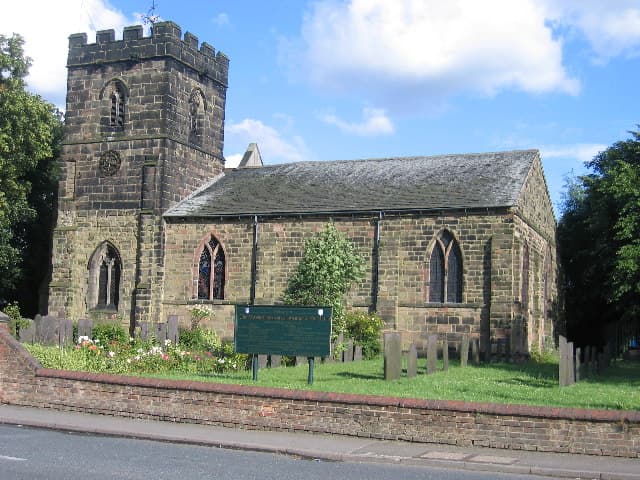
Gresley Priory
Gresley Priory was an Augustinian monastery founded in the 12th century in Church Gresley, Derbyshire, England. It played a significant role in the local community, with the Gresley family retaining influence over its direction for centuries. Following its dissolution in 1536, the priory church became the parish church of St George and St Mary, a role it continues to fulfill today, though much of the original monastic architecture has been lost to later rebuilding.

Llanthony Secunda Priory
Llanthony Secunda Priory was an Augustinian monastic house founded in 1136 by Miles de Gloucester. It served as a secondary house and refuge for the canons of the original Llanthony Priory. The priory became known for its cheese-making and its role in historical events, including a disputed connection to the 'Humpty Dumpty' rhyme. Today, its surviving remains are a Grade I listed building and a scheduled ancient monument, with restoration efforts leading to its re-opening to the public.