
La Maigrauge Abbey
La Maigrauge Abbey, also known as Magerau Abbey, is a Cistercian monastery for nuns located in Fribourg, Switzerland. Founded in 1255, it was the first and only monastery for nuns in Fribourg until the 17th century. Despite periods of poverty and decline, particularly during the Reformation and Swiss civil war, the abbey has persevered, rebuilding after a fire in the 17th century and adapting to changing political landscapes. Today, it houses a small community of nuns who support themselves through various enterprises, including a bakery, guesthouse, and liqueur shop.
Key Facts
- ›Founded in 1255 by a group of women following the Rule of St. Benedict in Fribourg, Switzerland.
- ›Admitted to the Cistercian Order in 1261, becoming a dependency of the Abbey of Hauterive.
- ›Suffered significant damage from a fire in 1660, necessitating extensive rebuilding.
- ›Faced suppression and restrictions following the Swiss CIVIL war in 1847.
- ›The community today numbers about a dozen nuns and is known for its biogarden and liqueur production.
- ›It is situated on the Sarine River, on the border between French-speaking and German-speaking Switzerland, maintaining a bilingual community.
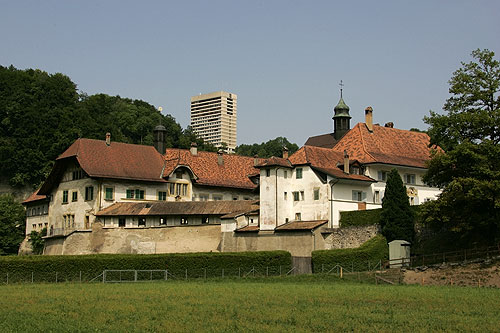
Bilingual Community, Bakery For Communion Wafers, Guesthouse, Biogarden, Liqueur Shop Selling GrüNeswasser/L'Eau Vert
Magerau Abbey, Abbey of La Maigrauge, Abtei Magerau
Anne Techtermann, Anne Elisabeth Gottrau, Marie-Bernardine Castella, Marianne ZüRcher
Founded In 1255, Admitted To Cistercian Order In 1261, Rebuilding After Fire In 1660, Endured French Revolutionary Army Occupation, Faced Consequences of Swiss Civil War In 1847
About La Maigrauge Abbey
La Maigrauge Abbey, also known by its German name Magerau Abbey, is a significant monastery for Cistercian nuns situated in Fribourg, Switzerland. Its founding in 1255 marks it as the first and for a long period, the only monastery for nuns in the canton of Fribourg. The abbey's location on the Sarine River places it at the cultural crossroads of French-speaking and German-speaking Switzerland, fostering a bilingual community.
History and Development
The origins of La Maigrauge Abbey trace back to a small group of women in the mid-1250s who sought to live a life of prayer under the Rule of St. Benedict. Their initial permission to form a religious community was granted by the pastor of Taval on July 3, 1255, a date they observe as their foundation. Four years later, the land they occupied, then known as Auge maigre, was gifted to them by Count Hartmann V of Kyburg. In 1261, the community was formally admitted into the Cistercian Order, establishing it as a dependency of the men's Abbey of Hauterive, a spiritual link that persists to the present day.
The abbey experienced periods of growth, partly due to the education of young girls and gifts from novices. However, the 15th century saw a decline, exacerbated by the Protestant Reformation in the 16th century. Despite diminished numbers, the community resisted proposed closures. A resurgence began in 1602 with a renewed commitment to strict observance of the Benedictine Rule, leading to a period of flourishing under two notable abbesses, Anne Techtermann and Anne Elisabeth Gottrau. This era saw renovations and a significant spiritual commitment to perpetual abstinence.
A devastating fire in 1660 destroyed much of the wooden abbey, with only the stone church, infirmary, and abbess's quarters surviving. The nuns undertook the extensive task of rebuilding most of the complex. The 18th century brought another slow breakdown in discipline and financial pressures, leading to suggestions of a merger with another Cistercian monastery. The abbey endured the occupation by the French Revolutionary Army and the subsequent Swiss civil war of 1847, which led to the suppression of its dependent abbey, Hauterive, in 1848 and imposed restrictions on accepting new candidates.
Contemporary Life
Following the relaxation of anti-Catholic measures, the community at La Maigrauge Abbey was able to resume accepting candidates. The Abbey of Hauterive was re-occupied by Cistercian nuns in 1939. Today, the community consists of approximately a dozen nuns led by Abbess Marianne Zürcher. To support themselves, the nuns operate a bakery for communion wafers, a guesthouse, and a liqueur shop selling their unique cordial, Grüneswasser or 'green water,' made from herbs grown in their biogarden.
Source: Wikipedia ↗
Frequently Asked Questions
When was La Maigrauge Abbey founded?
La Maigrauge Abbey was founded on July 3, 1255. This date is recognized by the community as their foundation date, based on a document granting them permission to live as a religious community.
What religious order does La Maigrauge Abbey belong to?
La Maigrauge Abbey belongs to the Cistercian Order. The community was admitted to the order in 1261, ten years after the Cistercian monks had placed restrictions on new foundations of Cistercian nuns.
What is the current status of La Maigrauge Abbey?
La Maigrauge Abbey is an active monastery today, housing a community of about a dozen nuns. They support themselves through various means, including running a bakery, a guesthouse, and a liqueur shop.
Where is La Maigrauge Abbey located?
La Maigrauge Abbey is located in Fribourg, Switzerland, situated on the Sarine River. It lies on the border between French-speaking and German-speaking Switzerland, and the community is bilingual.
What are some notable events in the history of La Maigrauge Abbey?
Notable events include its foundation in 1255, admission to the Cistercian Order in 1261, a major fire in 1660 that destroyed much of the wooden structure, and the suppression of its dependent abbey, Hauterive, in 1848 following the Swiss civil war.
What activities do the nuns at La Maigrauge Abbey engage in today?
The nuns at La Maigrauge Abbey run a bakery for communion wafers, a guesthouse for visitors, and a liqueur shop selling a cordial made from herbs grown in their biogarden, known as Grüneswasser or l'eau vert.
Related Monasteries

Eschenbach Abbey
Eschenbach Abbey is a Cistercian community of nuns located in Eschenbach, Switzerland. Originally founded around 1290 as an Augustinian convent, it transitioned to the Cistercian Order in 1588. The abbey has undergone several significant architectural expansions and renovations throughout its history, including the construction of its abbey church in 1910.

Abbaye de la Fille-Dieu
The Abbaye de la Fille-Dieu is a Cistercian monastery near Romont in Switzerland, continuously occupied by nuns since its founding in 1268. Initially a Benedictine priory, it later affiliated with the Trappists and has undergone significant restorations, including a notable 1990s modernization and the preservation of medieval murals. The abbey is recognized as a Swiss heritage site of national significance.

La Valsainte Charterhouse
La Valsainte Charterhouse is the sole surviving Carthusian monastery in Switzerland, located in the Canton of Fribourg. Founded in 1295, it has a complex history marked by destruction, suppression, and revival, notably serving as a refuge for French Trappists and becoming a center for the Cistercian Reform. The monastery has been a significant spiritual and intellectual hub throughout the 20th century, attracting scholars and artists.