
Krushuna Falls
Christian (Hesychast)·Bulgaria·Ruins (for the monastery remains)·13th-14th century
Krushuna Falls is a series of picturesque waterfalls located in Northern Bulgaria, near the village of Krushuna. Formed by numerous travertines, the falls are a notable tourist attraction with a path leading to the river's spring cave. Nearby, remains of the 13th-14th century Krushuna Monastery, a Hesychast site from the Second Bulgarian Empire, can also be found.
Key Facts
- ›Located in Northern Bulgaria, 34 km from the city of Lovech.
- ›Formed by many travertines, creating a picturesque landscape.
- ›A tourist path leads to the cave where the river originates.
- ›Features two smaller waterfalls, including Malkata Maara.
- ›Remains of the 13th-14th century Krushuna Monastery are located nearby.

Travertine Formations, Spring Cave, Malkata Maara Waterfall, Proximity To Other Caves
крушунски водопади
About Krushuna Falls
Krushuna Falls, known in Bulgarian as Крушунски водопади, are a celebrated natural landmark in Northern Bulgaria. Situated near the village of Krushuna, within the Letnitsa Municipality and approximately 34 kilometers from the city of Lovech, these waterfalls are renowned for their captivating landscape. The falls are a product of numerous travertine formations, which create a series of cascades and pools that are a significant draw for tourists.
A well-maintained tourist path guides visitors to the cave where the river that forms the falls originates. The site also features two smaller waterfalls, one notably called Malkata Maara. The surrounding area is rich in geological wonders, with several other caves, such as Urushka Maara, Gornik, and Devetashka cave, located nearby.
Adding to the historical depth of the region, the remnants of the Krushuna Monastery are found in the vicinity. This monastery was a Hesychast site dating from the 13th to 14th centuries, a period within the Second Bulgarian Empire. While the falls themselves are a natural spectacle, their proximity to these monastic ruins offers a glimpse into the area's spiritual past.
Source: Wikipedia ↗
Frequently Asked Questions
Where are Krushuna Falls located?
Krushuna Falls are situated in Northern Bulgaria, close to the village of Krushuna within the Letnitsa Municipality. They are approximately 34 kilometers from the city of Lovech.
What is notable about the formation of Krushuna Falls?
The falls are famous for their picturesque landscape, which is created by numerous travertines. These mineral deposits contribute to the unique and beautiful appearance of the waterfalls.
Are there any historical sites near Krushuna Falls?
Yes, the remains of the Krushuna Monastery, a Hesychast site dating back to the 13th-14th century during the Second Bulgarian Empire, can be found in the vicinity of the falls.
Can visitors explore the area around the falls?
A tourist path is available that leads to the cave where the river springs, offering visitors a way to experience the natural beauty of the area. There are also other caves in the proximity.
Related Monasteries

Aladzha Monastery
Aladzha Monastery is a medieval Orthodox Christian cave monastery complex located in northeastern Bulgaria, carved into a high karst cliff. Active since the 12th century as a hesychast community, it was dedicated to the Holy Trinity and likely survived until the early 18th century. Its name, derived from Turkish for "motley," refers to its once colorful murals, and the site is now a popular tourist destination.

Basarbovo Monastery
Basarbovo Monastery, also known as the Monastery of Saint Dimitar Basarbowski, is a Bulgarian Orthodox cave monastery located near Ruse in north-eastern Bulgaria. While founded during the Second Bulgarian Empire, its oldest written record dates to the 15th century. The monastery gained significant prominence in the 17th century following the death of Saint Dimitar Basarbovski, a local shepherd who lived an ascetic life there and whose relics are believed to have miraculous healing properties.
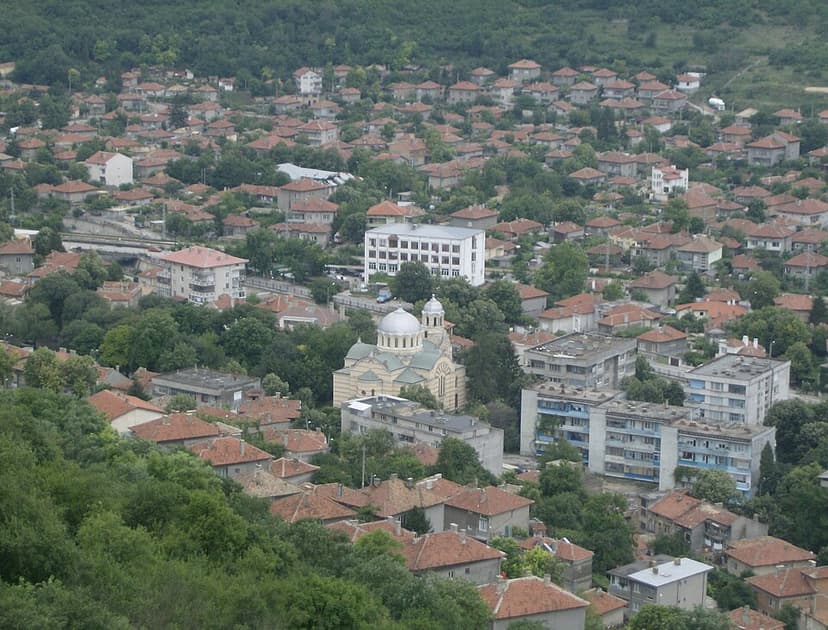
Provadia
Provadia is a historic town in northeastern Bulgaria, situated in a deep karst gorge. Its significance spans from being Europe's oldest prehistoric town, Solnitsata, to a medieval fortress known as Ovech. The area is notable for its mineral waters, extensive cave systems, and a rich history as a commercial and cultural center.