
Koroglaš monastery
Serbian Orthodox·Serbia·abandoned·14th century
The Koroglaš Monastery is an abandoned 14th-century Serbian Orthodox monastery located in Miloševo, Negotin, Serbia. While its exact founding is debated, it's attributed to either Serbian King Stefan Milutin or Mircea I of Wallachia. Legend also connects it to Prince Marko, suggesting his burial site, and states Mircea the Elder erected it in memory of Christians fallen in the Battle of Rovine. The monastery's medieval necropolis has seen partial excavation.
Key Facts
- ›Founded in the 14th century.
- ›Serbian Orthodox religious tradition.
- ›Located in Miloševo, Negotin, Serbia.
- ›Potentially founded by Serbian King Stefan Milutin or Mircea I of Wallachia.
- ›Associated with the legend of Prince Marko's burial.
- ›Declared a Monument of Culture of Great Importance in 1979.

Medieval Necropolis
Manastir Koroglaš, MăNăStirea CoroglașI
Stefan Milutin, Mircea I of Wallachia, Mircea the Elder of Wallachia, Prince Marko
Battle of Rovine
About Koroglaš monastery
The Koroglaš Monastery is a 14th-century Serbian Orthodox monastic complex located in the village of Miloševo, near Negotin, Serbia. Its historical origins are subject to some debate, with tradition suggesting it was founded by either the Serbian King Stefan Milutin of the Nemanjić dynasty or Mircea I of Wallachia. The monastery holds a significant place in local legend, notably as a potential burial site for King of Prilep Prince Marko after his involvement in the Battle of Rovine in 1395.
Further legends state that Mircea the Elder of Wallachia commissioned the erection of the monastery in memory of the Christians who perished during the Battle of Rovine and in remembrance of Prince Marko. Archaeological investigations have begun to uncover a medieval necropolis associated with the monastery, offering glimpses into its past inhabitants. In recognition of its historical and cultural importance, the Koroglaš Monastery was declared a Monument of Culture of Great Importance in 1979 and is currently protected by the Republic of Serbia. However, it is an abandoned site and does not house an active monastic community.
Source: Wikipedia ↗
Frequently Asked Questions
When was the Koroglaš Monastery founded?
The Koroglaš Monastery is believed to have been founded in the 14th century. Historical accounts suggest potential founders like Serbian King Stefan Milutin or Mircea I of Wallachia, though precise dating is not definitively established.
Where is the Koroglaš Monastery located?
The monastery is situated in the village of Miloševo, near Negotin, in modern-day Serbia. It is an abandoned site within the Serbian landscape.
Is the Koroglaš Monastery still active?
No, the Koroglaš Monastery is an abandoned site. While it holds historical and cultural significance, it does not currently house an active monastic community.
What is the significance of the Koroglaš Monastery?
The monastery is significant for its 14th-century origins and its association with Serbian royalty and Wallachian rulers. Legends connect it to Prince Marko and the Battle of Rovine, and it is recognized as a Monument of Culture of Great Importance.
What has been discovered at the Koroglaš Monastery site?
A medieval necropolis associated with the monastery has been partially excavated. This archaeological work aims to shed light on the historical inhabitants and practices related to the monastery.
Related Monasteries
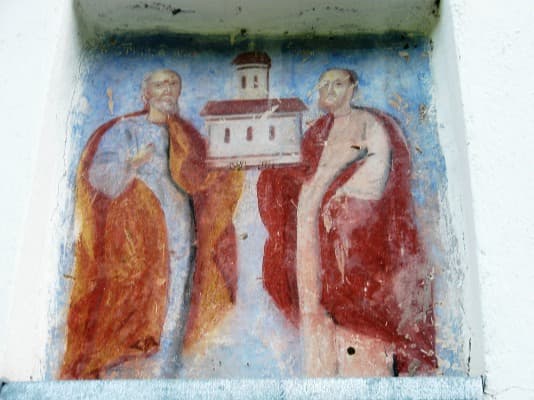
Church of Sts. Peter and Paul
The Church of Sts. Peter and Paul, also known as the Cave Church, is a Serbian Orthodox cave-church situated on Mount Kopaonik in southern Serbia. Constructed in the 14th century by King Milutin, it is dedicated to Saints Peter and Paul and forms part of the Monastery of St. Archangel Gabriel.

Drenča Monastery
Drenča Monastery, also known as Dušmanica Monastery, is a significant Serbian Orthodox religious site located near Aleksandrovac. Founded between 1379 and 1382 by nobleman monk Dorothej and his son, it is dedicated to the Presentation of the Virgin Mary and exemplifies the Morava architectural school. Despite being demolished by the Ottomans in 1454, the monastery has undergone extensive restoration and is now a protected cultural monument of great importance in Serbia.

Gornjak
Gornjak Monastery is a 14th-century Serbian Orthodox monastery situated in the Gornjačka gorge, Serbia. Founded in 1379 by King Lazar of Serbia, it served monks led by Gregory of Sinai and has endured multiple destructions and rebuildings. The monastery is notable for its church dedicated to the Entrance of the Theotokos and the nearby hermitage caves associated with Gregory of Sinai.