
Klisura Monastery
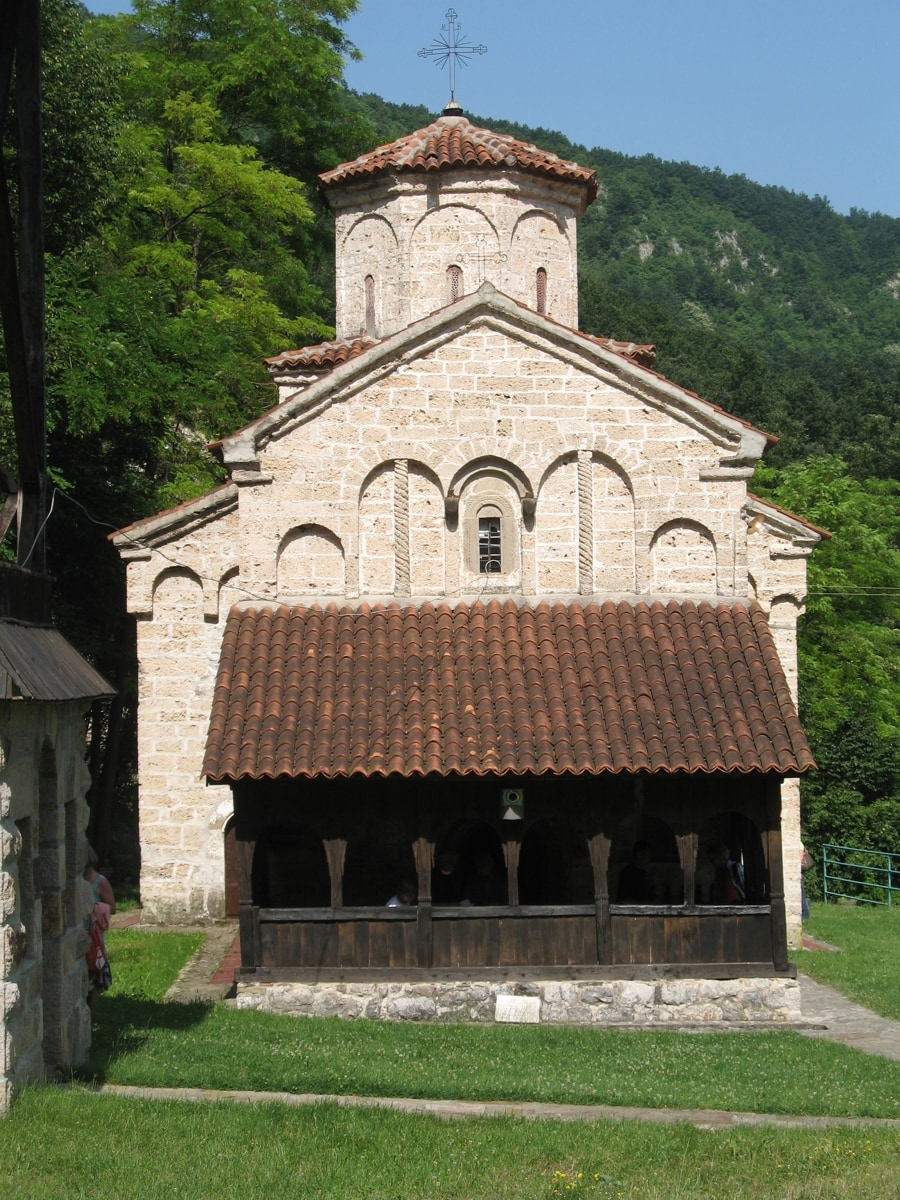
Klisura Monastery, formerly known as Dobrača Monastery, is an active women's monastery of the Serbian Orthodox Church, originating from the late 13th century. Located in the village of Dobrače, it is dedicated to the holy archangels Michael and Gabriel and is recognized as an immovable cultural asset. Despite enduring numerous destructions and rebuilds throughout its history, it continues to function as a spiritual center.
Key Facts
- ›Founded at the end of the 13th century in the Raška style.
- ›Dedicated to the holy archangels Michael and Gabriel.
- ›Suffered destruction and abandonment multiple times, notably in 1459, 1688, and during World Wars I and II.
- ›Rebuilt in 1798 by monk JaćIM Karlaga and later aided by Miloš Obrenović.
- ›Became an active women's monastery in 1961.
- ›Features frescoes by academic painter Jaroslav Kratina, incorporating Serbian folklore and epic poetry figures.
RašKa Style
- Frescoes By Jaroslav Kratina Blending Christian and Folk Motifs
- Iconostasis By Dimitrije Posniković
DobračA Monastery
JaćIm Karlaga, Miloš Obrenović, Joakim Vujić, Chrysantije, JanićIje, Joakim MilošEvić, Domentijan Zdravković, Jaroslav Kratina, Dimitrije Posniković
- Church Burned Down In 1688 During the Great Turkish War.
- Abandoned In 1690 After the Great Migration of Serbs.
- Rebuilt In 1798.
- Recovered In 1815–1816 After A Collapse.
- Raided and Destroyed By Austro-Hungarian Forces In 1915 and 1916.
- Suffered Destruction By Bulgarian Occupation Forces During World War Ii.
- Began Functioning As A Women's Monastery In 1961.
About Klisura Monastery
Klisura Monastery, also known historically as Dobrača Monastery, is an active women's monastery belonging to the Eparchy of Žiča within the Serbian Orthodox Church. Its origins are traced back to the late 13th century, with its church dedicated to the holy archangels Michael and Gabriel.
History and Significance
The monastery's church was constructed in the Raška architectural style, drawing inspiration from the nearby church of St. Achille in Arilje. While the exact founder remains unknown, stylistic similarities place its construction at the end of the 13th century, with folklore attributing it to the Nemanjić dynasty. The monastery has endured a tumultuous history, experiencing significant destruction and abandonment. Its first recorded hardship occurred in 1459 with the collapse of the Serbian state. The church was set ablaze around 1688 during the Great Turkish War, leading to its abandonment in 1690. The monastery was rebuilt in 1798 by monk Jaćim Karlaga and later recovered after a collapse in 1813, with support from Miloš Obrenović.
Architecture and Artistic Heritage
The church features a single nave foundation with a semicircular apse and an eight-sided dome. The original interior paintings were lost when the church was burned in 1688. The frescoes visible today were created in 1952 by academic painter Jaroslav Kratina, who notably incorporated figures from Serbian folklore and epic poetry, such as the Kosovo Maiden and Majka Jugović, alongside classic Christian motifs. The iconostasis, completed in 1867 by Dimitrije Posniković, consists of 42 icons, some of which were painted in Odessa and others by Posniković himself.
Evolution to a Women's Monastery
After the Second World War, during which the monastery suffered further destruction from Bulgarian occupation forces, a new hostel was built. Since 1961, Klisura Monastery has operated as a women's monastery, continuing its spiritual and cultural legacy.
Source: Wikipedia ↗
Frequently Asked Questions
When was Klisura Monastery founded?
While the exact founding date is unknown, stylistic characteristics suggest its origin at the end of the 13th century. It is believed to be based on the nearby church of St. Achille in Arilje.
What is the religious tradition of Klisura Monastery?
Klisura Monastery belongs to the Serbian Orthodox Church. It is part of the Eparchy of Žiča.
What is the architectural style of Klisura Monastery?
The monastery church was built in the Raška style, a significant architectural style in medieval Serbia. Its construction is modeled after the church of Saint Achille.
Is Klisura Monastery currently active?
Yes, Klisura Monastery is an active women's monastery. It has been functioning as such since 1961.
What notable features can be found within Klisura Monastery?
The monastery church contains frescoes created in 1952 by Jaroslav Kratina, which uniquely blend classic Christian motifs with figures from Serbian folklore and epic poetry. The iconostasis, made in 1867 by Dimitrije Posniković, comprises 42 icons.
Has the monastery always been known as Klisura?
No, it was known as Dobrača Monastery until the middle of the 18th century. The name changed to Klisura after a heavy rainstorm and torrent that caused significant damage to the complex.
Related Monasteries
Crna Reka
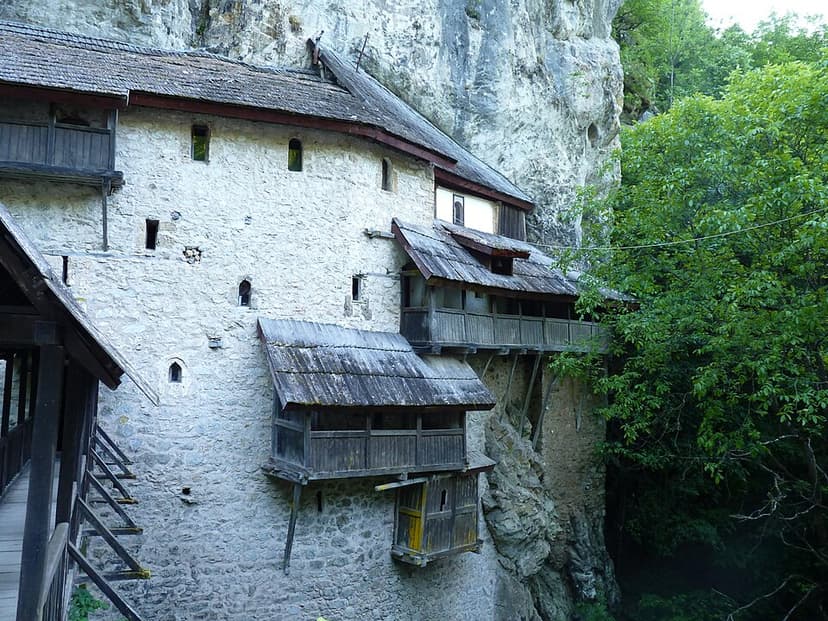
Crna Reka Monastery is a 13th-century Serbian Orthodox monastery located in southwestern Serbia, near the village of Ribariće. It is distinguished by its cave-church dedicated to Archangel Michael, which features 16th-century frescoes and houses the relics of Saint Peter of Koriša. The monastery's secluded location in the gorges of Ibar Kolašin provided refuge for monks from Sopoćani during Ottoman attacks in the 16th century.
Crna Reka Monastery
Crna Reka Monastery, meaning "Black River Monastery," is a 13th-century Serbian Orthodox monastic complex located in southwestern Serbia. It is notable for its cave-church dedicated to Archangel Michael, which contains 16th-century frescoes and the relics of Saint Peter of Koriša. The monastery served as a refuge for monks from Sopoćani during 16th-century Ottoman attacks.
Gradac Monastery
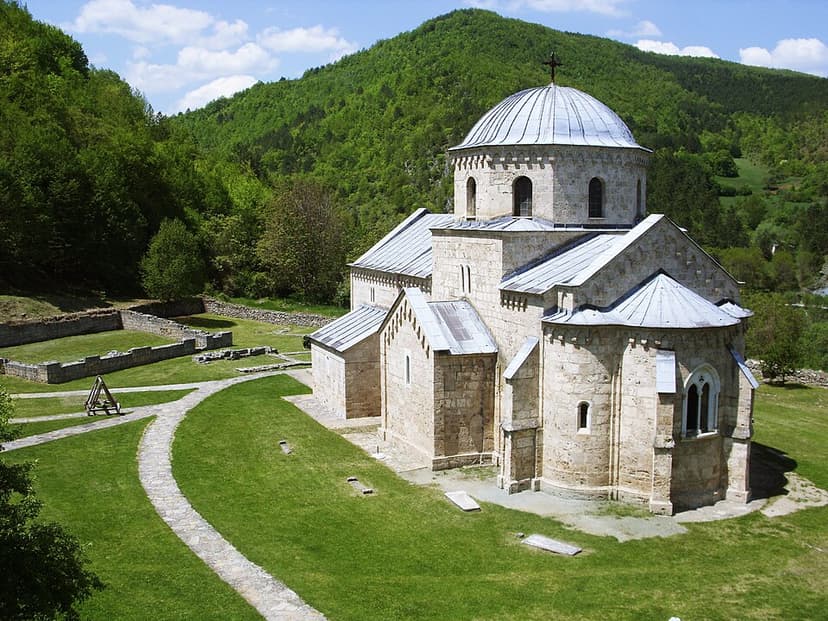
Gradac Monastery is a Serbian Orthodox Monastery located on a plateau above the Gradačka River, built between 1277 and 1282 as an endowment of Queen Helen of Anjou. Known for its Serbian-Byzantine architecture with Gothic and Romanesque elements, the monastery suffered devastation and abandonment but underwent significant reconstruction in the late 20th century and is now a functioning nunnery. It holds the status of a Monument of Culture of Exceptional Importance in Serbia.