
Kaona Monastery
The Kaona Monastery is a Serbian Orthodox monastery dedicated to the Holy Archangel Michael, founded in the 14th century. It holds significant historical importance, having played a role in the First Serbian Uprising and serving as a shelter during World War II. The monastery features a bell tower and a church rebuilt in the Byzantine style in 1892, and it houses relics of the Venerable Mother Paraskeva.
Key Facts
- ›Founded in the 14th century.
- ›Dedicated to the Holy Archangel Michael.
- ›Played a role in the First Serbian Uprising, with monks participating in combat.
- ›The current church structure was built in 1892 in the Byzantine style.
- ›The monastery archive was damaged and bells were taken during World War I.
- ›Houses relics of the Venerable Mother Paraskeva.

Byzantine
Bell Tower, Relics of the Venerable Mother Paraskeva
манастир каона
Ikonija, Teofilo, Milutin, Arsenije Cvetkovic, Serbian Patriarch Pavle
First Serbian Uprising, World War I, World War Ii, Agrarian Reform, Division of Eparchy of šAbac-Valjevo
About Kaona Monastery
The Kaona Monastery is a significant Serbian Orthodox monastic establishment located within the Eparchy of Šabac. Its origins trace back to the 14th century, and it is recognized as a cultural monument and a protected cultural property. The monastery is primarily dedicated to the Holy Archangel Michael, a central figure in Orthodox tradition.
Historical Role and Developments
Kaona Monastery holds a notable place in Serbian history, particularly for its involvement in the First Serbian Uprising. During this period, monks actively participated in combat, and following the conflict, the monastery's residence was repurposed as a hospital. At one point, due to the storage of ammunition for the army, religious services were limited to a single room within the konak, which was then consecrated as a chapel dedicated to the Assumption of the Holy Mother of God.
The present church structure at Kaona Monastery was erected in 1892. This construction followed the Byzantine architectural style and was built upon the existing stone foundations of the older church and cemetery. The monastery also features a distinct bell tower, situated approximately twenty meters from the current church. This tower houses three bells of varying sizes, which are rung daily to call worshippers to prayer.
Challenges and Preservation
Throughout its history, Kaona Monastery has faced periods of hardship. During World War I, the church's archive was destroyed by fire, and two of its bells were removed. Following World War II, during which the monastery served as a refuge, the church fell into disrepair. An agrarian reform program also led to the confiscation of a substantial portion of the monastery's land, amounting to 120 hectares.
A comprehensive renovation of the shrine commenced in 1962, initiated with the appointment of Teofilo as the head of the monastery. His leadership was also influential in the broader worship movement within the Eparchy of Šabac-Valjevo. Significant jubilees were observed on August 29, 1992, marking both the 600th anniversary of the monastery's founding and the centenary of the current monastery church. These celebrations were graced by the presence of Serbian Patriarch Pavle and two Hierarchs.
Notable Figures and Relics
Several figures have been instrumental in the monastery's history and maintenance. Abbot Milutin, who was pivotal in the monastery's renovation and arrangement in 2003, later went on to become the Bishop of Valjevo and then Bishop of Australia and New Zealand following a diocesan division. His successor as head of the monastery was Arsenije Cvetkovic, who served until his passing in October 2013. According to tradition, the monastery was a sacred endowment of Ikonija, the sister of the renowned Serbian knight Miloš Obilić. Kaona Monastery is also known to preserve the relics of the Venerable Mother Paraskeva.
Source: Wikipedia ↗
Frequently Asked Questions
When was the Kaona Monastery founded?
The Kaona Monastery was founded in the 14th century. A significant jubilee celebrating its 600th anniversary was held in 1992.
What is the primary religious dedication of Kaona Monastery?
The Kaona Monastery is dedicated to the Holy Archangel Michael. During a period when the main church was used for other purposes, worship was conducted in a chapel dedicated to the Assumption of the Holy Mother of God.
What is the historical significance of Kaona Monastery?
The monastery played a notable role in the First Serbian Uprising, with its monks engaging in combat. It also served as a shelter during World War II and experienced land confiscation due to agrarian reform.
What architectural style is represented at Kaona Monastery?
The latest church structure at Kaona Monastery was built in 1892 in the Byzantine style, on the foundations of the old church and cemetery.
Has the monastery undergone significant renovations?
Yes, a major renovation of the monastery began in 1962 under the leadership of Teofilo. The abbot Milutin also played a significant role in renovation and arrangement in 2003.
Related Monasteries
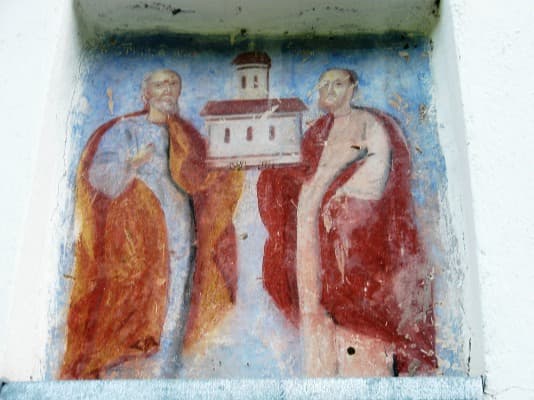
Church of Sts. Peter and Paul
The Church of Sts. Peter and Paul, also known as the Cave Church, is a Serbian Orthodox cave-church situated on Mount Kopaonik in southern Serbia. Constructed in the 14th century by King Milutin, it is dedicated to Saints Peter and Paul and forms part of the Monastery of St. Archangel Gabriel.

Ježevica Monastery
Ježevica Monastery is a Serbian Orthodox monastery situated near the village of Ježevica, south of Čačak, Serbia, dedicated to St. Nicholas. While tradition attributes its founding to King Stefan Milutin, historical records suggest a nobleman in service to King Stefan Dušan founded it in 1337. The monastery's interior was adorned with paintings in the early 17th century, and a Baroque bell tower was added in the 19th century, making it a significant cultural heritage site.
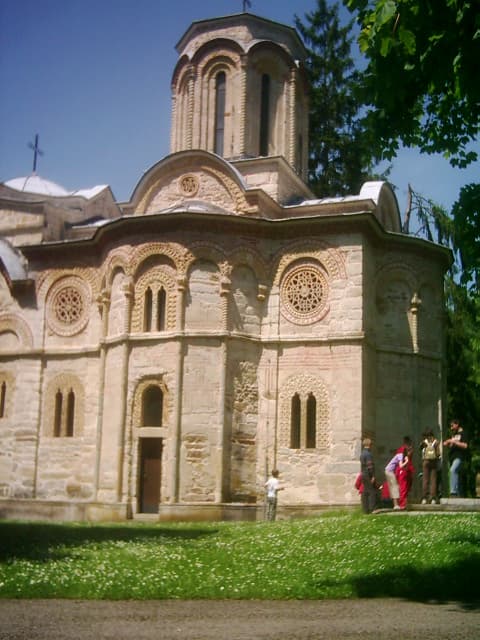
Ljubostinja Monastery
Ljubostinja Monastery is a Serbian Orthodox monastery near Trstenik, Serbia, built between 1388 and 1405 by Princess Milica. Dedicated to the Holy Virgin, its name signifies a "place of love," purportedly built on the site where Prince Lazar and Princess Milica first met. The monastery served as Princess Milica's endowment and later became a refuge for widows of fallen noblemen, eventually housing about fifty nuns and being declared a Monument of Culture of Exceptional Importance.