
Isleham Priory
Benedictine·England·Ruins/Barn Conversion·11th century
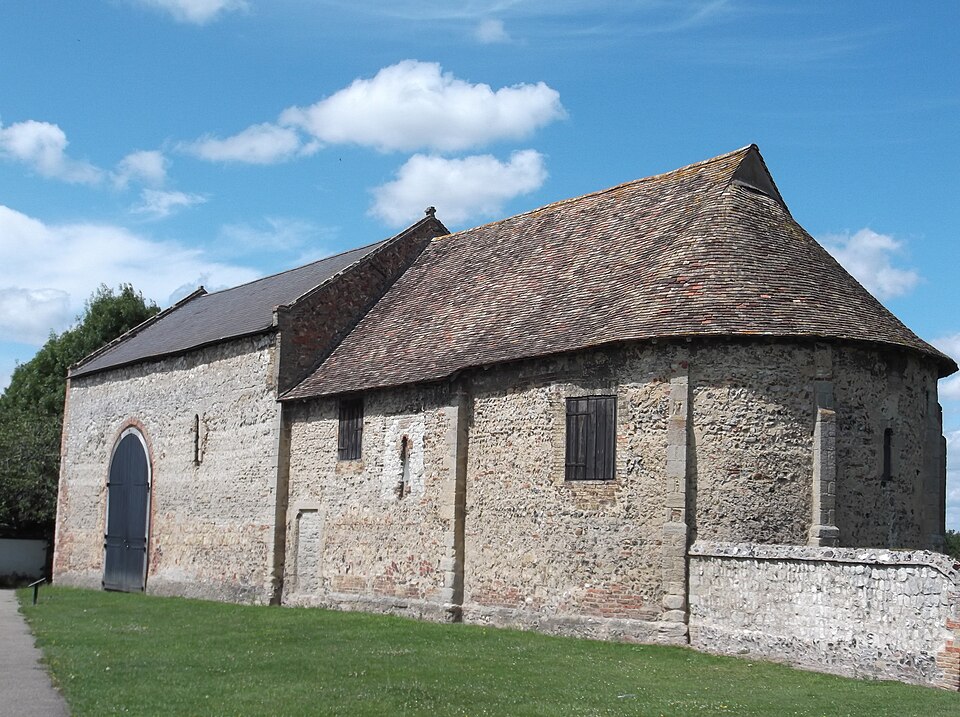
Isleham Priory Church, located in Isleham, Cambridgeshire, England, is a Benedictine alien priory established around 1100 AD. It is a significant example of early 12th-century Norman architecture, with its primary surviving structure, the Chapel of St Margaret of Antioch, remaining largely in its original condition. Despite its conversion into a barn after the Reformation, the priory complex is recognized for its historical and architectural importance, being a Grade I listed building and a scheduled Ancient Monument.
Key Facts
- ›Founded as a Benedictine alien priory around 1100 AD.
- ›The only surviving building is the Chapel of St Margaret of Antioch, converted into a barn.
- ›Represents an important example of early 12th-century Norman church architecture.
- ›Designated as a Grade I listed building.
- ›The site is also a scheduled Ancient Monument, including buried foundations and earthworks.
- ›Owned by Pembroke College, Cambridge, and in the care of English Heritage.
Norman
- Chapel of St Margaret of Antioch
- Buried Foundations of Other Priory Buildings
- Earthwork Remains of A Medieval Agricultural Complex
- Original Narrow Slit Windows
- Semicircular Arch Separating Nave and Chancel
- Apsidal Sanctuary
Count Alan of Brittany
- Founded Around 1100 Ad.
- Monks Moved To Linton Sister Cell In 1254.
- Lands Seized By King Henry V During the Hundred Years' War In 1414.
- Granted To Pembroke College, Cambridge In 1440.
- Placed In Guardianship of the Ministry of Works In 1944.
About Isleham Priory
Isleham Priory Church
Isleham Priory Church, situated in Isleham, Cambridgeshire, England, stands as a notable example of early 12th-century Norman ecclesiastical architecture. Established around 1100 AD, it was founded as a Benedictine alien priory by the Abbey of Saint-Jacut-de-la-Mer in Brittany, France, under the patronage of Count Alan of Brittany or his successors.
Surviving Structure and Architectural Significance
The primary surviving structure from the priory complex is the Chapel of St Margaret of Antioch. This building, constructed primarily from local clunch rubble and limestone, has remarkably retained most of its original form since its construction. Despite its conversion into a barn following the Reformation, the chapel's architectural integrity offers significant insight into early Norman church design. It features a nave, chancel, and an apsidal sanctuary, along with characteristic narrow slit windows and semicircular arches.
Historical Context and Current Status
The priory's history is intertwined with Anglo-French relations, particularly during the Hundred Years' War. French-owned monasteries in England faced scrutiny, leading to the seizure of Isleham Priory's lands by King Henry V in 1414. These lands were subsequently granted to Pembroke College, Cambridge, in 1440, which later placed the priory in the guardianship of the Ministry of Works in 1944. Today, Isleham Priory Church is recognized as a Grade I listed building and its associated foundations and earthworks are designated as a scheduled Ancient Monument, with the site now under the care of English Heritage.
Source: Wikipedia ↗
Frequently Asked Questions
When was Isleham Priory founded?
Isleham Priory was founded around 1100 AD. It was established as a Benedictine alien priory.
What is the main surviving building of Isleham Priory?
The main surviving building is the Chapel of St Margaret of Antioch. It has been converted into a barn but retains much of its original structure.
What is the architectural style of Isleham Priory Church?
The church is a significant example of early 12th-century Norman architecture. It features characteristic elements like narrow slit windows with rounded heads and semicircular arches.
What is the current status of Isleham Priory?
The surviving chapel is now a barn, but the site is a Grade I listed building and a scheduled Ancient Monument. It is in the care of English Heritage.
Who owns Isleham Priory?
The priory lands were granted to Pembroke College, Cambridge, in 1440. The college currently owns the site.
Related Monasteries

Buckfast Monastery
Buckfast Abbey is an active Benedictine monastery located in Buckfast, near Buckfastleigh, Devon, England. Originally founded as a Benedictine abbey in 1018, it later became Savignac and then Cistercian before its dissolution in 1539. Refounded by French Benedictines in 1882, it was formally reinstated as an abbey in 1902 and has since been rebuilt, most notably its abbey church completed in 1938. The abbey is known for its self-sufficiency, producing goods like Buckfast Tonic Wine and being the origin of the Buckfast bee.

Hatfield Peverel Priory
Hatfield Peverel Priory, also known as Hatfield Priory, was a Benedictine priory in Essex, England. Initially founded as a secular college before 1087, it was converted into a priory and cell of St Albans by William Peverel before 1100. While largely dissolved, a fragment of its Norman priory church nave survives as the parish church of St Andrew's.

Abbaye aux Dames
The Abbaye aux Dames, officially the Abbey of Sainte-Trinité, is a former Benedictine nunnery in Caen, Normandy. Founded in the late 11th century by William the Conqueror and Matilda of Flanders, it served as a significant religious institution and burial site for Matilda and her daughter Cecilia. Despite damage during the Hundred Years' War and suppression during the French Revolution, parts of the complex have been repurposed and restored, with the church retaining notable Romanesque and Gothic architectural features.