
Hatfield Peverel Priory
Hatfield Peverel Priory, also known as Hatfield Priory, was a Benedictine priory in Essex, England. Initially founded as a secular college before 1087, it was converted into a priory and cell of St Albans by William Peverel before 1100. While largely dissolved, a fragment of its Norman priory church nave survives as the parish church of St Andrew's.
Key Facts
- ›Founded as a secular college before 1087.
- ›Converted to a Benedictine priory and cell of St Albans before 1100.
- ›The parish church of St Andrew's is a surviving part of the original priory church nave.
- ›The property later transitioned to private ownership and has undergone significant restoration.
- ›Located on the south side of the village of Hatfield Peverel, Essex.

Norman
- Surviving Fragment of Norman Priory Church Nave
Hatfield Priory
Ingelrica, William Peverel, William the Conqueror, John Wright, Peter Luard, Philip Charles Tennant, Adrian Cowell, Fiona Cowell
Founded As A Secular College, Converted To A Benedictine Priory, Dissolution of the Monasteries
About Hatfield Peverel Priory
Hatfield Peverel Priory, also referred to as Hatfield Priory, was a significant monastic institution located in Essex, England. Its history began before 1087 as a secular college, and by the turn of the 11th century, it had been transformed into a Benedictine priory and designated as a cell of the prominent Abbey of St Albans. The priory was strategically situated on the south side of the village of Hatfield Peverel, approximately five miles northeast of Chelmsford, and is noted in the English Heritage Register of Parks and Gardens of Special Historic Interest.
Tradition holds that the priory was established by Ingelrica, the wife of Ranulph Peverel and rumored mistress of William the Conqueror, as an act of penance for her sins. Although the priory itself no longer stands in its entirety, a crucial fragment of its past endures. The nave of the original Norman priory church survives and now serves as the parish church of St Andrew's, an active place of worship within the Church of England.
Following the Dissolution of the Monasteries, the property underwent numerous transformations. It was acquired by the Wright family in the 18th century, and the current house on the site was built in 1769 within a park landscaped by Richard Woods. The estate passed through several generations of the Wright family before being occupied by Philip Charles Tennant in the 20th century, who eventually purchased it. In 1935, the property was sold to the Marianhill Mission, a Catholic lay brotherhood, which used it as their European headquarters until their closure in 1972. Subsequently, it was acquired by property developers and later used as a school. In the early 21st century, significant restoration efforts were undertaken by its owners, Adrian and Fiona Cowell, to preserve and revitalize the house and grounds.
Source: Wikipedia ↗
Frequently Asked Questions
When was Hatfield Peverel Priory founded?
The priory's origins trace back to a secular college established before 1087. It was subsequently converted into a Benedictine priory before the year 1100.
What is the religious tradition of Hatfield Peverel Priory?
Hatfield Peverel Priory was a Benedictine priory. It later served as a cell of the Benedictine abbey of St Albans.
What remains of Hatfield Peverel Priory today?
The most significant surviving remnant of the priory is the nave of its Norman priory church, which now functions as the parish church of St Andrew's.
Who founded Hatfield Peverel Priory?
According to tradition, the priory was founded by Ingelrica, the wife of Ranulph Peverel, to atone for her sins. She was reputedly the mistress of William the Conqueror.
Is Hatfield Peverel Priory still an active monastery?
No, Hatfield Peverel Priory was dissolved during the Dissolution of the Monasteries. The property has since passed through various private owners and institutions.
Related Monasteries

Combwell Priory
Combwell Priory was a monastic institution located near Bedgebury Cross in Kent, England. Originally founded as a Premonstratensian abbey by Robert de Thurnham during the reign of Henry II, it transitioned to an Augustinian priory in 1220. Following its suppression during the dissolution of the monasteries in 1537, it was granted to Thomas Culpeper and subsequently served as a private residence for the Culpepper and Campion families. Little of the original monastic structure remains.

Buckfast Monastery
Buckfast Abbey is an active Benedictine monastery located in Buckfast, near Buckfastleigh, Devon, England. Originally founded as a Benedictine abbey in 1018, it later became Savignac and then Cistercian before its dissolution in 1539. Refounded by French Benedictines in 1882, it was formally reinstated as an abbey in 1902 and has since been rebuilt, most notably its abbey church completed in 1938. The abbey is known for its self-sufficiency, producing goods like Buckfast Tonic Wine and being the origin of the Buckfast bee.
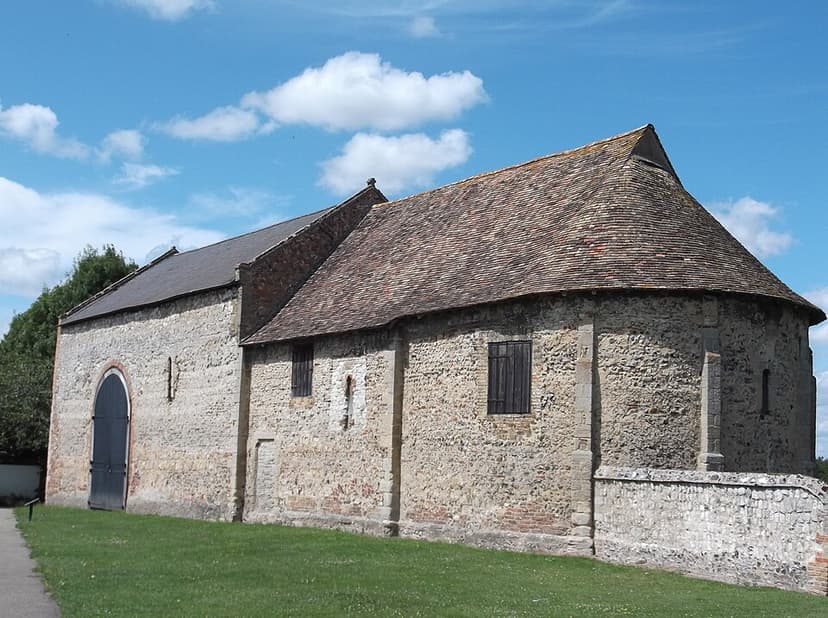
Isleham Priory
Isleham Priory Church, located in Isleham, Cambridgeshire, England, is a Benedictine alien priory established around 1100 AD. It is a significant example of early 12th-century Norman architecture, with its primary surviving structure, the Chapel of St Margaret of Antioch, remaining largely in its original condition. Despite its conversion into a barn after the Reformation, the priory complex is recognized for its historical and architectural importance, being a Grade I listed building and a scheduled Ancient Monument.