
Holy Trinity Monastery (Jordanville, New York)
Holy Trinity Monastery, located near Jordanville, New York, is a stavropegial monastery of the Russian Orthodox Church Outside of Russia (ROCOR). Founded in 1930, it has become a prominent spiritual center for Russian Orthodoxy in the West, recognized for its extensive publishing activities and the Holy Trinity Orthodox Seminary. The monastery is dedicated to the Holy Trinity, with its patronal feast day celebrated on Pentecost.
Key Facts
- ›Founded in 1930 by two Russian immigrants seeking a more rigorous monastic life.
- ›Became a major spiritual hub for Russian Orthodoxy in the Western Hemisphere.
- ›Known for its significant publishing work, including periodicals and liturgical texts.
- ›Houses the Holy Trinity Orthodox Seminary, which trains clergy for ROCOR and other Orthodox jurisdictions.
- ›Designated as a National Historic District in 2011, encompassing 41 contributing buildings.
- ›The monastery campus includes a museum accessible to the public.

Russian Revival
Holy Trinity Orthodox Seminary, Extensive Publishing Division, Museum Open To the Public, Holy Trinity Monastery Cemetery, Icon Studio, Cathedral With Frescoed Interior
Jordanville
Hieromonk Panteleimon, Ivan Kolos, Fr. James, Hieromonk Ilya, Bishop Vitaly, Bishop Seraphim, Metropolitan Laurus, Archbishop Averky, Archimandrite Cyprian, Monk Alypy, Nicholas Alexander, Roman Verhovskoy, Governor Thomas E. Dewey
- Founding In 1930
- Conflagration of the First Monastic Building In 1935
- Arrival of Monks From St. Job of Pochaev Monastery In 1946
- Construction of the New Monastery Cathedral
- Designation As A National Historic District In 2011
About Holy Trinity Monastery (Jordanville, New York)
Holy Trinity Monastery, often referred to simply as Jordanville, is a prominent male stavropegial monastery of the Russian Orthodox Church Outside of Russia (ROCOR), situated near Jordanville, New York. Established in 1930 by two Russian immigrants, it has evolved into a principal spiritual and cultural center for Russian Orthodoxy in the Western Hemisphere. Its significance is amplified by its extensive publishing endeavors and the presence of the Holy Trinity Orthodox Seminary, which has been instrumental in the formation of clergy within ROCOR and other Orthodox jurisdictions.
History and Development
The monastery's origins trace back to Hieromonk Panteleimon (Nizhnik) and Ivan Kolos, who sought to establish a community dedicated to a more rigorous monastic life and to remain affiliated with the Church Abroad following a 1926 schism. They purchased a farm near Jordanville, and life for the nascent brotherhood was characterized by hardship and dedication, involving manual labor, dairy production, and the use of basic amenities. A significant early event was the consecration of their first substantial monastic building in 1935, which was shortly thereafter destroyed by fire. Undeterred, the monks acquired more land and a larger house, continuing to expand their operations, including the establishment of a printing press.
Growth and Expansion
The brotherhood was significantly bolstered in 1946 with the arrival of fourteen new monks, led by Bishop Seraphim (Ivanov), including future leaders like Novice Vasily (later Metropolitan Laurus). This influx, from the Brotherhood of St. Job of Pochaev which had relocated from Czechoslovakia, made Holy Trinity Monastery the largest Orthodox Monastery in America. The monastery became the sole entity capable of typesetting in Church Slavonic worldwide until the fall of the Soviet Union, printing vast quantities of spiritual works. The construction of a new monastery cathedral, designed by Roman Verhovskoy and featuring extensive frescoes by Archimandrite Cyprian (Pyzhov) and Monk Alypy (Gamanovich), further enhanced the monastic complex. The monastery was officially recognized as a National Historic District in 2011, acknowledging its historical and architectural importance.
Publishing and Legacy
The monastery's publishing division, rooted in the traditions of the Pochayiv Lavra, became a cornerstone of its identity. It produced vital periodicals such as "Pravoslavnaia Rus," "Pravoslavnyi Put," and "Pravoslavnyi Kalendar," and was the largest publisher of Russian religious literature outside the Soviet Union during the Cold War. Although in-house printing has ceased due to costs, the monastery continues to translate, edit, and publish new works, maintaining its role as a vital source of Orthodox literature. The monastery also operates a bookstore, offering its own publications and a wide array of other Orthodox media.
Notable Features and Affiliations
Holy Trinity Monastery is dedicated to the Holy Trinity, with Pentecost serving as its patronal feast day. The campus includes the Holy Trinity Orthodox Seminary, a significant educational institution, and a museum accessible to the public. The monastery also maintains one of the largest Eastern Orthodox cemeteries in the United States, serving as the final resting place for many prominent figures within ROCOR's history. The monastery's icon and mounting studio contributes to the preservation and dissemination of Orthodox art.
Source: Wikipedia ↗
Frequently Asked Questions
When was Holy Trinity Monastery founded?
Holy Trinity Monastery was founded in the spring after Pascha in 1930. The initial property was purchased in 1930, with the first monks moving onto the land that year.
What is the religious tradition of Holy Trinity Monastery?
The monastery belongs to the Russian Orthodox Church Outside of Russia (ROCOR), which is a jurisdiction of Eastern Orthodox Christianity.
What is Holy Trinity Monastery known for?
The monastery is widely recognized for its extensive publishing work, producing spiritual literature and periodicals. It is also known for its attached Holy Trinity Orthodox Seminary, which has educated many clergymen.
Is Holy Trinity Monastery open to the public?
Yes, the monastery campus includes a museum that is open to the public. Visitors can also interact with the local community, as some monks have held concerts and members of nearby churches have visited for services.
What is the significance of Jordanville in relation to the monastery?
Due to their proximity to the hamlet of Jordanville, both the monastery and the seminary are often referred to simply as Jordanville. This name has become synonymous with the spiritual and publishing center.
What happened during the monastery's early construction?
In 1935, the first large monastic building, which included a chapel, was consecrated. Tragically, near the end of the divine liturgy, the uninsured building caught fire and burned to the ground, but the monks resolved to rebuild.
What is the role of the Holy Trinity Orthodox Seminary?
The seminary is attached to the monastery and has been instrumental in educating numerous clergymen for the Russian Orthodox Church Outside of Russia and other Orthodox jurisdictions. It is a key part of the monastery's spiritual mission.
Related Monasteries

Alexander Nevsky Lavra
The Alexander Nevsky Lavra, officially Saint Alexander Nevsky Monastery, is a prominent Eastern Orthodox monastery in Saint Petersburg, Russia. Founded by Peter the Great in 1710, it was intended to commemorate the victory of Alexander Nevsky, though the chosen site was not the actual battlefield. The monastery holds significant religious and historical importance, serving as a burial place for many famous Russians and housing the relics of its namesake saint.
Brâncoveni Monastery
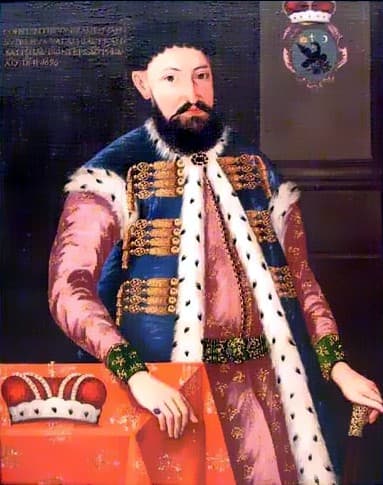
Brâncoveni Monastery is a religious site associated with the martyrdom of Prince Constantin Brâncoveanu and his sons, who were executed by the Ottoman Empire for refusing to renounce their Christian faith. The monastery, along with other significant constructions like Hurezi Monastery, is representative of the distinctive Brâncovenesc architectural style, which harmoniously blends local traditions with Neo-Byzantine and Renaissance influences. Following their martyrdom, Constantin Brâncoveanu and his family were canonized as saints by the Romanian Orthodox Church, with their feast day celebrated annually.

Optina Monastery
Optina Monastery is an Eastern Orthodox men's monastery near Kozelsk, Russia, renowned in the 19th century as the foremost spiritual center of the Russian Orthodox Church and a model for other monasteries. It was particularly celebrated for its tradition of spiritual eldership (staretsdom), attracting numerous devout Christians and notable literary figures. After suffering severe disruption during the Soviet era, it was returned to the Russian Orthodox Church and has since been restored, with its most esteemed elders glorified as saints.