
Hitchin Priory
Hitchin Priory, a Carmelite friary founded in 1317, was closed during the Dissolution of the Monasteries in the reign of Henry VIII. While the original priory was largely dismantled and its site used as a quarry, parts of it were incorporated into the current hotel building, which was constructed around 1700 and later rebuilt in 1770-71. The complex has been a Grade I listed building since 1951 and now operates as a hotel.
Key Facts
- ›Founded as a Carmelite friary in 1317.
- ›Closed during the Dissolution of the Monasteries under Henry VIII.
- ›The current building incorporates parts of the original priory.
- ›The present structure was largely rebuilt around 1700 and again in 1770-71.
- ›Designated a Grade I listed building on the Register of Historic England since 1951.
- ›Currently operates as a 52-bedroom hotel.

Palladian
- Incorporation of 15th-Century Remains
- Courtyard With Blocked Cloister Arcade Arches
- 18th-Century Palladian North Elevation
- Early 17th-Century Panelling and Plaster Ceiling
- Grade I Listed Building Status
Edward Ii, John De Cobham, Henry Viii, John Butler, Sir Edward Watson, Henry Herdson, Edward Pulter, Ralph Radcliffe, Hubert Delmé-Radcliffe, Francis Augustus Delmé-Radcliffe, John Radcliffe
- Founded 1317
- Prior John Butler Took Oath of Supremacy In 1534
- Surrender To King's Commissioners In 1538
- Dissolution In 1539
- Estate Sold In 1546
- Rebuilt C. 1700
- Rebuilt 1770–71
- Listed As Grade I Building In 1951
- Refurbished In 2009
About Hitchin Priory
Overview
Hitchin Priory is a historic site in Hitchin, Hertfordshire, England, with origins as a Carmelite friary founded in 1317. The original priory was dissolved during the reign of Henry VIII, and its buildings were largely dismantled. The present structure, which incorporates fragments of the medieval priory, was primarily constructed around 1700 and subsequently rebuilt in 1770-71. Since 1951, the complex has been recognized as a Grade I listed building.
History and Development
The Carmelite Friars were granted a messuage in Hitchin in 1317 by Edward II, where they established a church and habitation. Additional lands were provided by John de Cobham. The friary, dedicated to the Blessed Virgin Mary, existed until its closure in 1539. Following the Dissolution, the priory buildings were largely demolished, with materials salvaged by the Crown and local townspeople. A survey in 1546 detailed the remaining structures, noting the poor condition of most buildings except for the mansion house. The estate was subsequently sold to property speculators and passed through various owners, notably the Radcliffe family, who held it from 1553 to 1964.
The current building retains some elements from the original priory, particularly in its north and west ranges, where 15th-century remains and blocked cloister arcade arches can be observed. The main structure was rebuilt in plastered brick around 1700 and significantly remodelled in 1770-71 by John Radcliffe. The north elevation features an elaborate Palladian design, while the south wing was rebuilt to contain the principal rooms. Evidence of earlier periods includes 17th-century panelling and a plaster ceiling in a north room.
Modern Status
Today, Hitchin Priory operates as a 52-bedroom hotel set within 19 acres of parkland. It serves as a venue for events such as weddings and conferences. The hotel underwent a comprehensive refurbishment in 2009. The entire complex, including the priory, garden bridge, coach house, and stables, is protected as a Grade I listed building.
Source: Wikipedia ↗
Frequently Asked Questions
When was Hitchin Priory founded?
Hitchin Priory was founded in 1317. It was established as a Carmelite friary on land granted by King Edward II.
What happened to the original priory?
The original Carmelite friary was closed in 1539 during the Dissolution of the Monasteries. The buildings were largely stripped of materials, and the site became a quarry for local residents.
Is any of the original priory still visible?
Yes, small parts of the original priory are incorporated into the existing hotel building. Ancient remains can be seen in sections of the north and west ranges, with blocked arches of the original cloister arcade visible in the courtyard walls.
What is Hitchin Priory used for today?
Today, Hitchin Priory is a hotel with 52 bedrooms, situated on 19 acres of parkland. It is a venue for weddings and conferences.
Is Hitchin Priory a protected historic site?
Yes, the complex of buildings, including Hitchin Priory, the Garden Bridge, Coach House, and stables, has been part of a Grade I listing on the Register of Historic England since 1951.
Related Monasteries

Hitchin Whitefriars
Hitchin Priory, originally a Carmelite friary founded in 1317, was closed during the Dissolution of the Monasteries. The current hotel building, constructed around 1700, incorporates parts of the original structure and is recognized as a Grade I listed building. Despite significant rebuilding in the late 18th century, remnants of the medieval priory are integrated into the modern complex.

Burnham Norton Friary
Burnham Norton Friary was a Carmelite friary located near Burnham Market in Norfolk, England. Founded in 1241 by Sir William Calthorp and Sir Ralph Hemenhale, it was the first Carmelite monastery established after the order's expulsion from Mount Carmel. The friary was dissolved in 1538 during the Dissolution of the Monasteries and is now a ruin, though significant parts of its structure, including the gatehouse and precinct wall, still stand.
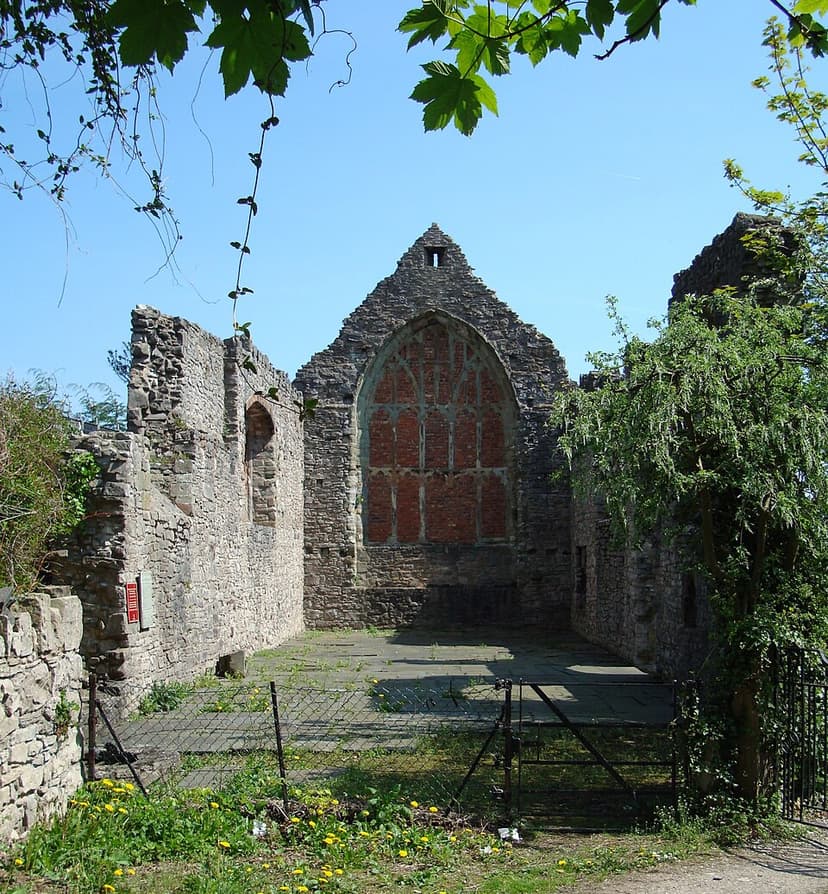
Denbigh Friary
Denbigh Friary, also known as Henllan Friary, was a Carmelite monastic house located in the River Clwyd valley in Wales. Founded between the late 13th century and the mid-14th century, it was dedicated to St Mary. After its dissolution, the friary suffered damage and has been in ruins since an 1898 fire, with its surviving structures primarily dating from the 13th and 15th centuries.