
Hautecombe Abbey
Christian·France·Administered by Chemin Neuf Community, Tourist Site·12th century
Hautecombe Abbey is a former Cistercian and later Benedictine monastery located in Savoie, France, renowned for centuries as the burial site of the House of Savoy. Founded around 1101, it played a significant role in religious and dynastic history, undergoing restorations and changes in monastic order over its existence. Today, it is administered by the Chemin Neuf Community and attracts a substantial number of tourists annually.
Key Facts
- ›Founded around 1101 by hermits from Aulps Abbey.
- ›Became a Cistercian monastery after accepting the Rule from Clairvaux around 1125.
- ›Served as the primary burial place for members of the House of Savoy for centuries.
- ›Restored in the late 18th century and later re-purchased and rebuilt in an exuberant Gothic-Romantic style in the 19th century.
- ›Currently administered by the Chemin Neuf Community.
- ›Receives approximately 150,000 tourist visits each year.
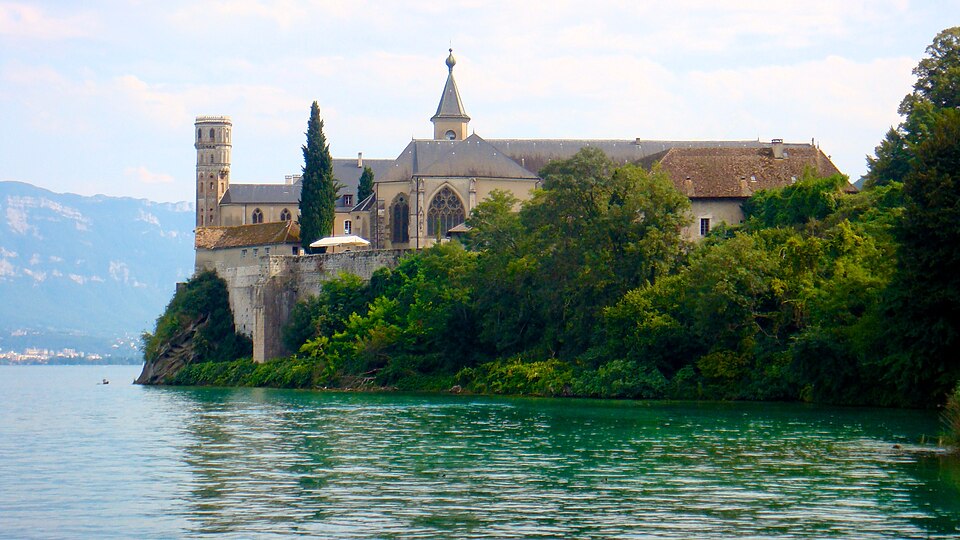
Gothic-Romantic
- Burial Place of the House of Savoy
- Interior With 300 Statues and Many Frescoes
- Church 66 Metres Long With A 26-Metre Wide Transept
Abbayed'Hautecombe, Altaecumbaeum
Amadeus Iii, Count of Savoy, Amadeus De Haute-Rive, Count Humbert Iii, Boniface of Savoy, Aymon, Count of Savoy, Anthony of Savoy, Charles Felix of Sardinia, Maria Christina of the Two Sicilies, Ernest Melano
- Founding of Religious Community
- Transfer To Current Site and Acceptance of Cistercian Rule
- Founding of Daughter-Houses Fossanova Abbey and San Angelo De Petra
- Secularization and Sale
- Purchase and Reconstruction By King Charles Felix
- Resettlement By Cistercians
- Takeover By Benedictines From Marseilles
- Departure of Benedictines
About Hautecombe Abbey
Hautecombe Abbey, known historically as Abbaye d'Hautecombe and in Latin as Altaecumbaeum, is a significant former monastery situated in Saint-Pierre-de-Curtille in Savoie, France. Its origins trace back to a religious community established around 1101 by hermits. By approximately 1125, it had transferred to its present location on the shores of Lake Bourget and formally adopted the Cistercian Rule from Clairvaux, with Amadeus III, Count of Savoy, recognized as its founder.
For centuries, Hautecombe Abbey served as the principal burial site for the members of the illustrious House of Savoy, a role that cemented its dynastic and historical importance. The abbey also established daughter-houses, including Fossanova Abbey in Italy (1135) and San Angelo de Petra near Constantinople (1214).
History and Reconstruction
The abbey underwent significant transformations throughout its history. It was restored in a debased style around 1750 but was secularized and sold in 1792 during the French occupation of Savoy, subsequently being used as a china factory. In 1824, King Charles Felix of Sardinia purchased the ruins and commissioned Piedmontese architect Ernest Melano to reconstruct the church in an exuberant Gothic-Romantic style, intending to restore it to the Cistercian Order. The church, measuring 66 meters in length and featuring a 26-meter wide transept, is adorned with approximately 300 statues and numerous frescoes.
Following the reconstruction, Cistercians resettled the abbey in 1826, but they were later replaced by monks from Sénanque Abbey. In 1922, the premises were taken over by Benedictine monks from the Priory of St. Madeleine in Marseilles. However, the Benedictines departed in 1992, partly due to the increasing tourist influx. Today, the buildings are administered by the Chemin Neuf Community, a charismatic Catholic group with an ecumenical mission, and the site attracts around 150,000 tourists annually.
Source: Wikipedia ↗
Frequently Asked Questions
When was Hautecombe Abbey founded?
The origins of Hautecombe Abbey trace back to a religious community founded around 1101 by hermits. It was later transferred to its current site and officially accepted the Cistercian Rule around 1125.
What is the historical significance of Hautecombe Abbey?
Hautecombe Abbey holds significant historical importance primarily as the burial place for the Counts and Dukes of Savoy for many centuries. It was also a prominent Cistercian monastery with daughter-houses established in Italy and near Constantinople.
What religious orders have been associated with Hautecombe Abbey?
Hautecombe Abbey was initially a Cistercian monastery. Later, it was restored and returned to the Cistercian Order, but eventually, Benedictine monks resettled there. Currently, the buildings are administered by the ecumenical Chemin Neuf Community.
Who is buried at Hautecombe Abbey?
For centuries, Hautecombe Abbey served as the necropolis for the House of Savoy. Notable burials include Count Humbert III, his wife Anne, Boniface of Savoy (Archbishop of Canterbury), and Abbot Anthony of Savoy.
What is the current status of Hautecombe Abbey?
Hautecombe Abbey is no longer an active Cistercian or Benedictine monastery. The buildings are now administered by the Chemin Neuf Community, a charismatic Catholic group, and the site is a popular tourist destination.
What architectural style characterizes Hautecombe Abbey's reconstruction?
Following its purchase by King Charles Felix of Sardinia, the church was reconstructed by architect Ernest Melano in an exuberant Gothic-Romantic style. The interior features numerous statues and frescoes.
Related Monasteries
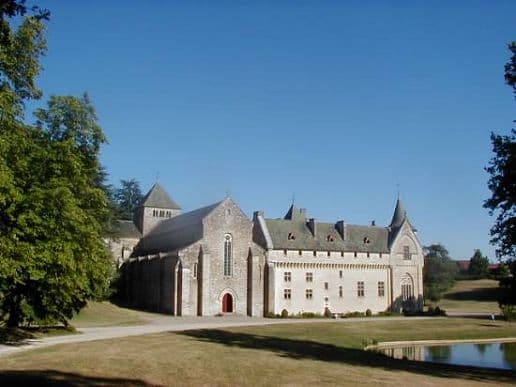
Abbey of Loc-Dieu
Abbey of Loc-Dieu is a Cistercian abbey situated in Aveyron, France, founded in 1123 on a site historically known as "devil's place" before being renamed "place of God" by its monastic inhabitants. Despite facing destruction and rebuilding, it became a significant Gothic architectural site and, during World War II, served as a safe haven for artworks from the Louvre, including the Mona Lisa. Today, the abbey and its park are open to the public.

Cadouin Abbey
Cadouin Abbey was a Cistercian monastery founded in 1115 as a hermitage. It rose to prominence as a major pilgrimage site due to its possession of a relic believed to be the Sudarium of Christ, attracting significant prestige and wealth. The abbey was dissolved during the French Revolution in 1791, with its assets looted and library destroyed, though its church still remains.

Flaran Abbey
Flaran Abbey, a former Cistercian monastery located near Valence-sur-Baïse in Gers, France, was founded in 1151 as a daughter house of Escaladieu Abbey. It flourished in the Middle Ages, even co-founding the town of Valence-sur-Baïse, but suffered damage during historical conflicts and was suppressed during the French Revolution. Today, after extensive restoration, it stands as one of the best-preserved abbeys in southwestern France and hosts cultural activities and an exhibition on the Way of St. James.