
Hatfield Broad Oak Priory
Benedictine·England·Ruins/Parish Church Component·12th century
Hatfield Broad Oak Priory was a former Benedictine priory located in Hatfield Broad Oak, Essex, England. Founded by 1139, it functioned as an "alien priory" under the authority of a Breton monastery. The priory was dissolved in 1536 during Henry VIII's Dissolution of the Monasteries, with its buildings largely dismantled, though parts of its church survive as St. Mary's parish church.
Key Facts
- ›Founded in or before 1139 as a Benedictine priory.
- ›Was a daughter house of Notre-Dame-en-Saint-Melaine de Rennes, making it an "alien priory".
- ›Suffered damage from a fire around 1230.
- ›The poet John Lydgate served as prior from 1423.
- ›Dissolved by Henry VIII in 1536.
- ›Parts of its church remain incorporated into St. Mary's parish church.

Incorporated Into St. Mary's Parish Church, Former Great Church, 230 Feet In Length
Hatfield Regis Priory
John Lydgate, Henry Iii, Henry Viii, Robert De Vere, 3rd Earl of Oxford
Fire Destroyed Part of the Priory Church, Dissolution of the Monasteries
About Hatfield Broad Oak Priory
Hatfield Broad Oak Priory, also known historically as Hatfield Regis Priory, was a significant Benedictine monastic institution situated in the village of Hatfield Broad Oak in Essex, England. Its establishment is recorded as being in or before 1139, making it one of five Benedictine communities founded in Essex during that era. The priory held the status of an "alien priory," meaning it was a dependent cell of a foreign monastery, in this case, Notre-Dame-en-Saint-Melaine de Rennes in Brittany, France. This arrangement meant that while it operated in England, its ultimate authority rested with its French mother house.
History and Development
The site of Hatfield Broad Oak was a royal manor known as Hatfield Regis, signifying its royal ownership, particularly after the Norman Conquest. The priory itself experienced periods of both growth and adversity. Around 1230, a fire caused damage to the priory church, necessitating repairs for which King Henry III granted timber. A notable figure associated with the priory was the poet John Lydgate, who was elected prior in 1423, though he later resigned to focus on his literary pursuits. Disputes over tithes and patronage, particularly involving the de Vere family, Earls of Oxford, who held the patronage rights, marked certain periods of its history. A significant settlement regarding the appointment of priors was reached in the mid-14th century, asserting a degree of practical independence for the English monks.
Architecture and Dissolution
The conventual church of the priory was constructed or substantially rebuilt in the early fourteenth century. At its zenith in the first half of the 14th century, the priory boasted a grand church measuring 230 feet in length, which would have been a prominent feature of the local landscape. The priory's existence concluded in 1536 with its dissolution under King Henry VIII's program to dismantle monastic institutions. At the time of its closure, the community consisted of only the prior and four monks, supported by thirty servants. Following the dissolution, the priory's assets, including its tithes and patronage, were eventually transferred to Trinity College, Cambridge. While most of the priory's above-ground structures no longer exist, portions of its former church have been preserved and integrated into the present-day St. Mary's parish church, serving as a tangible link to its historical past.
Source: Wikipedia ↗
Frequently Asked Questions
When was Hatfield Broad Oak Priory founded?
Hatfield Broad Oak Priory was founded in or before the year 1139. This places its establishment during the early medieval period in England.
What religious order was associated with Hatfield Broad Oak Priory?
The priory was a Benedictine monastery. As such, it followed the Rule of Saint Benedict and was part of the wider Benedictine monastic tradition.
What happened to Hatfield Broad Oak Priory?
Hatfield Broad Oak Priory was dissolved in 1536 as part of Henry VIII's Dissolution of the Monasteries. Following the dissolution, most of its buildings were dismantled.
Are any parts of the priory still standing?
Yes, some portions of the priory's church have survived. These remaining parts are now incorporated into the fabric of St. Mary's parish church in Hatfield Broad Oak.
What does "alien priory" mean in relation to Hatfield Broad Oak Priory?
The term "alien priory" signifies that Hatfield Broad Oak Priory was subordinate to a monastery located outside of England, specifically the Breton monastery of Notre-Dame-en-Saint-Melaine de Rennes. This meant it was an English cell of a foreign religious house.
Related Monasteries
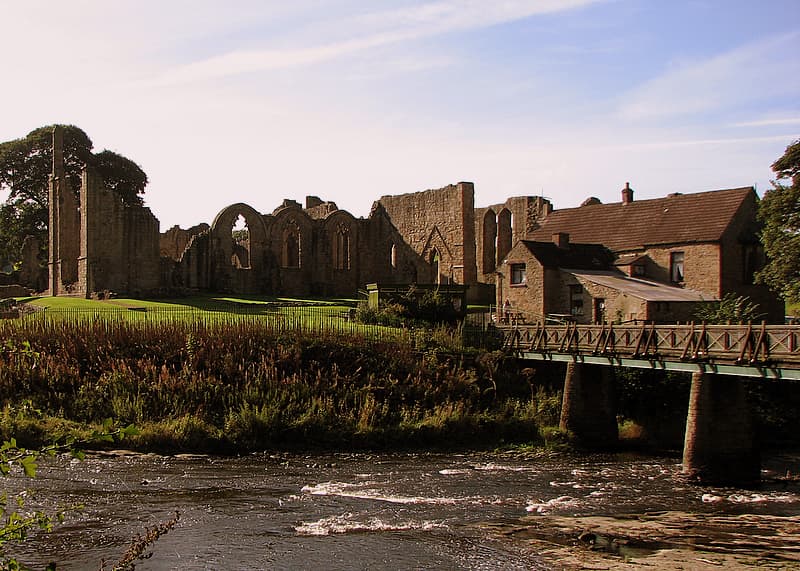
Finchale Priory
Finchale Priory was a 13th-century Benedictine priory located by the River Wear near Durham, England. Originally a hermitage founded by Godric of Finchale around 1112, it was endowed in 1196 to support eight monks and a prior, becoming a dependency of Durham Cathedral. The priory served as a rest facility for monks from Durham and operated until its dissolution in 1536, with its remains now managed by English Heritage.
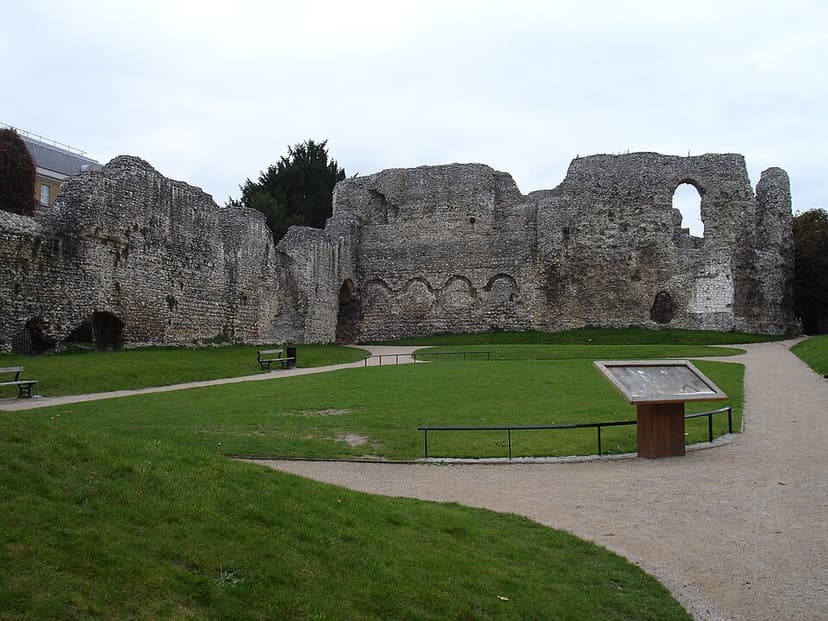
Reading Abbey
Reading Abbey was a large, ruined Benedictine monastery founded by King Henry I in 1121 in Reading, Berkshire, England. It was one of Europe's most significant royal monasteries, holding numerous relics and hosting royal events. Mostly destroyed during the Dissolution of the Monasteries in 1538, its ruins have undergone extensive conservation and reopened to the public in 2018, with parts of the site now occupied by HM Prison Reading.

Wix Priory
Wix Priory was a Benedictine nunnery located in Wix, Essex, England, with a history spanning from its founding in the early 12th century to its dissolution in 1525. While most of its structures have not survived, the priory church remains in existence today as St Mary's Church, Wix.