
Hadâmbu Monastery
The Hadâmbu Monastery is a Romanian Orthodox monastery situated in Iași County, Romania, southwest of the city of Iași. It was originally dedicated in 1659 by Iani Hadâmbul on land granted by Prince Gheorghe Ghica. After falling into ruin for many years, the monastery was re-established and reopened in 1990 and is recognized on the National Register of Historic Monuments.
Key Facts
- ›Dedicated in 1659 by Iani Hadâmbul.
- ›Located 30 km southwest of IașI, Romania.
- ›Reopened in 1990 after a period of ruin.
- ›Listed in the National Register of Historic Monuments.
- ›The original land was donated by Prince Gheorghe Ghica.

- National Register of Historic Monuments Listing
MăNăStirea HadâMbu
Iani HadâMbul, Gheorghe Ghica
Dedication In 1659, Reopening In 1990
About Hadâmbu Monastery
The Hadâmbu Monastery is a Romanian Orthodox monastic establishment located in Schitu Hadâmbului, within Iași County, Romania. Its origins trace back to 1659 when it was dedicated by Iani Hadâmbul, a Greek cellarer, who built it on land generously donated by Prince Gheorghe Ghica. The monastery's history includes a period where it fell into ruin, but it was subsequently revitalized and reopened in 1990.
Historical Context and Significance
Established in the 17th century, Hadâmbu Monastery represents a historical religious site in the region of Iași. The original construction was facilitated by Prince Gheorghe Ghica's land donation, underscoring the patronage that supported such institutions. Following a period of disrepair, its reopening in 1990 marked a significant moment in its modern history, allowing it to resume its spiritual and communal functions. The monastery's importance is further recognized by its inclusion in the National Register of Historic Monuments, acknowledging its cultural and historical value.
Location and Accessibility
Situated approximately 30 kilometers (19 miles) southwest of the prominent city of Iași, the monastery benefits from a setting that is both accessible and somewhat removed from urban bustle. While specific details on public access are not elaborated, its status as an active monastery and its listing as a historic monument suggest it is a site of interest for visitors. The monastery's official website, archived as of March 19, 2011, may offer further insights into its current operations and visitor information.
Source: Wikipedia ↗
Frequently Asked Questions
Where is Hadâmbu Monastery located?
Hadâmbu Monastery is located in Schitu Hadâmbului, Iași County, Romania. It is situated approximately 30 kilometers (19 miles) southwest of the city of Iași.
When was Hadâmbu Monastery founded?
The monastery was dedicated in 1659. It was originally built by Iani Hadâmbul.
What is the current status of Hadâmbu Monastery?
After being left in ruin for many years, Hadâmbu Monastery was reopened in 1990 and is currently an active religious site. It is also listed in the National Register of Historic Monuments.
Who was instrumental in the founding of Hadâmbu Monastery?
The monastery was built by Iani Hadâmbul, a Greek cellarer. The land on which it was built was donated to him by Prince Gheorghe Ghica.
Related Monasteries

Bârnova Monastery
Bârnova Monastery is a Romanian Orthodox monastery located in Bârnova, within the Iași metropolitan area of Moldavia, Romania. It was established in 1628 by Miron Barnovschi-Movilă, a Moldavian Voivode, and is recognized on the National Register of Historic Monuments. The monastery's courtyard hosts the oldest tree in Iași County, a 675-year-old hybrid lime tree, predating the first mention of Iași as an urban settlement.

Cernica Monastery
Cernica Monastery is a Romanian Orthodox monastic complex situated on the shore of Lake Cernica, near Bucharest, in Ilfov County. Established in 1608, it has served as a significant center for monastic education and houses three churches and three chapels. The monastery is also notable as the resting place for numerous Romanian personalities and is recognized as a historic monument.
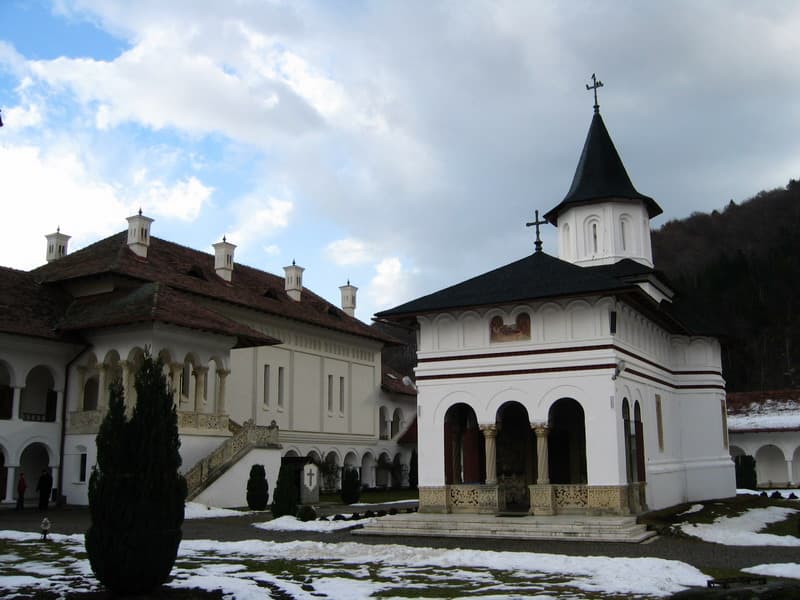
Sâmbăta de Sus Monastery
Sâmbăta de Sus Monastery, also known as Brâncoveanu Monastery, is a Romanian Orthodox monastery in Transylvania, Romania. Founded by Prince Constantin Brâncoveanu around 1696, it served as a spiritual and cultural center, aiming to bolster Orthodox presence against Catholic influence. Despite facing suppression and destruction in the 18th century, it was restored in the 20th century and remains a significant historical and religious site.