
Sâmbăta de Sus Monastery
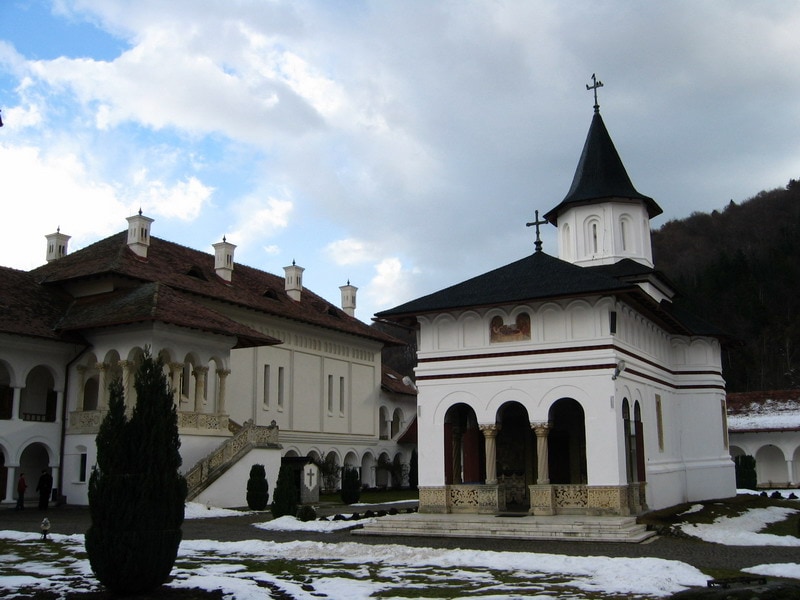
Sâmbăta de Sus Monastery, also known as Brâncoveanu Monastery, is a Romanian Orthodox monastery in Transylvania, Romania. Founded by Prince Constantin Brâncoveanu around 1696, it served as a spiritual and cultural center, aiming to bolster Orthodox presence against Catholic influence. Despite facing suppression and destruction in the 18th century, it was restored in the 20th century and remains a significant historical and religious site.
Key Facts
- ›Established by Constantin Brâncoveanu, Prince of Wallachia.
- ›Founded around 1696, with the monastery formally established by 1701.
- ›Intended to strengthen Orthodox presence and counter Catholicism in Transylvania.
- ›Faced destruction in 1785 but was later restored in the 20th century.
- ›Dedicated to the Dormition of the Mother of God.
- ›Classified as a historic monument by Romania's Ministry of Culture and Religious Affairs.
Church With Gilt Interior Frescoes, School For Secretaries, Workshop For Fresco Paintings, Small Printing Press
BrâNcoveanu Monastery
Constantin BrâNcoveanu, Nicolae BăLan, Grigore Maior
- Ordered Destroyed By Adolf Von Buccow In 1761.
- Destroyed In November 1785.
- Restored Starting In 1926.
- Rebuilt Church and Structures Consecrated In 1946.
About Sâmbăta de Sus Monastery
Sâmbăta de Sus Monastery, also widely recognized as Brâncoveanu Monastery, is a significant Romanian Orthodox monastic complex located in Sâmbăta de Sus, within the Brașov County of Transylvania, Romania. The monastery is dedicated to the Dormition of the Mother of God and holds a rich history intertwined with the political and religious landscape of the region.
History and Establishment
The origins of monastic life in the Sâmbăta de Sus area can be traced back to the early 17th century, with evidence of skete monasticism. The Brâncoveanu family acquired the village and surrounding lands in 1654. Prince Constantin Brâncoveanu of Wallachia was instrumental in its development, commissioning a stone and brick church around 1696 to replace an older wooden structure. The monastery itself was formally established by 1701. Brâncoveanu's motivation was multifaceted, including a desire to strengthen the Orthodox presence in Transylvania and to counter the growing influence of Catholicism, particularly after the Habsburg consolidation of power in the region.
Concurrent with the monastery's establishment, Brâncoveanu also fostered intellectual and artistic life by founding a school for secretaries, a workshop for fresco painting, and a small printing press on the monastery's grounds. These initiatives underscore the monastery's role as a vital cultural and spiritual hub.
Challenges and Suppression
Throughout the 18th century, the monastery faced considerable pressure to unite with the Roman Catholic Church. In 1761, Adolf von Buccow, the Governor of Transylvania, issued an order for the destruction of all Orthodox monasteries under his jurisdiction. Sâmbăta de Sus was spared at that time, possibly due to intervention from the Brâncoveanu family. Its status as the sole Orthodox monastery in Țara Făgărașului contributed to its growing prestige, and its interior frescoes were gilded in 1766.
However, from 1772 to 1802, the Brâncoveanu family temporarily lost control of the property due to unpaid debts. This period made the monastery more vulnerable. Greek-Catholic Bishop Grigore Maior actively sought its suppression, as the monks not only refused to convert but also encouraged local inhabitants to remain Orthodox. In 1782, an imperial decree from Vienna mandated the disbandment of monasteries whose inhabitants lived contemplative lives. Despite appeals from the Brâncoveanus, the monastery was ultimately destroyed in November 1785. While the church suffered severe damage, it was not entirely demolished, and the monks are believed to have fled across the Carpathians into Wallachia.
Restoration and Modern Era
Following the union of Transylvania with Romania and subsequent land reforms, the Romanian government transferred the monastery's property to the Sibiu Archdiocese in 1922. Nicolae Bălan, then Archbishop of Sibiu and Metropolitan of Transylvania, initiated the restoration of the monastery. Reconstruction efforts began in 1926, leading to the consecration of the rebuilt church and other structures in 1946. Further restorations were undertaken, with a major project concluding in 1993. Today, Sâmbăta de Sus Monastery is recognized as a historic monument by Romania's Ministry of Culture and Religious Affairs, with the church, annexes, and park individually listed as such. It continues to function as an active monastic community and a site of historical and religious importance.
Source: Wikipedia ↗
Frequently Asked Questions
When was Sâmbăta de Sus Monastery founded?
The monastery was established by Prince Constantin Brâncoveanu around 1696, with the formal establishment of the monastery occurring by 1701. The area had seen monastic activity prior to this, potentially as early as the 17th century.
What was the historical significance of Sâmbăta de Sus Monastery?
The monastery was founded to reinforce the Orthodox faith in Transylvania, which was under increasing pressure from Catholicism following Habsburg consolidation of power. It also housed a school, a fresco workshop, and a printing press.
Did the monastery face any challenges or destruction?
Yes, during the 18th century, there were efforts to suppress Orthodox monasteries, and Sâmbăta de Sus was ordered destroyed in 1761 and subsequently demolished in November 1785. The church was severely damaged, and monks fled.
When was the monastery restored?
Following the union of Transylvania with Romania, the property was transferred to the Sibiu Archdiocese, and restoration work began in 1926. The rebuilt church and structures were consecrated in 1946, with further restorations concluding in 1993.
What is the monastery dedicated to?
Sâmbăta de Sus Monastery is dedicated to the Dormition of the Mother of God.
Related Monasteries

Bârnova Monastery
Bârnova Monastery is a Romanian Orthodox monastery located in Bârnova, within the Iași metropolitan area of Moldavia, Romania. It was established in 1628 by Miron Barnovschi-Movilă, a Moldavian Voivode, and is recognized on the National Register of Historic Monuments. The monastery's courtyard hosts the oldest tree in Iași County, a 675-year-old hybrid lime tree, predating the first mention of Iași as an urban settlement.

Căldărușani Monastery
Căldărușani Monastery is a Romanian Orthodox monastery founded in 1638 by Wallachian ruler Matei Basarab. Situated by Căldărușani Lake in Gruiu, Ilfov County, Romania, it is recognized as a historic monument and has been a vital center for Orthodox spirituality and Romanian culture. The monastery is known for its significant art collection, scriptorium, and its role in developing the Romanian literary language, attracting prominent figures like painter Nicolae Grigorescu.

Cernica Monastery
Cernica Monastery is a Romanian Orthodox monastic complex situated on the shore of Lake Cernica, near Bucharest, in Ilfov County. Established in 1608, it has served as a significant center for monastic education and houses three churches and three chapels. The monastery is also notable as the resting place for numerous Romanian personalities and is recognized as a historic monument.