
Gloucester Greyfriars
Greyfriars in Gloucester, England, was a medieval monastic house established around 1231. The church underwent a significant rebuilding in the Perpendicular Gothic style in 1518, funded by the prominent Berkeley family. While the church was rebuilt, the remainder of the friary complex was later demolished.
Key Facts
- ›Founded around 1231.
- ›The church was rebuilt in Perpendicular Gothic style in 1518.
- ›Rebuilding was funded by the Berkeley family of Berkeley Castle.
- ›The majority of the friary complex was demolished after its rebuilding.
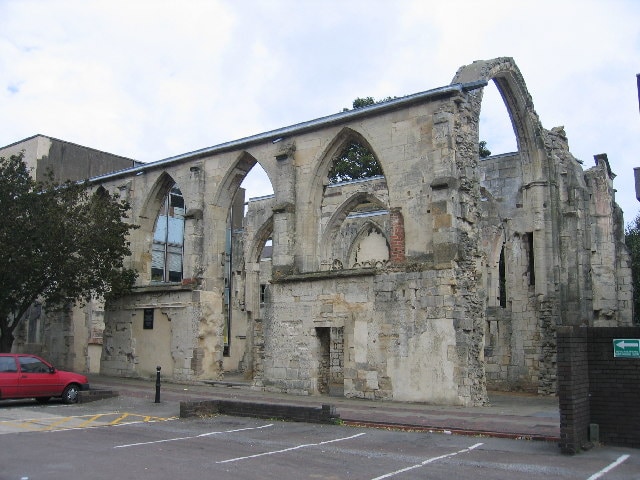
Perpendicular Gothic
the Berkeleys of Berkeley Castle
Rebuilding of the Church In 1518.
About Gloucester Greyfriars
Gloucester Greyfriars was a medieval monastic house situated in Gloucester, England. Its history traces back to its founding around 1231, establishing it as a significant religious institution during the medieval period.
Architectural Significance
A notable event in the history of Gloucester Greyfriars was the rebuilding of its church. This reconstruction took place around 1518 and was executed in the Perpendicular Gothic style. The funding for this substantial project was provided by the prominent local Berkeley family, who were based at Berkeley Castle. While the church was thus revitalized, the remainder of the friary complex did not survive and was later demolished, leaving the church as a focal point of its historical remains.
Source: Wikipedia ↗
Frequently Asked Questions
When was Greyfriars in Gloucester founded?
Greyfriars in Gloucester was founded as a monastic house around the year 1231. This places its establishment in the early 13th century.
What architectural style is the church at Greyfriars?
The church at Greyfriars in Gloucester was rebuilt in the Perpendicular Gothic style. This rebuilding occurred around 1518 and was funded by the Berkeley family.
Who paid for the rebuilding of the church at Greyfriars?
The prominent local family, the Berkeleys of Berkeley Castle, funded the rebuilding of the church at Greyfriars. This significant contribution occurred around 1518.
What happened to the rest of the friary complex at Greyfriars?
Following the rebuilding of the church, the rest of the friary complex at Greyfriars was later demolished. Only parts of the church structure may remain.
Related Monasteries
Ashridge Priory
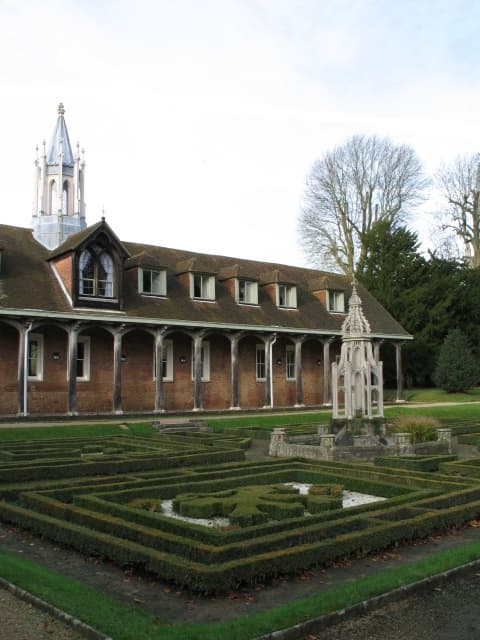
Ashridge Priory was a medieval college of Austin canons, established in 1283 by Edmund of Almain. It was known as the "Brothers of Penitence" or the "Boni Homines" and gained wealth through donations, particularly a phial of Christ's blood. After its dissolution, it served as a royal residence and later became a private estate before being demolished.

Beeston Regis Priory
Beeston Regis Priory was an Augustinian priory founded in 1216 by Lady Isabel de Cressey. Dissolved in 1538, its remains, particularly the priory church nave and transept, are a Grade I listed ruin. The priory's suppression is believed to have influenced the founding of Gresham's School, and its cloister garden is now part of Priory Farm.

Cornworthy Priory
Cornworthy Priory was an Augustinian nunnery established in the early 13th century in Devon, England. It operated until its dissolution in 1536. Following its closure, the priory's lands were acquired by the Harris family, who resided there for over a century, with the notable poet Anne, Lady Southwell, being born within its walls.