
Franciscan Friary, Helsingør
Marienlyst Castle, originally a royal pavilion and pleasure palace in Helsingør, Denmark, has a history spanning from its 16th-century origins as part of Kronborg Castle to its 18th-century transformation into a baroque residence. Named after Queen Juliana Maria, it evolved through various royal and private ownerships before becoming a municipal museum. The site also holds remnants of a medieval Franciscan friary, though little remains of that structure today.
Key Facts
- ›Originally built as a royal pavilion for King Frederick II of Denmark in 1587.
- ›Transformed into a pleasure palace by Count Adam Gottlob Moltke and architect Nicolas-Henri Jardin between 1759 and 1763.
- ›Renamed Marienlyst in honor of Queen Juliana Maria, the second wife of King Frederik V.
- ›The site once hosted a Franciscan friary dedicated to Saint Anne, founded in 1419.
- ›Currently operated as a branch of the Helsingør Municipality Museums, featuring exhibitions of paintings and silver.
- ›The gardens have undergone several redesigns, with the current 18th-century style largely established between 1919 and 1921.

Northern Italian Renaissance, Baroque, Neoclassical
- 18th-Century Garden Design
- Permanent Exhibitions of Paintings and HelsingøR Silver
- Remnants of A Medieval Franciscan Friary
- Royal Pavilion and Pleasure Palace History
Marienlyst Slot, Lundhave, Lundegaard, Kongenshafve
King Frederick Ii of Denmark, Queen Sophie of Mecklenburg-GüStrow, King Christian Iv of Denmark, King Frederik Iii of Denmark, King Christian V of Denmark, King Frederik Iv of Denmark, King Frederik V of Denmark, Queen Juliana Maria, Count Adam Gottlob Moltke, Nicolas-Henri Jardin, Colonel Adam Gottlob Von Krogh, Magdalene Von Krogh, Hans Van Steenwinckel, Hans Van Steenwinckel Jr., Gudmund Nyeland Brandt
- Founding of St. Anne's Friary
- Confiscation of the Friary During the Reformation
- Construction of the Royal Pavilion and Garden
- Transformation Into A Pleasure Palace
- Renaming To Marienlyst
- Sale To HelsingøR Municipality
- Establishment of the Town Museum In the Castle Basement
- Full Takeover By the Museum
About Franciscan Friary, Helsingør
Marienlyst Castle
Marienlyst Castle is a palatial residence located in Helsingør, Denmark, with a history intertwined with royal residences, pleasure gardens, and a medieval religious institution. Originally established as a royal pavilion and parterre garden in 1587 for King Frederick II of Denmark, it was designed by royal architect Hans van Steenwinckel the Elder. This early structure was intended as a retreat for the king, featuring a three-story building with dedicated levels for an armory, the queen, and the king, situated on the royal estate known as Lundegaard.
During the late 18th century, the pavilion underwent a significant transformation into a pleasure palace. Under the patronage of Count Adam Gottlob Moltke and the design of French architect Nicolas-Henri Jardin, the building was expanded with extensions on either side, creating a baroque facade. The gardens were also redesigned into a larger garden à la française. The castle was renamed Marienlyst in honor of Queen Juliana Maria, the second wife of King Frederik V, who also used the residence. The grounds later featured romantic gardens laid out in the 1790s.
Historically, the site also holds a connection to a medieval Franciscan friary. In 1438, a chapel dedicated to Saint Anne was given to a community of Franciscan friars, who established a friary there. This religious institution was confiscated by the crown during the Reformation in 1536, and no physical remnants of the friary remain, though its existence is marked by the street name Sankt Anna Gade in Helsingør.
In 1851, the entire property was purchased by the Helsingør municipality. After being rented out for various purposes, including a luxury hotel and private residences, the castle was eventually taken over by the Helsingør Municipality Museums. The park was redeveloped into its present appearance between 1919 and 1921, and the castle itself now serves as a museum housing permanent exhibitions of paintings and local silver, as well as temporary art history exhibitions. The castle's architectural styles reflect its evolution from Renaissance origins to baroque additions and later neoclassical garden interpretations.
Source: Wikipedia ↗
Frequently Asked Questions
What was the original purpose of Marienlyst Castle?
The original structure, built in 1587 by royal architect Hans van Steenwinckel, was a three-story pavilion and parterre garden designed for King Frederick II of Denmark. It served as a royal retreat for pleasure and hunting, connected to Kronborg Castle.
When was Marienlyst Castle transformed into its current form?
The castle underwent a significant transformation between 1759 and 1763 under Count Adam Gottlob Moltke and French architect Nicolas-Henri Jardin. They added extensions to the original pavilion, creating a palace with baroque architectural elements and redesigned the gardens.
What is the historical significance of the Franciscan Friary at this site?
In medieval times, a chapel dedicated to Saint Anne was given to Franciscan friars in 1438, who converted it into a friary. This friary was confiscated by the crown during the Reformation in 1536, and nothing of its structure remains today, though the street name Sankt Anna Gade in Helsingør is a reminder of its presence.
Who were some notable figures associated with Marienlyst Castle?
Notable figures include King Frederick II, King Christian IV, King Frederik III, King Christian V, King Frederik IV, King Frederik V, Queen Juliana Maria, Count Adam Gottlob Moltke, and architect Nicolas-Henri Jardin. Colonel Adam Gottlob von Krogh and his wife Magdalene also resided there for an extended period.
What can visitors see at Marienlyst Castle today?
Today, Marienlyst Castle operates as a branch of the Helsingør Municipality Museums. It houses permanent exhibitions of 18th and 19th-century paintings and Helsingør silver, as well as temporary exhibitions focused on art history.
How has the garden at Marienlyst Castle evolved over time?
The gardens have seen multiple redesigns. Initially a parterre garden, it was later transformed into a garden à la française, then a romantic landscape garden in the 1790s, and finally reinterpreted into an 18th-century neoclassical style between 1919 and 1921 to complement the castle's architecture.
Related Monasteries

Santa María de las Cuevas Charterhouse
The Monastery of Santa María de las Cuevas, also known as the Cartuja, is a historic religious complex located on the Isla de La Cartuja in Seville, Spain. Originally a chapel and later a monastery founded in the 15th century, it gained prominence as a burial site for Christopher Columbus's remains and suffered during the Napoleonic invasion. Following its secularization, it was transformed into a highly successful ceramics factory and is now a national monument housing the Andalusian Contemporary Art Center (CAAC).

Katharinenhof Kranenburg
The Katharinenhof in Kranenburg, Germany, operated as a convent for Catholic sisters from 1446 until its secularization in 1802. Following its closure as a religious institution, the building underwent various transformations, serving as a police office, school, kindergarten, and compensatory church. Since 1961, it has been home to the Museum Katharinenhof.
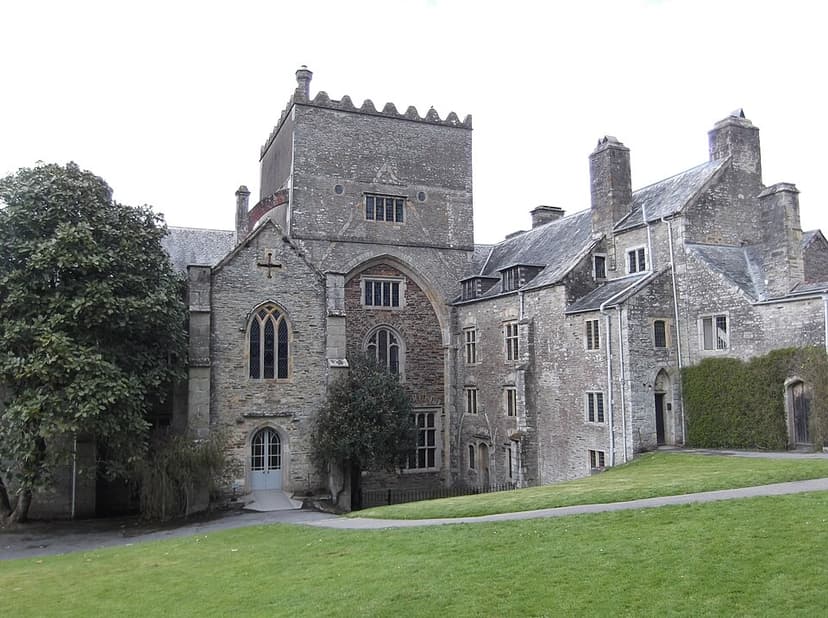
Buckland Abbey
Buckland Abbey, a Grade I listed historic house in Devon, England, was originally founded as a Cistercian abbey in 1278. After its dissolution under Henry VIII, it was converted into a private residence by Sir Richard Grenville and later owned by Sir Francis Drake. Today, it is managed by the National Trust and is open to the public, housing part of the Plymouth City Museum and Art Gallery's collection.