
Ferrara Charterhouse
Christian·Italy·Active (church), Cemetery·15th century
Ferrara Charterhouse, originally known as Certosa di Ferrara, was a Carthusian monastery established in 1452 under the patronage of Duke Borso d'Este. While it was suppressed during the Napoleonic era, its church, San Cristoforo alla Certosa, was reconsecrated and remains in use. The site now also functions as a municipal cemetery and has experienced damage from both World War II bombing and a 2012 earthquake, impacting its structural integrity and accessibility.
Key Facts
- ›Founded in 1452 with sponsorship from Duke Borso D'Este.
- ›The present monastic church, San Cristoforo alla Certosa, was built in 1498 and is attributed to Biagio Rossetti.
- ›The monastery was suppressed during the Napoleonic era, leading to the dispersal of its art.
- ›The grounds were converted into a municipal public cemetery in 1813.
- ›The church sustained damage from aerial bombing in 1944 and a 2012 earthquake.

Renaissance
- Church of San Cristoforo Alla Certosa
- Municipal Cemetery
- Jewish Cemetery
- Memorial Statue To Leopoldo Cicognara By Antonio Canova
Certosa Di Ferrara
Borso D'Este, Biagio Rossetti, Gaetano Barbieri, Pietro Puttini, Francesco Zoppi, Nicolò Roselli, Bastianino, Ferdinando Canonici, Antonio Canova, Leopoldo Cicognara, Roselli, Sebastiano Filippi, Agostino Caracci, Francesco Naselli, Ippolito Scarsellino, Bononi, Francesco Ferrari, Pietro Turchi, Giuseppe Avanzi, Maurelio Scanavini, Guercino, Giacomo Bambini, Carlo Bononi, Leonello Bononi, Lorenzo Costa, Dosso, Giovanni Battista Benvenuti, Garofalo, Benedetto Gennari, Giuseppe Mazzuoli, Domenico Mona, Alessandro Naselli, Camillo Ricci, Gabriello Rossi, Scarsellino
- Construction Sponsored By Duke Borso D'Este
- New City Walls Brought the Charterhouse Within the City
- Napoleonic Suppression
- Church Reconsecrated
- Conversion To Municipal Cemetery
- Demolition of Older Church and Part of Cloister
- Aerial Bombing Damage
- Earthquake Damage
About Ferrara Charterhouse
Ferrara Charterhouse, known in Italian as Certosa di Ferrara, is a former Carthusian monastery located in Ferrara, Emilia-Romagna, Italy. Its construction was initiated in 1452 under the patronage of Duke Borso d'Este. The site now encompasses the Church of San Cristoforo alla Certosa, which serves as its monastic church, and a large municipal cemetery established in 1813.
History and Significance
The charterhouse was initially built outside the city walls, but new fortifications later incorporated it within the urban area. The present church, dedicated to Saint Christopher, was constructed in 1498 and is attributed to the architect Biagio Rossetti, featuring a Latin cross layout with six lateral chapels. The monastery faced suppression during the Napoleonic era, which led to the closure of the church and its conversion into public property.
Later Developments and Damage
In 1813, the church was reconsecrated, and the adjacent grounds were transformed into a municipal cemetery, necessitating the demolition of older structures. The site has endured significant damage over time, including aerial bombing during World War II in 1944, which affected various parts of the church. More recently, a 2012 earthquake caused further damage to the foundations, restricting its current use.
Source: Wikipedia ↗
Frequently Asked Questions
When was Ferrara Charterhouse founded?
Ferrara Charterhouse was founded in 1452. The Duke Borso d'Este sponsored its construction, establishing it outside the existing city walls.
What is the current status of Ferrara Charterhouse?
The monastery was suppressed during the Napoleonic era. Its church, San Cristoforo alla Certosa, was reconsecrated in 1813 and remains in use. The site also accommodates a large municipal cemetery.
Has Ferrara Charterhouse been damaged?
Yes, the church sustained damage from aerial bombing in 1944 during World War II. Further damage occurred to its foundations due to the 2012 earthquake, which has limited its use.
Who was instrumental in the design of the church?
The project for the present church, dedicated to Saint Christopher, is attributed to Biagio Rossetti. The marble portal on the west front, though incomplete, was designed by Gaetano Barbieri.
What happened to the art from Ferrara Charterhouse?
Following the Napoleonic suppression, the works of movable art from the church and monastery were dispersed. An inventory from 1770 listed numerous canvases and paintings by various artists.
Related Monasteries
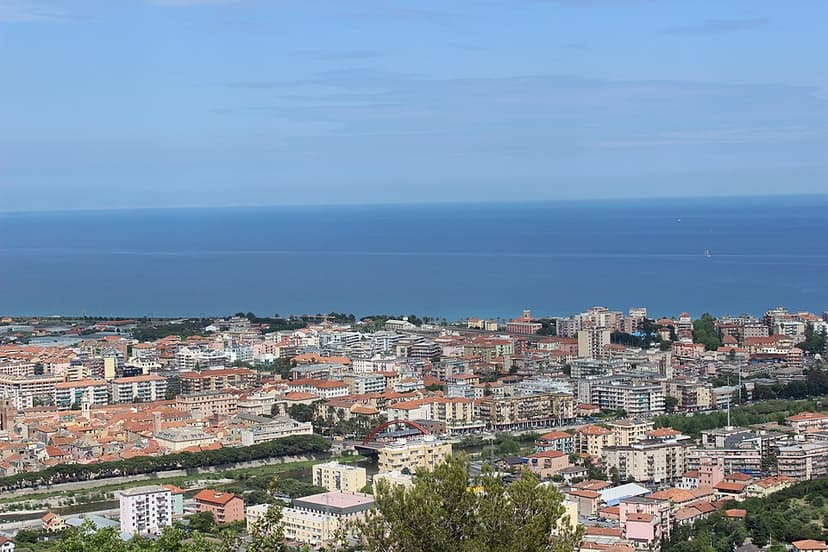
Albenga
Albenga is a historic city on the Italian Riviera, known for its "city of a hundred spires" nickname. Its economy thrives on tourism, local commerce, and agriculture. Founded around the 4th century BC by the Ligurian tribe Ingauni, Albenga boasts a rich history marked by Romanization, medieval self-governance, and periods of prosperity and decline, with its strategic location on the Centa River influencing its development and economy.

Certosa di Pavia
The Certosa di Pavia is a magnificent monastery complex in Lombardy, Northern Italy, renowned for its opulent architecture blending Gothic and Renaissance styles, and its extensive collection of artworks. Commissioned by Giangaleazzo Visconti in 1396 as a dynastic mausoleum and a testament to his political ambitions, it evolved over a century, becoming one of Italy's largest monasteries. Despite its Carthusian origins, known for austerity, the Certosa is celebrated for its rich decoration and artistic treasures.

Certosa di San Giacomo
The Certosa di San Giacomo, also known as the Charterhouse of St. James, is a former Carthusian monastery founded in 1363 by Giacomo Arcucci on the island of Capri. Originally established as a religious institution, it later underwent fortification and restoration. Today, it functions as a museum and a venue for cultural events, housing several exhibitions and a high school on its premises.