
Évora
Évora is a historic city in Portugal's Alentejo region, renowned for its remarkably well-preserved old town center, medieval walls, and numerous monuments spanning various historical periods. Originally founded by the Celtici as Ebora, it flourished under Roman rule, became an important center during Arab Islamic rule, and was a significant royal residence during Portugal's Middle Ages, particularly the 15th century. Its rich cultural and artistic heritage, evidenced by diverse architectural styles and numerous historical sites, led to its designation as a UNESCO World Heritage Site in 1986.
Key Facts
- ›Designated a UNESCO World Heritage Site in 1986 for its well-preserved historic center and monuments.
- ›Its ancient name, Ebora, is derived from the Celtic word for 'yew trees', sharing etymological roots with York, England (Eboracum/Eburacum).
- ›The city features a well-preserved Roman Temple, believed to have been erected in honor of Emperor Augustus.
- ݃vora served as a significant royal residence during the Middle Ages, particularly in the 15th century, hosting royal weddings and important decisions.
- ›The University of Évora, founded by the Jesuits in 1559, was a center of learning for European masters before its closure and later reopening in 1973.
- ›It was chosen as a European Capital of Culture for 2027, alongside Liepāja, Latvia.

Romanesque, Gothic, Manueline, Renaissance, Baroque, MudéJar
Roman Temple, Chapel of Bones, Medieval Walls, Cathedral of éVora, University of éVora, Prata Aqueduct
Ebora, Liberalitas Julia, YāBurah, Very Noble and Ever Loyal City of éVora
Julius Caesar, Pliny the Elder, Quintianus, Tariq Ibn-Ziyad, Gerald the Fearless, Afonso I of Portugal, Manuel I of Portugal, John Iii of Portugal, André De Resende, Nicolau Chanterene, CristóVãO De Figueiredo, GregóRio Lopes, Manuel Cardoso, Duarte Lobo, Duarte GalvãO, Gil Vicente, Nicolas Cleynaerts, Clenardus, Johannes Vasaeus, Luis De Molina, Marquis of Pombal, Louis Henri Loison, King Miguel I, Francisco De Arruda, LuíS De CamõEs, áLvaro Siza Vieira
- Roman Conquest In 57 Bc
- Conquered By Arab Forces In 715
- Reconquered By Gerald the Fearless In 1165
- Sieged By Almohad Forces In 1181
- Seat of An Archbishopric Established In 1540
- University Founded In 1559
- University Closed By the Marquis of Pombal In 1759
- Battle of éVora In 1808
- Surrender of King Miguel I's Forces In 1834
- University Reopened In 1973
About Évora
Évora is a city and municipality in Portugal, recognized as the historic capital of the Alentejo region. Its historical importance is underscored by its designation as a UNESCO World Heritage Site since 1986, a recognition earned for its exceptionally well-preserved old town center, medieval fortifications, and a rich tapestry of monuments spanning across millennia.
History and Significance
The city's origins trace back over five thousand years, initially known as Ebora by the Celtici, who made it their regional capital. The name itself is thought to derive from the Celtic word for 'yew trees.' Évora experienced significant development under Roman rule, starting from 57 BC, when it was expanded and known as Liberalitas Julia. Vestiges from this period, including city walls and a notable Roman Temple believed to be dedicated to Emperor Augustus, remain.
Following periods of Visigothic and Arab Islamic rule, during which it was known as Yāburah and developed into an agricultural center, Évora was reconquered by the Moors in 1165. It subsequently flourished as a dynamic city within the Kingdom of Portugal, especially during the 15th century. The royal court resided here for extended periods, contributing to the construction of palaces and religious buildings, and Évora became a site for numerous royal events and crucial decisions.
Évora particularly thrived during the Avis Dynasty (1385–1580), becoming a hub for humanities and arts. The city was elevated to the status of an archbishopric in 1540, and the University of Évora was founded by the Jesuits in 1559, attracting prominent European scholars. Despite a period of decline in the 18th century after the university's closure, Évora has since undergone revitalization, with its historical and cultural heritage serving as its primary attraction. It is also slated to be a European Capital of Culture in 2027.
Architecture and Heritage
The architectural landscape of Évora is a testament to its layered history, featuring styles from Romanesque and Gothic to Manueline, Renaissance, and Baroque. Key landmarks include the Roman Temple, the Cathedral of Évora, the Church of Saint Francis with its unique Chapel of Bones, and the Prata Aqueduct. The city's urban fabric, characterized by picturesque squares and narrow streets, further contributes to its historical charm and appeal.
Source: Wikipedia ↗
Frequently Asked Questions
What is the historical significance of Évora?
Évora boasts a history stretching back over five millennia, beginning with the Celtici. It prospered under Roman rule as Liberalitas Julia, became an agricultural center under Arab Islamic rule, and served as a vibrant royal residence during Portugal's Middle Ages, especially in the 15th century. Its rich heritage is recognized by its UNESCO World Heritage status.
What are the main attractions in Évora?
Key attractions include the Roman Temple of Évora (often called the Temple of Diana), the Chapel of Bones at the Church of Saint Francis, the Cathedral of Évora, and the historic city center with its medieval walls. The variety of architectural styles, including Romanesque, Gothic, Manueline, Renaissance, and Baroque, also makes it a significant draw.
What is the origin of the name Évora?
The name Évora is believed to originate from the ancient Celtic word 'ebora' or 'ebura', meaning 'of the yew trees'. This etymology is shared with the ancient Celtic name for York, England, which was Eboracum/Eburacum.
When did Évora become a UNESCO World Heritage Site?
Évora was inscribed as a UNESCO World Heritage Site in 1986 due to its exceptionally well-preserved old town center, its medieval walls, and the numerous monuments that reflect its diverse historical periods.
What was Évora like during Roman rule?
During Roman rule, Évora, then known as Liberalitas Julia, was expanded and became an important walled town situated at the junction of several key routes. It flourished as a city, evidenced by inscriptions and coins, and features the monumental Corinthian temple dedicated to Emperor Augustus.
What architectural styles can be found in Évora?
Évora showcases a wide array of architectural styles, including Romanesque, Gothic, Manueline, Renaissance, and Baroque. Remnants of Moorish architecture are also present, contributing to the city's unique historical character.
Related Monasteries

Monastery of Alcobaça
The Monastery of Alcobaça is a significant Catholic monastic complex founded in 1153 by King Afonso Henriques, marking a pivotal moment in Portuguese history and the introduction of Gothic architecture to the country. Throughout its seven centuries of operation, it maintained a close relationship with the Portuguese monarchy, becoming the wealthiest and most influential monastery in Portugal by 1300. Although it ceased to function as a monastery in 1834 due to the dissolution of religious orders, its historical, artistic, and cultural importance led to its designation as a UNESCO World Heritage Site in 1989.
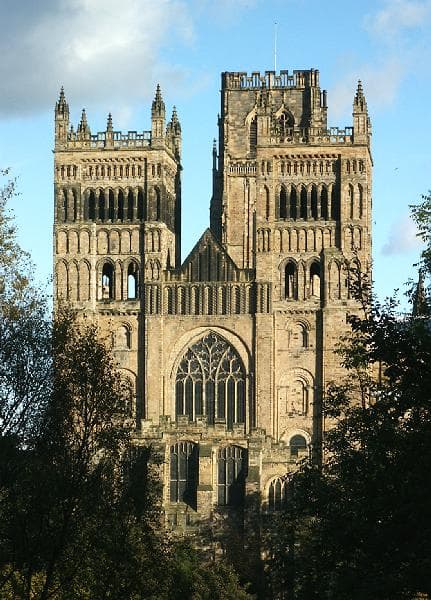
Durham Cathedral Priory
Durham Cathedral Priory, originally the Cathedral Church of Christ, Blessed Mary the Virgin and St Cuthbert of Durham, is a significant Church of England cathedral with a history rooted in Anglo-Saxon monasticism. It succeeded Lindisfarne Priory, becoming a Benedictine monastery until its dissolution in 1541, after which it transitioned to a secular chapter. The current structure is a prime example of Norman Romanesque architecture, notable for its early ribbed vaulting, and houses the shrines of Saints Cuthbert and Bede, making it a long-standing pilgrimage site.

Tournai
Tournai is one of Belgium's oldest cities, situated on the river Scheldt and historically significant as the first capital of the Frankish Empire. Its cultural heritage is marked by its Romanesque and Gothic cathedral and its influential role in medieval art and textiles. The city has experienced periods of French, English, and Spanish rule, reflecting its strategic importance throughout European history.