
Épernay
Épernay is a historic commune in the Marne department of northern France, renowned as a principal center for champagne wine production. Its history spans over a millennium, transitioning from ecclesiastical to noble ownership before enduring significant damage during various conflicts, including the Hundred Years' War and World War I. Today, it is distinguished by its modern suburbs and the prestigious Avenue de Champagne, lined with leading champagne manufacturers and their extensive cellars.
Key Facts
- ›Known as the principal 'entrepôt' for champagne wines.
- ›Cellars for champagne are built into the chalk rock beneath the town.
- ›Historically belonged to the archbishops of Reims, then the counts of Champagne.
- ›Suffered significant destruction during the Hundred Years' War and World War I.
- ›Avenue de Champagne is famous for housing leading champagne manufacturers.
- ›Its economy is heavily reliant on the champagne industry and associated equipment production.

Avenue De Champagne, Champagne Cellars Built Into Chalk Rock, ChâTeau De Pierry, ChâTeau De Montmort, ChâTeau De Condé
Sparnacum
Flodoard, Jean-Baptiste-Maximien Parchappe De Vinay, Henri-Gustave Joly De LotbinièRe, LéOn Homo, Gabrielle Dorziat, Albert Louis Deullin, Yohann Diniz, John Gadret, Maakan Tounkara, Alex Vanopslagh, LéOn AzéMa, Yvette Lundy
- Belonged To Archbishops of Reims
- Came Into Possession of Counts of Champagne
- Damaged During the Hundred Years' War
- Burned By Francis I
- Resisted Henry of Navarre
- Became Capital of Canton and District During French Revolution
- Became Subprefecture of the Arrondissement of éPernay
- Suffered Devastation During the French Campaign
- Streets Named and Houses Numbered
- Gas Street Lighting Installed
- Paris-Strasbourg Railway Line Inaugurated
- Occupied By Prussian Troops
- First Power Station Built
- Connected To Montmirail By C.B.R. Railway
- Connected To Ambonnay
- Two-Thirds of the Town Destroyed During World War I
- Occupied and Bridge Blown Up By German Army During Retreat From the Marne
- Bombed Multiple Times During World War I, Especially From 1917 Onwards
- Fears of Falling Into Enemy Hands During German Offensive
About Épernay
Épernay is a commune situated in the Marne department of northern France, recognized globally as a primary hub for the production and storage of champagne wines. Its strategic location on the left bank of the Marne River and at the end of the Cubry valley has historically contributed to its development.
History and Development
The settlement, known in ancient times as Sparnacum, initially belonged to the archbishops of Reims from the 5th century until the 10th century. It subsequently came under the control of the counts of Champagne. Épernay's history is marked by periods of conflict; it sustained considerable damage during the Hundred Years' War and was notably burned by Francis I in 1544. Despite these challenges, the town demonstrated resilience, resisting Henry of Navarre in 1592 and eventually being assigned as a duchy in 1642. The French Revolution saw Épernay become the capital of its canton and district, and by 1800, it was established as the subprefecture of its arrondissement. The 19th century brought modernization, including the naming of streets, numbering of houses, and the introduction of gas street lighting, alongside the crucial arrival of the Paris-Strasbourg railway line.
Economic Significance and Notable Features
Épernay's economy is predominantly driven by the champagne industry. The town is celebrated for its extensive network of cellars, ingeniously constructed within the chalk rock formations beneath the surface, where the renowned champagne wines are aged and bottled. The Avenue de Champagne is a particularly famous thoroughfare, lined with the prestigious houses of leading champagne manufacturers. Beyond champagne, local industries include the production of related equipment, brewing, sugar refining, and hat manufacturing.
Modern Era and Cultural Landscape
While the older quarter of Épernay retains narrow, irregular streets, its surrounding suburbs and newer areas are more modern and spacious. The town has also expanded to the right bank of the Marne. During World War I, Épernay suffered extensive destruction, with two-thirds of the town being obliterated. It served as a critical rear-front town, a transit point for troops, and an important hospital center, frequently subjected to bombing. Despite this, Épernay has continued to grow and develop. The town is a birthplace or final resting place for several notable figures across various fields, including chroniclers, politicians, historians, architects, and athletes.
Source: Wikipedia ↗
Frequently Asked Questions
What is Épernay most famous for?
Épernay is most famous as the principal center for champagne wine production. It is known for its extensive cellars, built into the chalk rock, where champagne is bottled and stored. The prestigious Avenue de Champagne showcases many of the leading champagne manufacturers.
What is the historical significance of Épernay?
Épernay has a long history, dating back to Roman times as Sparnacum. It was part of the archbishops of Reims' territory and later belonged to the counts of Champagne. The town has endured significant damage throughout history, particularly during the Hundred Years' War and World War I, but has consistently rebuilt and maintained its importance.
What are the main industries in Épernay?
The primary industry in Épernay is the production and storage of champagne wines. Other significant economic activities include the production of equipment and raw materials for the champagne industry, brewing, sugar refining, and the manufacturing of hats and caps.
What can visitors see in Épernay?
Visitors to Épernay can explore the Avenue de Champagne, which features the houses of major champagne producers and their cellars. The town also has an oldest quarter with narrow, irregular streets, and surrounding suburbs with modern villas. Nearby sights include Château de Pierry, Château de Montmort, and Château de Condé.
How did transportation evolve in Épernay?
Épernay has seen significant improvements in transportation. Gas street lighting was installed in 1846, and the Paris-Strasbourg railway line reached the town in 1849. Further railway connections were established throughout the 20th century, linking it to regional destinations and facilitating trade.
Related Monasteries
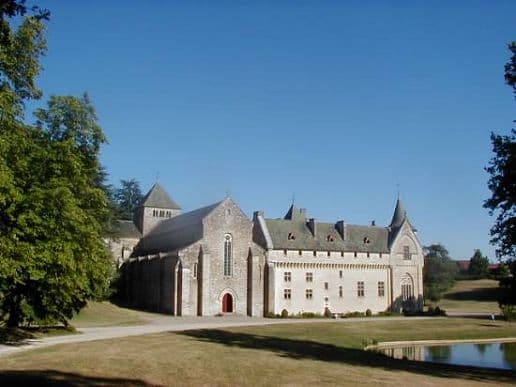
Abbey of Loc-Dieu
Abbey of Loc-Dieu is a Cistercian abbey situated in Aveyron, France, founded in 1123 on a site historically known as "devil's place" before being renamed "place of God" by its monastic inhabitants. Despite facing destruction and rebuilding, it became a significant Gothic architectural site and, during World War II, served as a safe haven for artworks from the Louvre, including the Mona Lisa. Today, the abbey and its park are open to the public.

Abbey of Saint-Germain-des-Prés
The Abbey of Saint-Germain-des-Prés, originally a Benedictine abbey founded in 558, is one of the oldest churches in Paris. It served as a significant center for scholarship, producing illuminated manuscripts, and was a royal necropolis. Despite destruction by Vikings and damage during the French Revolution, the church has undergone numerous rebuilds and restorations, incorporating Romanesque, Gothic, and later decorative styles, and remains an active Catholic parish church.

Abbey of Sénanque
Sénanque Abbey is a Cistercian monastery founded in 1148 in Provence, France, renowned for its remarkably preserved Romanesque architecture. Initially thriving, it experienced decline and was suppressed during the French Revolution, only to be re-established in 1854 and later reactivated in 1988. Today, it houses an active monastic community and is known for its lavender fields and spiritual retreats.