
Engelszell Abbey
Trappist (Order of Cistercians of the Strict Observance)·Austria·Suppressed/Closed·13th century
Engelszell Abbey, originally founded as a Cistercian monastery in 1293, later became the last Trappist monastery in Austria. Despite periods of decline, dissolution, and confiscation, it was re-established by Trappist monks in 1925 and gained recognition for its Trappist beer production. In May 2023, the community was suppressed due to a dwindling number of monks.
Key Facts
- ›Founded in 1293 by Bernhard of Prambach, Bishop of Passau.
- ›Re-founded as a Trappist monastery in 1925 by refugee German monks.
- ›Confiscated by the Gestapo in 1939, with monks sent to concentration camps.
- ›Became the 9th producer of Trappist beer approved by the International Trappist Association in 2012.
- ›The last Trappist monastery in Austria.
- ›Suppressed by the Order of Cistercians of the Strict Observance in May 2023.
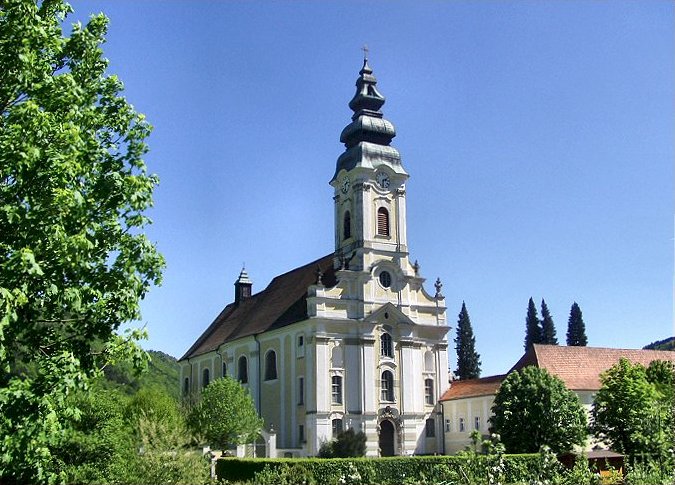
Rococo
- Rococo Abbey Church
- Trappist Beer Production
- Artworks By Bartolomeo Altomonte, Joseph Deutschmann, and Fritz FröHlich
Stift Engelszell
Bernhard of Prambach, Gregorius Eisvogel, Marianus Hauseder
- Founded As A Cistercian Monastery
- Suffered Decline During the Protestant Reformation
- Restored With Support From Wilhering Abbey
- Disastrous Fire In 1699
- Dissolved By Emperor Joseph Ii
- Re-Founded As A Trappist Monastery
- Confiscated By the Gestapo and Community Evicted
- Community Suppressed and Ordered To Close
About Engelszell Abbey
Engelszell Abbey, also known by its German name Stift Engelszell, holds the distinction of being the last Trappist monastery in Austria. Located near Engelhartszell in Upper Austria, its history spans centuries, marked by periods of prosperity, decline, dissolution, and re-establishment.
History and Significance
The abbey's origins trace back to 1293 when it was founded as a Cistercian monastery by Bernhard of Prambach, the Bishop of Passau. It was settled the following year by monks from its mother house, Wilhering Abbey. Over the centuries, Engelszell faced considerable challenges, including spiritual and financial decline during the Protestant Reformation and a devastating fire in 1699. In 1786, Emperor Joseph II dissolved the abbey, and its buildings were repurposed for secular uses.
In 1925, Engelszell was re-founded as a Trappist monastery by German monks expelled from Oelenberg Abbey after World War I. It was elevated to the rank of an abbey in 1931. The monastery's history took a dark turn in 1939 when it was confiscated by the Gestapo, and its community was evicted, with some monks sent to concentration camps. Following the war, survivors returned and were joined by other refugee Trappists. In recent years, Engelszell gained international recognition for its Trappist beer production, becoming the ninth producer of Trappist beer approved by the International Trappist Association.
Suppression of the Community
Despite its historical resilience and modern achievements, the monastic community at Engelszell Abbey faced its end. With only four monks remaining, it was determined that the community was no longer able to sustain a Trappist life. Consequently, on May 15, 2023, the Order of Cistercians of the Strict Observance suppressed the community, ordering the closure of the monastery.
Architectural Features
The abbey church at Engelszell, constructed between 1754 and 1764, is a notable example of Rococo architecture, boasting a 76-meter high tower. Its interior is adorned with significant artworks by artists such as Bartolomeo Altomonte and Joseph Deutschmann, with stucco work by Johann Georg Üblhör. The ceiling of the nave was later repainted by Fritz Fröhlich following structural damage.
Source: Wikipedia ↗
Frequently Asked Questions
When was Engelszell Abbey founded?
Engelszell Abbey was founded in 1293 as a Cistercian monastery by Bernhard of Prambach, the Bishop of Passau. It was settled by monks from Wilhering Abbey in 1295.
What is Engelszell Abbey known for today?
Engelszell Abbey is known for its Trappist beer, producing three varieties: Nivard, Benno, and Gregorius. It was approved as a Trappist beer producer in 2012 and was the last Trappist monastery in Austria.
What happened to Engelszell Abbey in 2023?
In May 2023, the community of Engelszell Abbey was suppressed by the Order of Cistercians of the Strict Observance. This decision was made because the community, with only four monks left, was no longer able to maintain a Trappist life.
What architectural style is the abbey church?
The present-day abbey church, rebuilt between 1754 and 1764, is an impressive example of Rococo style. It features a tower that stands 76 meters high and contains notable artworks.
Was the abbey ever dissolved?
Yes, Engelszell Abbey was dissolved in 1786 by Emperor Joseph II. The buildings were subsequently used for secular purposes, including as a factory and a residence, before its re-establishment as a Trappist monastery.
Related Monasteries

Nový Dvůr Monastery
Nový Dvůr Monastery, officially the Monastery of the Mother of God Nový Dvůr, is the sole Trappist men's monastery in the Czech Republic. It originated from a Baroque manor house and was largely rebuilt with modern architecture designed by John Pawson. Established in 2002 as a daughter house of Sept-Fons Abbey in France, it is known for its community of approximately twenty monks who produce specialized face creams and mustards, alongside other products sourced from its mother monastery.

Enns
Enns is a historic town in Upper Austria, recognized as Austria's oldest town by virtue of its ancient Roman municipal status and its granting of town rights in 1212. Situated on the Enns River, the site has a history of settlement dating back 4,000 years, evolving from a Celtic settlement to a significant Roman military camp and civilian town. Its strategic location has played a crucial role in its development, from Roman times through medieval territorial shifts.

Graz Friary
Graz Friary is a Franciscan monastery located in the center of Graz, Austria, first mentioned in 1239. It is still owned and operated by the Franciscan order. The complex includes a church with Gothic cloisters surrounding a public garden, and a fortified tower that is a prominent city landmark.