
Dubnica Monastery
Dubnica Monastery is a Serbian Orthodox monastery situated in Božetići, southwestern Serbia, and belongs to the Eparchy of Mileševa. Originally constructed in the mid-17th century by Serbian Patriarch Gavrilo I, the monastery was later destroyed by the Ottomans. Extensive restoration efforts commenced in 2003 and concluded in 2007, involving various institutions, local communities, and skilled artisans.
Key Facts
- ›Founded in the MID-17th century by Serbian Patriarch Gavrilo I.
- ›Located in BožetićI, between Zlatar and Javor mountains.
- ›Destroyed by the Ottomans at some point after its construction.
- ›Restoration work was carried out from 2003 to 2007.
- ›Consecrated on August 4, 2007, the feast day of St. Mary Magdalene.

- Interior Wood-Carving
- Icons and Iconostasis Painted By Ivan KovalčIk MilešEvac
Manastir Dubnica
Patriarch Gavrilo I, Veljko Vucković, MićO Zorić, Milijan đOković, Miroslav TrbušIć, Ivan KovalčIk MilešEvac, Bishop Filaret MićEvić
- Built In the Mid-17th Century
- Destroyed By the Ottomans
- Restoration Began In September 2003
- Restoration Ended and Consecrated On August 4, 2007
About Dubnica Monastery
Dubnica Monastery is a Serbian Orthodox religious site located in the village of Božetići, within southwestern Serbia. Situated between the Zlatar and Javor mountains, the monastery is ecclesiastically administered by the Eparchy of Mileševa. Its construction dates back to the mid-17th century, initiated by Serbian Patriarch Gavrilo I, who served as patriarch from 1648 to 1655.
History and Restoration
Following its establishment in the mid-17th century, Dubnica Monastery suffered destruction at the hands of the Ottoman Empire. Centuries later, a comprehensive restoration project was launched in September 2003. This extensive effort was a collaborative endeavor, supported by the Eparchy of Mileševa, the Municipal Assembly of Nova Varoš, local villagers, and donors, notably Mićo Zorić, who chaired the restoration building committee. The foundational work for the demolished church was executed by stonecutter Milijan Đoković and his team, using stone and rubble. The interior featured the craftsmanship of wood-carver Miroslav Trbušić, while the iconographer Ivan Kovalčik Mileševac was responsible for the icons and iconostasis.
The restoration concluded on August 4, 2007, coinciding with the feast day of St. Mary Magdalene. The monastery was then consecrated by bishop Filaret Mićević, attended by the monastic brotherhood of the Eparchy of Mileševa.
Source: Wikipedia ↗
Frequently Asked Questions
When was Dubnica Monastery built?
Dubnica Monastery was built in the mid-17th century. The specific period of construction is noted as being during the tenure of Serbian Patriarch Gavrilo I, who served from 1648 to 1655.
What is the religious affiliation of Dubnica Monastery?
Dubnica Monastery is a Serbian Orthodox monastery. It is ecclesiastically part of the Eparchy of Mileševa.
Has the monastery always been in its current state?
No, the monastery was destroyed by the Ottomans after its initial construction. Significant restoration work was undertaken between 2003 and 2007 to bring it to its present condition.
Where is Dubnica Monastery located?
The monastery is situated in the village of Božetići in southwestern Serbia. It lies between the Zlatar and Javor mountains, near the road connecting Nova Varoš and Ivanjica.
When was the restoration of Dubnica Monastery completed?
The restoration of Dubnica Monastery concluded on August 4, 2007. The act of consecration was performed by bishop Filaret Mićević and the monastic brotherhood of the Eparchy of Mileševa on this date.
Related Monasteries
Pustinja Monastery
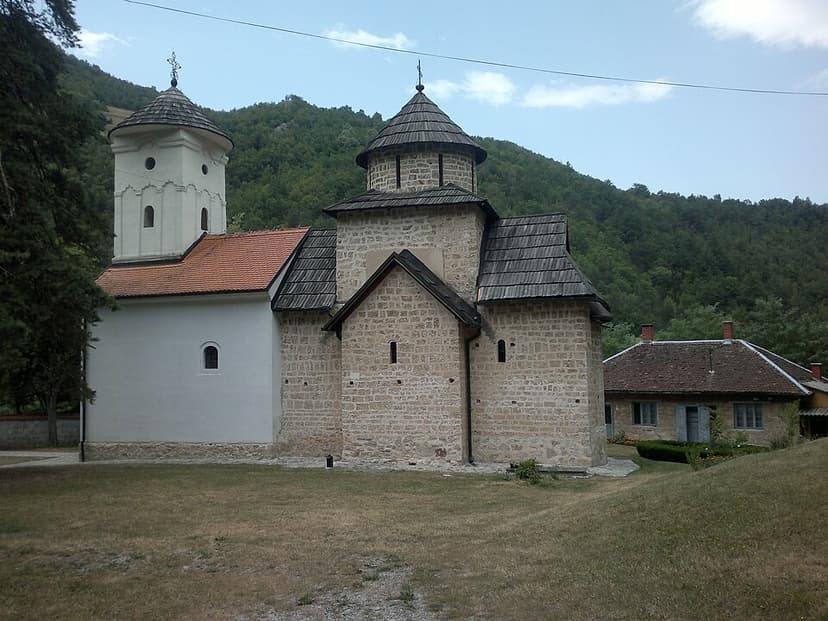
Pustinja Monastery is a Serbian Orthodox monastery located in Poćuta near Valjevo, Central Serbia. While local legends attribute its founding to King Saint Stefan Dragutin in the 13th century, scientific research indicates its construction was completed in 1622 on the foundations of an older 11th-century monastery. The monastery is noted for its architecture, belonging to the Raška architectural school.

Duži Monastery
Duži Monastery, dedicated to the Intercession of the Theotokos, is a Serbian Orthodox monastery situated in Popovo Polje, near the Adriatic coast and west of Trebinje in Bosnia and Herzegovina. First mentioned in 1694 as a refuge for monks fleeing conflict, it briefly served as the seat of the Eparchy of Hum. The monastery has a history of supporting Serb uprisings against the Ottomans, enduring damage and looting, and later hosted Russian monks after the October Revolution, who adorned the church with frescoes. Despite periods of disrepair and military occupation, it was restored by nuns starting in 1959 and today engages in beekeeping and agricultural production.
Gomirje Monastery
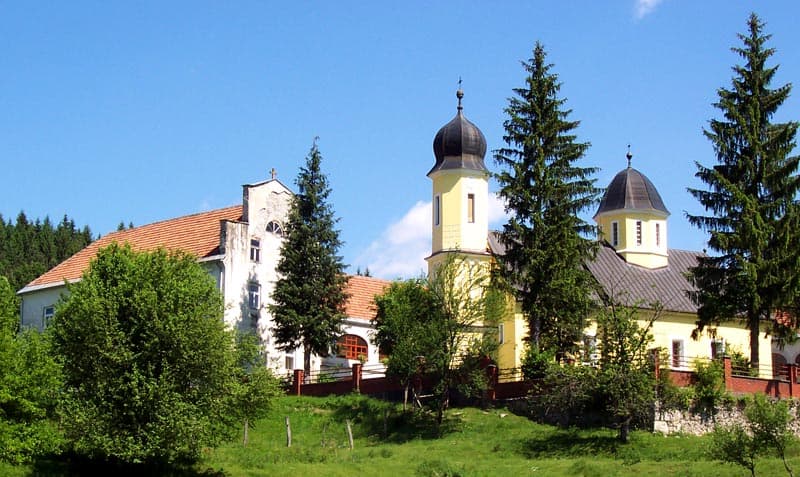
Gomirje Monastery is the westernmost Serbian Orthodox monastery, located in Croatia near the village of Gomirje. Founded around 1600, it has a history marked by struggles for land rights, resistance to Uniatism, and devastation during wartime. The monastery complex includes a stone church built in the 18th century and has undergone periods of rebuilding and reopening.