
Gomirje Monastery
Gomirje Monastery is the westernmost Serbian Orthodox monastery, located in Croatia near the village of Gomirje. Founded around 1600, it has a history marked by struggles for land rights, resistance to Uniatism, and devastation during wartime. The monastery complex includes a stone church built in the 18th century and has undergone periods of rebuilding and reopening.
Key Facts
- ›Considered the westernmost Serbian Orthodox monastery.
- ›Thought to have been founded in the year 1600.
- ›The church of Roždenije Saint John the Baptist was built in 1719 and completed in 1730.
- ›Monks from Gomirje provided religious services to surrounding Serbian settlements.
- ›Resisted Uniatist efforts by the Roman Catholic Church in the late 17th century.
- ›The monastery complex was burned in 1943 during World War II and reopened in 1967.
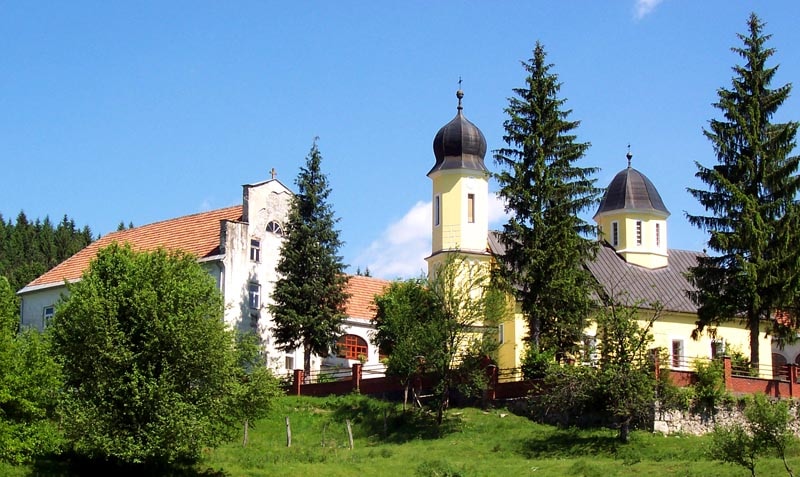
Church of RožDenije Saint John the Baptist, Monastery Garden
Manastir Gomirje
Juraj Frankopan, Vuk Ii Krsto Frankopan, Auxentios Branković, Bessarion VučKović, Mardarios Orlović, Archduke Ferdinand, Leopold I, Pavle ZoričIć, Danilo JakšIć, Josif RajačIć, Sava Mrkalj, Ivan Mikan, Nektarije Dazgić
- Grant of Land By Juraj Frankopan To Serb Refugees
- Construction of the First Wooden Chapel
- Conflict With Frankopan Family Over Serfdom Vs. Grenzer Rights
- Settlers Move To Slavonian Military Frontier, Leaving 40 Families
- Vuk Ii Krsto Frankopan Erects Observation Tower
- Settlers Redeem Land Rights
- Confirmation of Land Grant By Holy Roman Emperor Leopold I
- Resistance To Uniatism and Monk Imprisonment
- Expulsion of Gomirje Monks From žUmberak Mountains
- Devastation By Fires and Rebuilding
- Monastery Used As A Concentration Camp For Serbian Orthodox Priests
- Plunder and Burning of the Monastery Complex By UstašE
- Reopening of the Monastery
About Gomirje Monastery
Overview
Gomirje Monastery, also known as Manastir Gomirje, stands as the westernmost Serbian Orthodox monastery, situated in the western part of Croatia near the village of Gomirje and the town of Ogulin. Its origins are tied to the significant settlement of Serb refugees from areas under Ottoman control into depopulated villages, a process that began in the late 16th and early 17th centuries. The monastery's establishment is generally dated to around 1600, with historical accounts suggesting either a group of monks laying the foundation stone in 1601 or settlers constructing a small wooden chapel for an arriving monk between 1600 and 1602.
History and Significance
The early years of Gomirje Monastery were marked by complex negotiations and conflicts with the Frankopan noble family, who initially granted land rights to the settlers but later sought to impose serfdom. The settlers, seeking the status of 'Frontiersmen' or 'Grenzer' within the Croatian Military Frontier, appealed for protection and eventually secured their land rights through a redemption agreement in 1657, confirmed by Emperor Leopold I.
Throughout its history, Gomirje Monastery played a crucial role in serving the spiritual needs of surrounding Serbian Orthodox communities, extending its pastoral care to numerous villages. It also became a site of resistance against the Roman Catholic Church's Uniatist efforts in the late 17th century, an action that led to the imprisonment and harsh treatment of some of its monks. The monastery faced further trials, including devastation by fires in 1789 and subsequent rebuilding, and was tragically burned in 1943 during World War II by the Ustaše regime, which also arrested and persecuted its monks.
Architectural and Operational Details
The monastery's church, dedicated to the Nativity of Saint John the Baptist, was constructed in stone between 1719 and 1730, replacing an earlier wooden structure. The monastery library and collections were professionally organized in 1938. Despite periods of destruction and closure, Gomirje Monastery was reopened in 1967 and continues to function as an active monastic community. Its garden, dating from the latter half of the 20th century, adds to the monastic complex.
Source: Wikipedia ↗
Frequently Asked Questions
When was Gomirje Monastery founded?
Gomirje Monastery is thought to have been founded in the year 1600. The initial settlement of Serbs in the Gomirje area, which led to the monastery's establishment, occurred at the end of the 16th and the beginning of the 17th century.
What is the significance of Gomirje Monastery being the westernmost Serbian Orthodox monastery?
Its location in western Croatia makes Gomirje Monastery a significant outpost for Serbian Orthodoxy in a region where it is less prevalent. This position has historically placed it at the forefront of interactions and sometimes conflicts with other religious and political entities.
What challenges has Gomirje Monastery faced throughout its history?
Gomirje Monastery has encountered several challenges, including conflicts with landowners over rights, intense pressure to convert to Uniatism, and significant destruction during World War II. The monastery has also been rebuilt and reopened after periods of devastation.
What is the main church at Gomirje Monastery?
The main church at Gomirje Monastery is dedicated to the Nativity of Saint John the Baptist. The current stone church replaced an earlier wooden structure and was constructed between 1719 and 1730.
What happened to the monastery during World War II?
During World War II, the Ustaše government of the Independent State of Croatia arrested monks and took valuable possessions to Zagreb. The monastery complex itself was burned in 1943.
Related Monasteries

Krupa Monastery
Krupa Monastery is a 17th-century Serbian Orthodox monastery situated on the Krupa river in Croatia, recognized as one of the oldest Eastern Orthodox monasteries in the region. Despite folk traditions suggesting earlier foundations, its current structure, including Gothic-style windows, points to a probable construction around 1642 by immigrating monks. The monastery has been a site of artistic creation and intellectual activity, housing significant frescoes, icons, and serving as a residence for notable Serbian writers and educators.

Dalmatinska Lazarica Monastery
The Holy Lazarica Monastery, also known as Dalmatinska Lazarica, is a Serbian Orthodox monastery located near Knin, Croatia. Construction began in 1874 and was completed in 1889. The monastery is dedicated to Prince Lazar of Serbia, a significant figure in Serbian history.
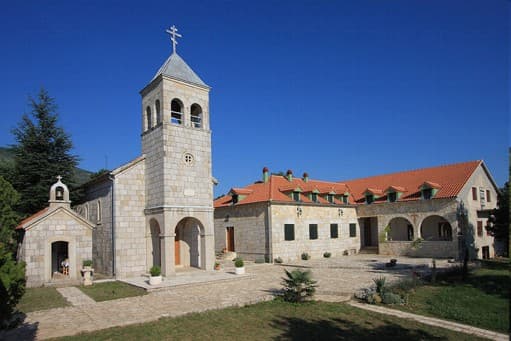
Dragović Monastery
Dragović Monastery is a Serbian Orthodox monastery located near Vrlika in Croatia. Originally founded in the late 14th century, it has been destroyed and rebuilt multiple times throughout its history, most notably after its original site was submerged by the creation of Peruća Lake. Today, it is an active spiritual center for Serbs in Dalmatia, known for its treasury of historical manuscripts and religious artifacts.