
Darley Priory
Augustinian·England·Ruins (monastic buildings)·12th century
Darley Abbey was the site of an Augustinian monastery founded around 1160. Though it faced periods of poverty and was dissolved in 1538, remnants of its monastic past survive, most notably the Abbey Pub and a portion of a private dwelling. The area later developed into a significant industrial mill village, now recognized as part of the Derwent Valley Mills World Heritage Site.
Key Facts
- ›Founded around 1160 as an Augustinian monastery.
- ›Received numerous donations and held significant land and advowsons.
- ›Suffered periods of poverty and accusations of mismanagement by its abbot.
- ›Dissolved on October 22, 1538.
- ›Two buildings from the monastic period remain: the Abbey Pub and part of a private dwelling.
- ›The area is now part of the Derwent Valley Mills World Heritage Site.

the Abbey Pub, Part of A Private Dwelling, Darley Abbey Mills
Darley Abbey
Robert De Ferrers, 2nd Earl of Derby, Hugh, Rural Dean of Derby, Ralph, Son of Ralph De Wistanton, James Tuchet, 5th Baron Audley
- Donation By Robert De Ferrers In 1154
- Donation of Land By Hugh Around 1160
- Receiving Numerous Donations From Burgesses of Derby
- Case of Ralph De Wistanton Donating Possessions To Avoid Jewish Money-Lenders
- Recorded Income of £72 19s. 3½D. In 1291
- Fell Into Poverty In the Early 14th Century
- Recorded Income of £258 13s. 5d. In 1535
- Surrendered For Dissolution On October 22, 1538
- Burial of James Tuchet, 5th Baron Audley In 1459
About Darley Priory
Darley Abbey
Darley Abbey, located in Derby, England, is a site with a dual historical identity, encompassing both a medieval Augustinian monastery and a significant industrial mill village. The monastery, established around 1160, received numerous donations and played a role in the local economy, though it also experienced periods of poverty before its dissolution in 1538. Today, only fragments of the monastic structures remain, most notably the Grade II* listed Abbey Pub, believed to be part of the Abbot's residence, and a portion of another building that forms part of a private dwelling.
Following the monastic era, the area was transformed into an important industrial center. The development of water-powered mills for various purposes began in the monastic period, but it was in the 18th century that the Evans family established extensive cotton mills. This industrial expansion led to the creation of a planned village for the mill workers, characterized by a series of distinctive terraces and communal buildings. The mills and village are now recognized as part of the Derwent Valley Mills World Heritage Site, acknowledging their importance in the history of industry.
Darley Abbey is now a suburb of Derby, with much of the historic village and mill area designated as a conservation area. The area retains connections to its industrial past through ongoing commercial uses of the former mill buildings and its connection to Darley Park, a significant green space gifted to the city.
Source: Wikipedia ↗
Frequently Asked Questions
When was Darley Abbey founded?
The Augustinian monastery of Darley Abbey was established around 1160. Its initial foundation plans in 1154 did not result in a new monastery due to a lack of a suitable location.
What religious order was associated with Darley Abbey?
Darley Abbey was an Augustinian monastery. It was a daughter establishment to St Helen's Priory in Derby.
What happened to Darley Abbey after its dissolution?
The Abbey was surrendered for dissolution on October 22, 1538. While most of the monastic buildings were lost, two structures from the monastic period still exist today.
Are there any surviving buildings from the monastic period?
Yes, two buildings from the monastic period remain. One is the Abbey Pub (also known as the Abbey Inn), which is thought to have been part of the Abbot's residence. The other survivor is part of a private dwelling on Abbey Lane.
What is the current status of Darley Abbey?
Darley Abbey is now a suburb of Derby, England. It is recognized for its historical significance, particularly its monastic past and its role in the industrial revolution, being part of the Derwent Valley Mills World Heritage Site.
Related Monasteries

Blackmore Priory
Blackmore Priory was an Augustinian priory in Essex, England, established in the second half of the 12th century. It housed a Prior and twelve Canons who served the local parish while leading a monastic life. The priory experienced its peak in the late 14th century but was largely demolished in the 1520s due to the actions of Henry VIII and Cardinal Wolsey, eventually passing into secular hands.
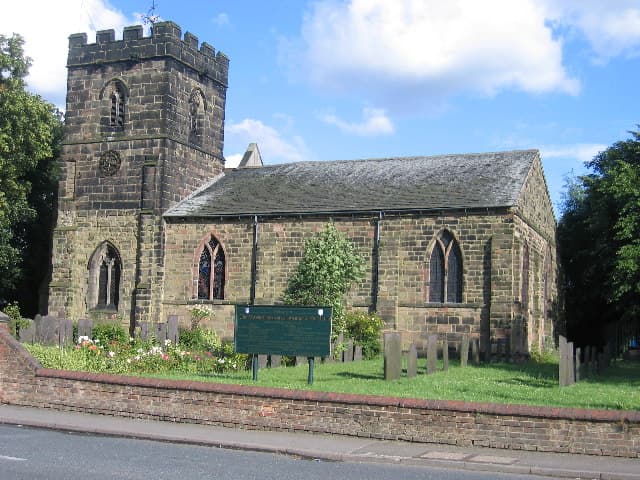
Gresley Priory
Gresley Priory was an Augustinian monastery founded in the 12th century in Church Gresley, Derbyshire, England. It played a significant role in the local community, with the Gresley family retaining influence over its direction for centuries. Following its dissolution in 1536, the priory church became the parish church of St George and St Mary, a role it continues to fulfill today, though much of the original monastic architecture has been lost to later rebuilding.

Lanercost Priory
Lanercost Priory, founded by Robert de Vaux between 1165 and 1174, was an Augustinian priory situated in Cumbria, England. It suffered numerous raids and depredations due to its proximity to the Scottish border, particularly during the Wars of Scottish Independence. Despite its dissolution in 1538, parts of the church remain intact and in use as a parish church, with the priory ruins now managed by English Heritage and open to the public.