
Coverham Abbey
Coverham Abbey was a Premonstratensian monastery located in North Yorkshire, England. Founded in 1190, it experienced a period of destruction by the Scots in the 14th century. Following its dissolution in 1536, the abbey fell into ruin, with significant surviving remains including the church and guesthouse.
Key Facts
- ›Founded in 1190 by Helewisia, daughter of Ranulf de Glanville.
- ›Refounded at Coverham around 1212 by her son, Ranulf fitzralph.
- ›Suffered significant damage from Scottish raids in the first half of the 14th century.
- ›Dissolved in 1536, with its possessions stripped and buildings sold.
- ›The abbey ruins are a Scheduled Ancient Monument and a Grade I listed building.
- ›Notable sculptural remains include two stone effigies of knights.
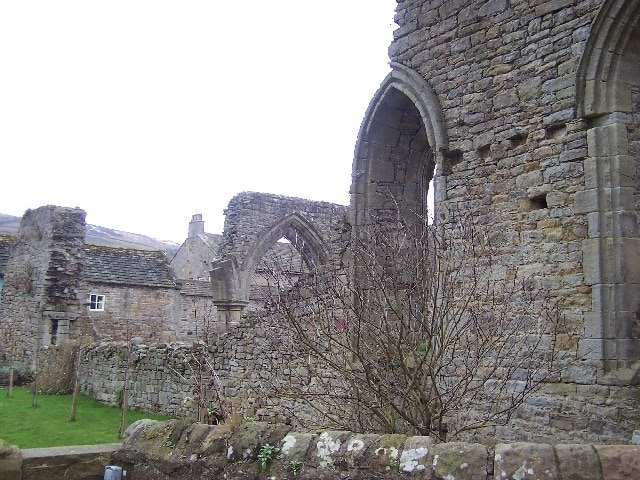
Ruins of the Church, Ruins of the Guesthouse, Ruins of the Gatehouse, Stone Effigies of Knights, Coverham Abbey House
Swainby Abbey
Helewisia, Ranulf De Glanville, Robert, Lord of Middleham, Ranulf Fitzralph, Edward Loftus, Adam Loftus, William Blytheman, Thomas Wraye, Humphrey Orme, Geoffrey Le Scrope, Ivetta De Ros, Ralph Neville, 1st Baron Neville De Raby, Ranulph Neville, 1st Baron Neville
- Founded At Swainby In 1190
- Refounded At Coverham About 1212
- Attacked By Scots In the First Half of the 14th Century
- Dissolution In 1536
About Coverham Abbey
Coverham Abbey was a Premonstratensian monastery situated in North Yorkshire, England. Its history began in 1190 when it was founded at Swainby by Helewisia, daughter of the Chief Justiciar Ranulf de Glanville. The monastery was later refounded at Coverham around 1212 by her son, Ranulf fitzRalph, who had his mother's remains reinterred in the chapter house there.
During the first half of the 14th century, the abbey and its estates are believed to have been attacked by the Scots, resulting in the abbey itself being virtually destroyed. By the later part of that century, records indicate a community of fifteen canons and the abbot in residence.
The abbey met its end with the Dissolution of the Monasteries. In the early months of 1536, inspectors were sent to the abbey to assess its possessions. By April of that year, the Abbot had been granted a pension, the monks were offered the chance to renounce their vows, and the monastery was stripped of all its valuables, including silver plate, gold, brass bells, and lead from the roofs. The remaining structures were sold to Humphrey Orme twenty years later, and the abbey rapidly fell into ruin.
Surviving Remains
The principal surviving remains of Coverham Abbey are a Scheduled Ancient Monument and a Grade I listed building. These include the ruins of the church and the guesthouse. The guesthouse was incorporated into two houses, with one later replaced by Coverham Abbey House in the late 18th century, which still retains surviving monastic architectural features. The ruins of the gatehouse, consisting of an archway and flanking buildings, also survive at the entrance to the abbey grounds.
Significant sculptural remains are preserved, notably two stone effigies of knights set against a garden wall at Coverham Abbey House. The earlier effigy depicts a knight in chain mail, while the later one, from the early 14th century, shows a knight with a scene of a stag hunt behind him.
Access and Associated Figures
The site of Coverham Abbey is generally inaccessible to the public, though glimpses can be obtained from the churchyard of the nearby redundant medieval parish church, Holy Trinity Church, Coverham. The exterior of the abbey and its grounds were notably used as a filming location for the BBC television series "All Creatures Great and Small."
Several notable figures are associated with the abbey through burials, including Geoffrey le Scrope and his wife Ivetta De Ros, as well as Ralph Neville, 1st Baron Neville de Raby, and Ranulph Neville, 1st Baron Neville.
Source: Wikipedia ↗
Frequently Asked Questions
When was Coverham Abbey founded?
Coverham Abbey was founded in 1190 by Helewisia, daughter of Ranulf de Glanville. It was later refounded at Coverham around 1212 by her son, Ranulf fitzRalph.
What religious order was Coverham Abbey a part of?
Coverham Abbey belonged to the Premonstratensian order, also known as the Canons Regular of Prémontré.
What happened to Coverham Abbey after its dissolution?
Coverham Abbey was dissolved in 1536. Its valuable possessions were removed, and what remained was sold, leading to the abbey's rapid decline into ruin.
What are the main surviving remains of Coverham Abbey?
The principal surviving remains include the ruins of the church and the guesthouse. Parts of these ruins have been incorporated into later buildings, such as Coverham Abbey House.
Can I visit the ruins of Coverham Abbey?
The site of Coverham Abbey is usually inaccessible to the public. However, some of its exterior and grounds can be glimpsed from the churchyard of the nearby Holy Trinity Church, Coverham.
Are there any notable burials at Coverham Abbey?
Yes, notable burials at Coverham Abbey include Geoffrey le Scrope and his wife Ivetta De Ros, as well as Ralph Neville, 1st Baron Neville de Raby, and Ranulph Neville, 1st Baron Neville.
Related Monasteries
Aldgate Priory
Holy Trinity Priory, also known as Christchurch Aldgate, was an Augustinian priory founded around 1108 by Queen Matilda of Scotland near Aldgate in London. It held significant ties to English royalty, with several queens maintaining a close relationship with the priory and some royal children buried there. The priory was a center of learning in the 12th century and played a role in civic life, with its prior serving as an Alderman of London. It was dissolved in 1532 and its buildings have since been largely lost, with only remnants surviving.

Ankerwycke Priory
Ankerwycke Priory was a small and relatively poor Benedictine nunnery established around 1160 in Buckinghamshire, England. Dedicated to St. Mary Magdalene, it held lands across several counties. Dissolved in 1536, its revenues were transferred to Bisham Abbey, and the priory site later saw the construction of a manor house. Today, only a small section of ruins remains, situated in Berkshire.

Arthington Priory
Arthington Priory was an English monastery for nuns of the Cluniac congregation, located in Arthington, West Yorkshire, and founded in the mid-12th century. It was one of only two Cluniac nunneries in England. The priory experienced periods of disciplinary issues among its nuns and prioresses, as documented by Archbishop William Greenfield's visits and injunctions. Following the Dissolution of the Monasteries under Henry VIII, the priory was surrendered in 1540, and its lands were eventually granted to Archbishop Thomas Cranmer. Today, little remains of the original priory structures, with a residence known as Arthington Hall built on the site around 1585, and the priory church potentially occupied by a farmhouse named The Nunnery.