
Chepstow Priory
Christian·United Kingdom·Parish church (partially historic priory)·11th century
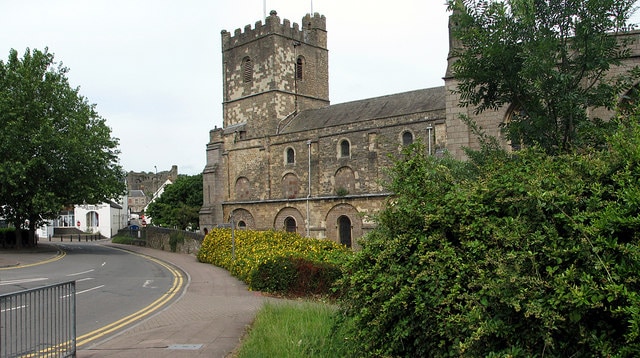
Chepstow Priory, officially the Parish and Priory Church of St Mary, is a historic Benedictine monastery located in Chepstow, Monmouthshire, south east Wales. Founded around 1072 by William Fitzosbern, parts of its Norman church, including its ornate west doorway, survive and are contemporary with the nearby Chepstow Castle. Though it likely never housed more than a dozen monks, the priory played a significant role in the development of Chepstow as a market town and port, with its nave serving as the parish church. The priory was suppressed in 1536 during the Dissolution of the Monasteries, leading to the demolition of most of its buildings.
Key Facts
- ›Founded around 1072 by William Fitzosbern as a Benedictine priory.
- ›Parts of the church, including its west doorway, date from the late 11th century.
- ›Originally established as a monastic cell to collect rent for lands granted to Cormeilles Abbey in Normandy.
- ›By the early 12th century, it held the status of an alien priory, likely never exceeding 12 monks.
- ›The nave was used as the parish church during the medieval period.
- ›Suppressed in 1536 during the Dissolution of the Monasteries; most buildings were demolished.
Norman, Rustic Classical Idiom, Gothic Revival
- Ornate West Doorway With Zigzag and Lozenge Patterns
- Surviving Norman Piers and Nave
- 17th-Century Organ With Early Pipework
- Eight Bells Dating From 1735
- Tomb of Henry Marten, Signatory To King Charles I's Death Warrant
Parish and Priory Church of St Mary
William Fitzosbern, Roger De Breteuil, John De Hemmyngburg, Henry Somerset, 2nd Earl of Worcester, Margaret Cleyton, Henry Marten, Edward Copleston, John Davies
- Founded As A Benedictine Priory
- Became An Alien Priory In Its Own Right
- Nave Used As Parish Church
- Became Detached From Cormeilles During the Hundred Years' War
- Suppressed During the Dissolution of the Monasteries
- Central Tower Collapsed In A Storm
- New Tower Completed
- Aisles Removed, Eastern End Rebuilt
- Restoration of Norman Character of Nave Begun But Abandoned
- Designated Grade I Listed Building
About Chepstow Priory
The Parish and Priory Church of St Mary, commonly known as Chepstow Priory, is a historic ecclesiastical site located in Chepstow, Monmouthshire, in south east Wales. Its origins trace back to around 1072 when it was founded as a Benedictine priory by William FitzOsbern, a key supporter of William the Conqueror. FitzOsbern established the priory on a ridge overlooking the River Wye, close to the Norman castle he also commissioned. The priory served as a monastic cell for Cormeilles Abbey in Normandy, primarily to manage lands granted to the French house.
By the early 12th century, Chepstow Priory had gained the status of an 'alien priory' in its own right, though its monastic community was small, likely never exceeding twelve monks. During the medieval period, as Chepstow developed into a market town and port, the nave of the priory church was adapted for use as the parish church. This arrangement persisted, with the nave continuing to serve the local population. The priory's monastic buildings, including the choir, cloister, chapter house, lodgings, and kitchens, were largely demolished following its suppression in 1536 during the Dissolution of the Monasteries.
Architectural History
While most of the priory structures are gone, significant portions of the original Norman church remain. These include the nave and a particularly ornate west doorway, dating from the late 11th and early 12th centuries, characterized by zigzag and lozenge patterns. The building's history is marked by numerous alterations and additions over the centuries. The central tower of the original church collapsed in a storm in 1701, leading to the construction of a new western tower in a 'rustic classical idiom' completed in 1706. Further modifications in 1841 involved the rebuilding of the eastern end, crossing, and transepts, while efforts to restore the Norman character of the nave between 1890 and 1913 were left unfinished. These successive modifications have resulted in a building described as "an extraordinarily disjointed building" architecturally, showcasing a blend of styles.
Notable Features and Later History
The church contains several notable features, including two fonts, one of Norman origin and another from the 15th century. It houses significant tombs and memorials, such as those of Henry Somerset, 2nd Earl of Worcester, and Margaret Cleyton. Notably, it also contains the memorial of Henry Marten, a signatory to King Charles I's death warrant, who was imprisoned in Chepstow Castle. The church boasts an 18th-century organ with early 17th-century pipework, originally made for Gloucester Cathedral, and eight bells cast in 1735 by William Evans. The church was designated a Grade I listed building on 12 June 1950, recognizing its historical and architectural importance.
Source: Wikipedia ↗
Frequently Asked Questions
When was Chepstow Priory founded?
Chepstow Priory was founded around 1072. It was established by William FitzOsbern, who was granted the Lordship of Striguil by King William I.
What religious order was Chepstow Priory part of?
Chepstow Priory was a Benedictine priory. It was founded as a monastic cell for Cormeilles Abbey in Normandy.
What remains of the original priory buildings?
Parts of the original Norman church remain, including its nave and a notably ornamented west entrance doorway. However, most of the priory buildings, such as the choir, cloister, chapter house, lodgings, and kitchens, were demolished after the Dissolution of the Monasteries.
What happened to Chepstow Priory during the Dissolution of the Monasteries?
Chepstow Priory was suppressed in 1536 during the English Reformation. At that time, three monks were in residence. Most of the priory's buildings were subsequently demolished.
Is Chepstow Priory still an active monastery?
The original priory is no longer an active monastic community. The surviving church building is now the Parish Church of St Mary.
What is the architectural significance of Chepstow Priory?
The priory church contains surviving parts of late 11th-century Norman architecture, including an ornate west doorway. However, the building has been significantly modified over centuries, incorporating various architectural styles, resulting in a disjointed appearance.
Related Monasteries

Bromley-by-Bow Priory
Bromley-by-Bow is a district in East London with a history stretching back to at least the year 1000, when it was a manor belonging to St Paul's Cathedral. It was historically known as Bromley and later Bromley-by-Bow to distinguish it from other places named Bromley. The area was once home to St Leonard's Priory, a Benedictine nunnery, and later saw the construction of royal palaces and significant industrial development. Despite losing many historic buildings, it remains a vibrant community with ongoing redevelopment and a notable connection to Mahatma Gandhi's 1931 visit.

Colchester — St John's Abbey
Colchester — St John's Abbey was a Benedictine monastic institution founded in 1095 by Eudo Dapifer and dissolved in 1539. Situated in Colchester, Essex, it played a significant role in the town's medieval history, experiencing periods of prosperity, conflict with townspeople and other religious houses, and internal discipline issues. Following its dissolution, most of the abbey was demolished, with only the gatehouse substantially surviving, while the abbey church's foundations were rediscovered in 2010.

Hurley Priory
Hurley Priory was a Benedictine priory founded in 1086 as a cell of Westminster Abbey by Geoffrey de Mandeville I. It was suppressed by Henry VIII in 1536 and its monastic community dispersed. Today, the priory's remains are integrated into the village of Hurley, Berkshire, with its former church serving as the parish church and other structures adapted for private residences and an inn.