
Cambrai
Cambrai is a historic city in northern France, situated on the Scheldt River. It rose to prominence in the Merovingian era as the seat of a vast archdiocese and later became a church principality within the Holy Roman Empire. The city experienced periods of prosperity due to its textile industry and its strategic importance, but also suffered significant destruction during World War I and World War II, leading to extensive reconstruction.
Key Facts
- ›Replaced Bavay as the 'capital' of the land of the Nervii towards the end of the Roman Empire.
- ›Became the seat of an immense archdiocese in the Merovingian era, later a church principality within the Holy Roman Empire.
- ›Renowned for its musical history, particularly in the 15th century, with many composers associated with its cathedral.
- ›Site of important international negotiations, including the League of Cambrai and the Paix des Dames.
- ›Suffered significant destruction during the First Battle of Cambrai in World War I, notable for the first mass use of tanks.
- ›Annexed by France in 1677 following a siege by Louis XIV.

Scheldt River, Chalk Bedrock, Network of Cellars, Tunnels, and Quarries, Canal De L'Escaut, HôTel De Ville
Cambray, Camerick, Camericke, Kimbré, Kamerijk
FéNelon, Clodio the Long-Haired, Clovis, Gaugericus, Otto I, Henry Ii, BéRenger, Philippe De Luxembourg, Guillaume Dufay, Nicolas Malin, Richard Loqueville, Johannes Tinctoris, Ockeghem, Nicolas Grenon, Alexander Agricola, Jacob Obrecht, Philippe De Monte, Johannes Lupi, Jacobus De Kerle, Pope Julius Ii, Joseph Le Bon, FrançOis Iii Maximilien De La Woestyne, Duke of Wellington, Louis Xiv, Marquis De Cesen, Henri De Lorraine-Harcourt, Vicomte De Turenne, Condé, Mazarin, Pierre Leprince-Ringuet, Raymond Gernez
- Salian Franks Under Clodio Took the Town
- Normans Destroyed the Town
- Magyars Besieged Cambrai
- Communal Uprising Against Bishop BéRenger
- League of Cambrai Formed
- Treaty of Cambrai
- Paix Des Dames Negotiations
- Taken By the Spanish In French Wars of Religion
- Community of English Benedictine Nuns Founded
- Annexation By France
- Siege and Surrender To French Troops
- French Revolution and Period of Terror Under Joseph Le Bon
- Demolition of Religious Buildings During the Revolution
- Duke of Wellington's Headquarters
- German Occupation and First Battle of Cambrai
- Germans Burned City Center Before Leaving
- German Occupation and Bombing During World War Ii
- Allied Air Raids
- Reconstruction Efforts Post-World War Ii
About Cambrai
Cambrai is a historic city located in the Nord department of the Hauts-de-France region in northern France, situated on the Scheldt River, locally known as the Escaut. Its history stretches back to Roman times, when it replaced Bavay as the principal town of the Nervii. In the early Merovingian period, Cambrai became the seat of a significant archdiocese and an ecclesiastical principality, holding some secular power and owing allegiance to the Holy Roman Empire until its annexation by France in 1678.
Historical Significance and Development
The city's strategic location and the fertile surrounding lands contributed to its prosperity in the Middle Ages, largely driven by its textile industry, which produced woolens, linen, and cambric. Cambrai also developed a notable musical heritage, particularly in the 15th century, with its cathedral serving as a vital musical hub. The city has been a site for significant international diplomacy, hosting negotiations for treaties such as the League of Cambrai and the Paix des Dames.
Despite periods of growth and cultural flourishing, Cambrai has also endured considerable hardship. It was occupied by German forces during both World Wars, suffering significant destruction, most notably during the First Battle of Cambrai in 1917, which is recognized as the first mass use of tanks in warfare. Following extensive damage, the city underwent substantial reconstruction in the post-war periods, leading to its modern urban landscape while preserving its rich monumental heritage.
Source: Wikipedia ↗
Frequently Asked Questions
When was Cambrai first mentioned in historical records?
Cambrai, known to the Romans as Camaracum or Camaraco, is first mentioned on the Peutinger table in the middle of the 4th century. It became a significant town in the Roman province of the Nervii.
What was Cambrai's role in the early Middle Ages?
During the Merovingian era, Cambrai became the seat of a large archdiocese and an administrative center. Successive bishops founded abbeys and churches, contributing to its growth into a city.
What is Cambrai known for musically?
Cambrai has a distinguished musical history, especially in the 15th century. Its cathedral was a major musical center, and many composers of the Burgundian School were associated with it, including Guillaume Dufay.
What significant historical negotiations took place in Cambrai?
Cambrai was the venue for several international negotiations. These include the League of Cambrai in 1508 and the Paix des Dames in 1529, which significantly impacted regional conflicts.
What was the significance of the Battle of Cambrai in World War I?
The First Battle of Cambrai, fought in 1917, is significant for being the first large-scale use of tanks in battle. The fighting around the town resulted in partial destruction.
When was Cambrai annexed by France?
Cambrai was annexed by France in 1677 after a siege led by Louis XIV. The city surrendered on April 5th of that year.
Related Monasteries

Abbey of Saint-Germain-des-Prés
The Abbey of Saint-Germain-des-Prés, originally a Benedictine abbey founded in 558, is one of the oldest churches in Paris. It served as a significant center for scholarship, producing illuminated manuscripts, and was a royal necropolis. Despite destruction by Vikings and damage during the French Revolution, the church has undergone numerous rebuilds and restorations, incorporating Romanesque, Gothic, and later decorative styles, and remains an active Catholic parish church.
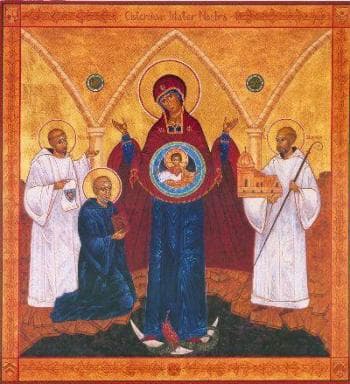
Bernardine Cistercians of Esquermes
The Bernardine Cistercians of Esquermes are a distinct branch of the Cistercian Order, adhering to the Rule of St. Benedict and actively engaged in the Catholic Church's mission through education and hospitality. Originating from three suppressed abbeys following the French Revolution, the order was re-established by determined sisters in Esquermes, near Lille, in 1799. Today, eight monasteries in six countries form this united community, continuing their spiritual life and apostolates.

Blessed Sacrament Fathers
The Congregation of the Blessed Sacrament, also known as the Sacramentinos, is a Catholic clerical religious congregation for men founded by Peter Julian Eymard in Paris, France, on May 13, 1856. The congregation's mission centers on fostering Christian communities where the Eucharist is the core of life, collaborating with lay individuals in various ministries. Members are dedicated to making Christ in the Eucharist better known and loved through prayer and apostolic life, striving for a more just and brotherly world.