
Calder Abbey
Calder Abbey was a Savigniac monastery founded in 1134, later becoming Cistercian in 1148. It suffered significant destruction during Scottish raids and was dissolved in 1536. Today, it exists as a picturesque ruin, with parts of its claustral buildings incorporated into a private residence, and its grounds are not open to the public.
Key Facts
- ›Founded in 1134 by Ranulph de Gernon, 2nd Earl of Chester.
- ›Originally a Savigniac monastery, it became Cistercian in 1148.
- ›Suffered significant damage from Scottish raids in the 12th, 13th, and 14th centuries.
- ›Dissolved in 1536, with its roof and fittings sold off.
- ›Remains are considered a picturesque ruin, with parts of the claustral buildings integrated into a private house.
- ›The Monk's Bridge, built by the monks, is the oldest packhorse bridge in Cumbria.
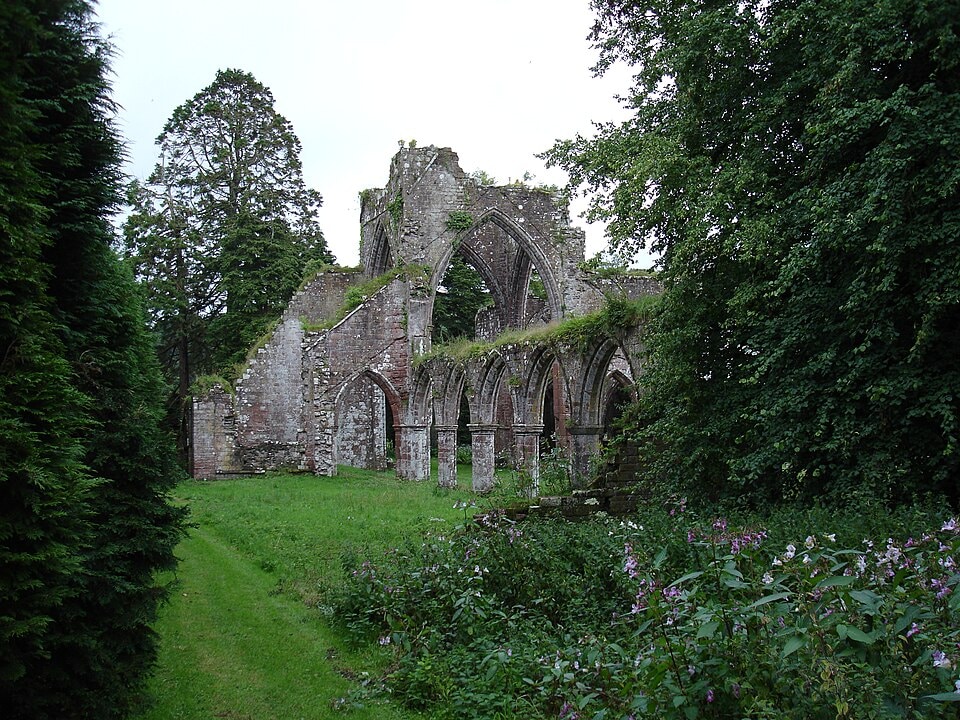
Early English Gothic, 13th Century
West Door, Arches Supporting the Central Tower, South Transept, North Arcade of the Nave, Chapter House, East Range of Claustral Buildings, Monk's Bridge
Ranulph De Gernon, 2nd Earl of Chester, Gerold, Hardred, Thomas De Multon of Egremont, Richard Ponsonby, Sir Thomas Leigh
- Scottish Raids In the 12th, 13th, and 14th Centuries
- Amalgamation of Savigniac and Cistercian Orders
- Dissolution of the Monasteries
About Calder Abbey
Calder Abbey, located near the village of Calderbridge in Cumbria, England, was a significant religious institution with a history marked by foundation, destruction, and eventual ruin. Originally established in 1134 as a Savigniac monastery, it transitioned to the Cistercian order in 1148. The abbey's early years were turbulent, including a period of abandonment and refoundation due to Scottish raids and political instability.
History and Development
Founded by Ranulph de Gernon, 2nd Earl of Chester, the initial wooden structure housed twelve Savigniac monks. However, within four years, Scottish raiders despoiled the abbey, leading the monks to abandon the site. After a period of wandering and a dispute over jurisdiction with Furness Abbey, the monks were released in 1142 and a second attempt at colonisation was made at Calder under Abbot Hardred, with protection from Fitz Duncan. The order officially became Cistercian in 1148, a change Calder Abbey followed.
By 1180, a stone church was constructed, with its west door being a notable surviving element. Much of the abbey was rebuilt in the early 13th century in the Early English style. Despite these developments, Calder Abbey faced further hardship from wars between England and Scotland, experiencing raids in 1216 and 1332, which significantly reduced its community.
Dissolution and Post-Reformation Era
By 1535, the abbey's annual net income was a modest £50. An unfavorable report was made by the King's commissioners, and in 1536, the abbey was surrendered by the last abbot, Richard Ponsonby, and nine monks during the Dissolution of the Monasteries. Henry VIII subsequently granted the abbey to Sir Thomas Leigh, who dismantled the roof and sold off valuable materials, reducing the church to a ruin.
Remains and Legacy
Today, Calder Abbey exists as a picturesque ruin. Parts of the south and east ranges of the claustral buildings have been incorporated into Calder Abbey House, a private residence dating primarily from the early 19th century. Other sections of the abbey were intentionally retained as ornamental features by the mansion's early residents. The abbey and grounds are private and not accessible to the public, with new trees obscuring views from the surrounding landscape. The Monk's Bridge, an ancient packhorse bridge built by the monks, stands as a testament to their engineering skills and remains the oldest of its kind in Cumbria and is still in use.
Source: Wikipedia ↗
Frequently Asked Questions
When was Calder Abbey founded?
Calder Abbey was founded on January 10, 1134. It was initially a Savigniac monastery before becoming Cistercian.
What happened to Calder Abbey after its dissolution?
After its dissolution in 1536, Henry VIII granted the abbey to Sir Thomas Leigh, who stripped it of its roof and fittings, reducing the church to a ruin. Ownership has since passed through various secular hands.
Can I visit Calder Abbey?
No, the Abbey and its grounds are private and not open to the public. New trees also obscure much of the view from the surrounding land.
What remains of Calder Abbey today?
Ruins of the largely 13th-century church and claustral buildings still stand. Notable surviving portions include the west door, parts of the transepts, and arches supporting the central tower.
Is the Monk's Bridge associated with Calder Abbey still accessible?
Yes, the Monk's Bridge, built by the monks of Calder, is still in use today and is open to the public. It is considered the oldest packhorse bridge in Cumbria.
Related Monasteries
Aldgate Priory
Holy Trinity Priory, also known as Christchurch Aldgate, was an Augustinian priory founded around 1108 by Queen Matilda of Scotland near Aldgate in London. It held significant ties to English royalty, with several queens maintaining a close relationship with the priory and some royal children buried there. The priory was a center of learning in the 12th century and played a role in civic life, with its prior serving as an Alderman of London. It was dissolved in 1532 and its buildings have since been largely lost, with only remnants surviving.

Ankerwycke Priory
Ankerwycke Priory was a small and relatively poor Benedictine nunnery established around 1160 in Buckinghamshire, England. Dedicated to St. Mary Magdalene, it held lands across several counties. Dissolved in 1536, its revenues were transferred to Bisham Abbey, and the priory site later saw the construction of a manor house. Today, only a small section of ruins remains, situated in Berkshire.

Arthington Priory
Arthington Priory was an English monastery for nuns of the Cluniac congregation, located in Arthington, West Yorkshire, and founded in the mid-12th century. It was one of only two Cluniac nunneries in England. The priory experienced periods of disciplinary issues among its nuns and prioresses, as documented by Archbishop William Greenfield's visits and injunctions. Following the Dissolution of the Monasteries under Henry VIII, the priory was surrendered in 1540, and its lands were eventually granted to Archbishop Thomas Cranmer. Today, little remains of the original priory structures, with a residence known as Arthington Hall built on the site around 1585, and the priory church potentially occupied by a farmhouse named The Nunnery.