
Cadzand
Cadzand is a village in the Dutch province of Zeeland, known for its historical significance during the Hundred Years' War and as a refuge for Huguenot settlers. While the village itself had a population of 790 in 2010, the nearby beach resort of Cadzand-Bad attracts many visitors. Historically, it was part of a secret treaty involving England and France and later became an important stop for Huguenot refugees.
Key Facts
- ›Site of the Battle of Cadzand in 1337.
- ›Mentioned in the Secret Treaty of Dover (1670) between England and France.
- ›Served as a refuge for Huguenot settlers escaping persecution in the late 17th century.
- ›Experienced a significant emigration to the United States in 1847.
- ›Formerly an independent municipality until 1970, later becoming part of the municipality of Sluis.
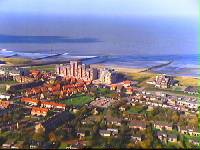
Nearby Beach At Cadzand-Bad, Historical Battle Sites
Jean Harlan, Morel Brothers, Van Houte Brothers, Isaac Lemahieu, Suzanne Morel
Battle of Cadzand, Battle of Margate, Secret Treaty of Dover, Huguenot Refugee Arrivals, Exodus To the United States
About Cadzand
Cadzand is a village situated in the Dutch province of Zeeland, within the municipality of Sluis. It is located approximately eight kilometers northwest of Oostburg and is perhaps better known to visitors for its nearby beach resort, Cadzand-Bad.
Historical Significance
The history of Cadzand is marked by several significant events. It was the scene of two battles during the Hundred Years' War: the Battle of Cadzand in 1337 and the Battle of Margate in 1387. In 1670, Cadzand was mentioned in the Secret Treaty of Dover, where England was to receive possession of the area as a reward for aiding France in a war against the Dutch Republic; however, this treaty was never implemented.
Refuge for Huguenots and Emigration
In 1685, Cadzand served as an important station on the escape route for Jean Harlan, a Huguenot fleeing Calais after the Revocation of the Edict of Nantes. He eventually settled in Germany and founded a successful merchant family. This period also saw other Huguenot refugees from the Calais area arriving in Cadzand, including the Morel brothers and the Van Houte brothers, who helped re-establish their former church. Later, in 1847, a significant exodus of people from Cadzand occurred, with many emigrating to the United States, notably aboard the ship "bark Maria."
Administrative History
Cadzand was an independent municipality until April 1, 1970, when it was annexed by the municipality of Oostburg. In January 2003, following the merger of Sluis-Aardenburg and Oostburg, Cadzand became part of the newly enlarged municipality of Sluis.
Cultural Mentions
In recent years, Cadzand has been recognized in popular culture, with parts of the 2023 Belgian-Flemish television series "Knokke Off" being set on a campsite in the village.
Source: Wikipedia ↗
Frequently Asked Questions
What historical events took place in Cadzand?
Cadzand was the location of two battles during the Hundred Years' War: the Battle of Cadzand in 1337 and the Battle of Margate in 1387. It was also a significant station on the escape route for Huguenot refugees in 1685 following the Revocation of the Edict of Nantes.
What was the significance of Cadzand in the Secret Treaty of Dover?
Under the Secret Treaty of Dover in 1670, England was slated to gain possession of Cadzand and Walcheren as a reward for assisting France in a war against the Dutch Republic. However, this treaty was not implemented due to stronger-than-expected Dutch resistance.
Who were some notable refugees who settled in Cadzand?
In 1685, Jean Harlan, a Huguenot from Calais, escaped to Cadzand and later founded a successful merchant family in Germany. The Morel brothers (Isaac, Jacob, and Pierre) and the Van Houte brothers (Jacob and Isaac) were also prominent Huguenot refugees who settled in Cadzand and helped re-establish their former church.
When did Cadzand cease to be an independent municipality?
Cadzand was an independent municipality until April 1, 1970, when it was annexed by the municipality of Oostburg. It later became part of the enlarged municipality of Sluis in January 2003.
Is Cadzand a popular tourist destination?
The nearby beach at Cadzand-Bad is a well-known attraction for many visitors. The village itself had a population of 790 inhabitants as of 2010.
Related Monasteries

Noordgouwe
Noordgouwe is a village in the Dutch province of Zeeland, now part of the municipality of Schouwen-Duiveland. Historically, it was known for its circular layout around a moated church and was the site of the Carthusian monastery Sion, founded in 1434. Although the monastery was abandoned and demolished during the Reformation, the village church, originally dedicated to the Three Kings' Day, retains its 15th-century tower.

Brezovička
Brezovička is a village and municipality located in the Sabinov District of the Prešov Region in northeastern Slovakia. Historically documented since 1320, the settlement has maintained a predominantly Slovak ethnicity and a strong affiliation with the Roman Catholic Church, as indicated by its religious demographics. The municipality covers an area of nearly 9 square kilometers and had a population of 429 as of December 2025.

Charminster
Charminster is a village and civil parish located in west Dorset, England, situated along the River Cerne. Its name originates from "Cerneminster," referring to the River Cerne and the minster church of St Mary, which later evolved into Charminster. The village is notable as the place of origin for Richard Norman and his family, early planters of the Massachusetts Bay Colony in America.