
Brechin Monastery
Celtic Church·Scotland·Ruins·10th century
Brechin Monastery was a significant Culdee religious house in Angus, Scotland, founded during the reign of Kenneth II (971–995). It served as the "mother church" for the provinces of Angus and Mearns, ministering to local communities. Although no physical structures of the monastery remain today, historical artifacts like the Aldbar Stone and the Mary Stone provide insights into its religious and artistic context, reflecting the transition from the Celtic Church to Augustinian canons.
Key Facts
- ›Founded during the reign of Kenneth II of Scotland (971–995).
- ›Was a Culdee religious house, part of the Celtic Church.
- ›Served as the "mother church" for the provinces of Angus and Mearns.
- ›Known to have had lay abbots who managed secular properties.
- ›Replaced by Augustinian canons in the MID-12th century.
- ›No physical trace of the monastery buildings remains today.
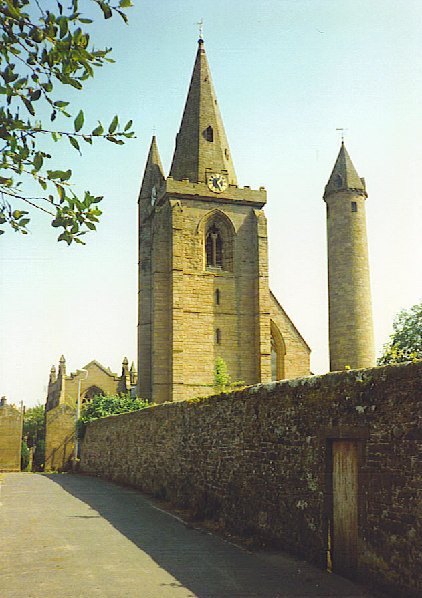
Aldbar Stone, Mary Stone, Hogback Tombstone
Kenneth Ii, Leod of Brechin, Sampson, Son of Leod, Dovenald, John Abbot of Brechin, Morgundus
Danish Raids On Brechin
About Brechin Monastery
Brechin Monastery was a significant Culdee religious house situated in Angus, Scotland, with its establishment dating to the reign of Kenneth II, between 971 and 995. It held considerable importance as the "mother church" for the provinces of Angus and Mearns, serving as a center from which Culdee monks ministered to local communities. The monastery was a part of the Celtic Church tradition, distinct from the Roman Catholic Church.
History and Development
The monastery's founding is linked to the flourishing city of Brechin, which may have been a Pictish center of government. Historical conjectures suggest that following the Picts' conversion to Christianity in 560, Brechin likely became a seat of learning for the Culdees. The establishment was formally dedicated to God, as recorded in the "Chronicle of the Picts." Initially, Brechin Monastery was characterized by its system of lay abbots who managed the institution's secular properties. Surviving records list several abbots from the periods of David I (1124–1153) and William the Lion (1165–1214), with the title "abbot of Brechin" evolving into the surname Abbot.
From the mid-12th century, Scotland underwent a process of "Normanization" under David I, which favored the Roman Church over the Celtic. As part of this shift, the Culdees at Brechin were replaced by a chapter of Augustinian canons. Brechin also gained status as a bishopric during this time. By 1272, the monastery was further converted into a priory of canons regular, and by the 13th century, the prior held a higher rank than the abbot.
Legacy and Artifacts
Today, no physical trace of Brechin Monastery remains. However, its historical significance is preserved through various archaeological finds. Stone fragments and cross slabs discovered over the years, some of which are displayed in the nearby Brechin Cathedral, offer glimpses into the monastery's past. Notable among these are the Aldbar Stone and the Mary Stone, both dating to the 9th or 10th century, which showcase intricate Celtic knotwork, Christian iconography, and inscriptions, reflecting the artistic and religious practices of the era. The hogback tombstone, an 11th-century carving in the Norse Ringerike style, further contributes to the understanding of the region's cultural influences.
Source: Wikipedia ↗
Frequently Asked Questions
When was Brechin Monastery founded?
Brechin Monastery was founded during the reign of Kenneth II, who was king of the Scots from 971 to 995. This places its establishment in the late 10th century.
What religious tradition did Brechin Monastery belong to?
Brechin Monastery was a Culdee religious house, which was part of the Celtic Church. This tradition differed from the later Roman Catholic Church.
What is known about the leadership of Brechin Monastery?
Little is known about its religious leadership, but it was a heritable establishment. Lay abbots managed its secular properties rather than its religious program, with their names surviving from the reigns of David I and William the Lion.
What happened to Brechin Monastery in the 12th century?
From the mid-12th century, King David I began to promote the Roman Church, and he replaced the Culdees at Brechin with a chapter of Augustinian canons. Later, in 1272, it was converted into a priory of canons regular.
Are there any remains of Brechin Monastery today?
No trace of the monastery buildings remains today. However, stone fragments and cross slabs have been discovered over the years and are displayed in the nearby Brechin Cathedral.
Related Monasteries

Bardzrakash Monastery
Bardzrakash Monastery is a 10th-13th century Armenian monastic complex situated on a steep slope in the Lori region of Armenia, overlooking the Marts River. The site features two churches, a vestibule, and an ancestral cemetery, with the oldest surviving structure dating to the 10th century. Despite undergoing renovations, it was listed by the World Monuments Fund in 2014 as a cultural heritage site at risk.

Brogne Abbey
Brogne Abbey, also known as the Abbey of Saint-Gerard of Brogne, was a Benedictine monastery founded in the early 10th century by Gerard of Brogne. Situated in Wallonia, Belgium, it became a significant religious site, particularly known for housing important relics, including a fragment of the True Cross. The abbey was suppressed in 1796 and its former buildings now serve various community and cultural purposes.

Cluny Abbey
Cluny Abbey was a former Benedictine monastery in Cluny, France, founded in 910 and dedicated to Saints Peter and Paul. It became the originating point of the Cluniac Reforms, establishing a vast network of monasteries across Western Europe and serving as a model for monasticism. Largely destroyed during the French Revolution, its Romanesque architectural style and significant influence on European religious and architectural practices are still recognized.