
Béguinages
Christian·Primarily Belgium and Netherlands·Mostly historical sites, some may be museums or repurposed buildings·12th century
Béguinages are architectural complexes established to house beguines, lay religious women who lived communally without taking permanent vows or withdrawing entirely from the world. Emerging from a 12th-13th century religious movement in the Low Countries, these communities provided social, economic, and spiritual support for women, particularly addressing a female demographic surplus and the inability of many to join traditional religious orders or marry. While some were small, informal houses, larger 'court beguinages' in the Low Countries featured central chapels, communal buildings, and were often walled, offering a degree of independence and religious life.
Key Facts
- ›Béguinages housed beguines, lay religious women living in community.
- ›They emerged from a 12th-13th century religious movement in the Low Countries and Rhineland.
- ›Larger 'court beguinages' included central chapels and functional buildings like breweries and bakeries.
- ›These communities offered women religious life, social support, and personal independence.
- ›Many Flemish Béguinages are recognized as UNESCO World Heritage sites.
- ›The institution largely declined and ended in the 19th and 20th centuries.

Central Chapels Or Churches, Communal Housing, Infirmaries, Functional Buildings, Walled Compounds With Gates
Beguinage
- Emergence of Religious Movement In the Low Countries and Rhineland
- Founding of A BéGuinage In Paris By Louis Ix
- Institutional Changes and Increased Supervision During the Counter-Reformation
- Flourishing of Large Urban Beguinages
- Transformation of Rural Communities Into Hospices
- Decline and End of Communities
- Recognition of Flemish BéGuinages As Unesco World Heritage Sites
About Béguinages
Béguinages represent a unique architectural and social phenomenon that emerged in the late Middle Ages, primarily in the Low Countries (modern-day Belgium and the Netherlands). The term 'béguinage' refers to an architectural complex established to house beguines, who were lay religious women committed to a communal spiritual life without undertaking permanent vows or fully withdrawing from the secular world. These communities arose from a broader 12th and 13th-century religious renewal, offering an alternative for women facing demographic surpluses, financial constraints from entering traditional religious orders, or the inability to marry.
History and Structure
The beguine movement provided women with a structured religious life coupled with a degree of personal independence, which was difficult for women to attain at the time. While smaller béguinages might comprise a single dwelling, larger 'court béguinages' developed into substantial complexes. These often featured numerous houses arranged around a central chapel or church, serving as the focal point for religious activities. Furthermore, these larger communities frequently included functional buildings essential for communal living, such as infirmaries, bakeries, breweries, and sometimes even farm buildings. Many of these complexes were enclosed by walls and gates, providing a distinct separation from the surrounding town, though beguines were free to move about during the day.
Significance and Legacy
Béguinages flourished between the 12th and 18th centuries, with most cities and large towns in the Low Countries hosting at least one court béguinage. While they initially offered considerable autonomy, tensions with ecclesiastical authorities and later religious shifts, particularly during the Counter-Reformation, led to increased regulation and supervision. In the 17th and 18th centuries, urban béguinages continued to thrive, while smaller, rural communities often transitioned into hospices for the elderly and poor. The communities gradually declined throughout the 19th and 20th centuries. The enduring architectural and historical importance of these sites is underscored by the recognition of thirteen 'Flemish Béguinages' as UNESCO World Heritage sites in 1998, preserving their legacy as significant examples of medieval women's religious and social organization.
Source: Wikipedia ↗
Frequently Asked Questions
What is a béguinage?
A béguinage is an architectural complex designed to house beguines. Beguines were lay religious women who chose to live in community together, without taking perpetual vows or fully retiring from secular life.
When and where did béguinages originate?
Béguinages began as part of a religious movement in the Low Countries and the Rhineland during the 12th and 13th centuries. They arose in response to various social and economic factors affecting women of the time.
What was the purpose of a béguinage?
Béguinages served to provide a religious life for women who could not or did not wish to join traditional convents or marry. They offered social and economic support, a degree of personal independence, and a structured spiritual community.
What distinguished larger béguinages from smaller ones?
Smaller béguinages might consist of a single house where women lived together. In contrast, the larger 'court beguinages' in the Low Countries were often enclosed complexes with multiple houses around a central chapel, and included communal facilities like infirmaries, bakeries, and breweries.
Are any béguinages recognized as UNESCO World Heritage sites?
Yes, thirteen 'Flemish Béguinages' in Belgium were listed by UNESCO as World Heritage sites in 1998, recognizing their historical and architectural significance.
What happened to the béguinage communities over time?
The communities of beguines saw changes throughout the centuries, with increased supervision in later periods. The institution generally dwindled and came to an end across the 19th and 20th centuries.
Related Monasteries

Fontenay Abbey
The Abbey of Fontenay, founded by Saint Bernard of Clairvaux in 1118, is one of Europe's oldest and most complete Cistercian abbeys. Located in Marmagne, France, it exemplifies Romanesque architecture with its well-preserved original buildings, including the church, dormitory, cloister, and chapter house. Recognized as a UNESCO World Heritage Site in 1981, Fontenay Abbey provides an exceptional glimpse into 12th-century Cistercian monastic life and architecture.

Fountains Abbey
Fountains Abbey is a ruined Cistercian monastery located near Ripon in North Yorkshire, England, founded in 1132. Over four centuries, it grew into one of England's wealthiest abbeys due to extensive landholdings, but was dissolved in 1539 during the English Reformation. Now part of Studley Royal Park, it is renowned for its well-preserved ruins, described as "the finest picturesque ruin," and is a UNESCO World Heritage Site.
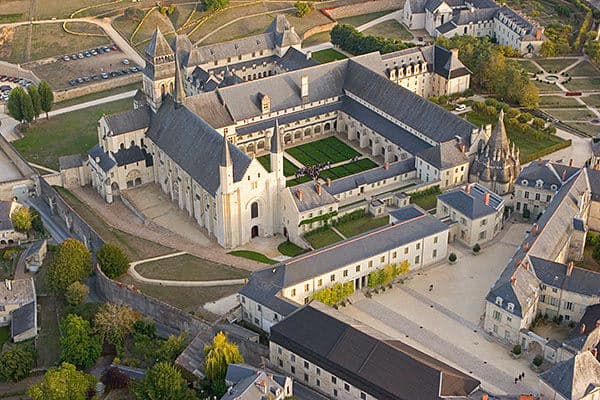
Fontevrault Abbey
The Royal Abbey of Fontevraud was a pivotal monastery founded in 1101 by Robert of Arbrissel, establishing a unique monastic order composed of double monasteries where men and women lived under the authority of an Abbess. It became a significant royal necropolis, housing the tombs of King Henry II, Eleanor of Aquitaine, and King Richard the Lionheart. After its disestablishment during the French Revolution, the complex later served as a prison before being transformed into a cultural center and heritage site.