
Angoulême
Angoulême is a historic city in southwestern France, perched on a plateau overlooking the Charente River. Once a fortified town and the capital of Angoumois, it possesses a rich historical, religious, and urban heritage shaped by numerous sieges and reconstructions. Today, it is a vibrant industrial, commercial, and cultural center, renowned for its international festivals and animation industry.
Key Facts
- ›Located on a plateau overlooking a meander of the river Charente, earning it the nickname 'balcony of the southwest'.
- ›Formerly the capital of Angoumois, it has a long history as a fortified town, enduring many sieges.
- ›Inherited a significant historical, religious, and urban heritage from its tumultuous past.
- ›Known today for its industrial sector, particularly paper manufacturing, and its role as an administrative and cultural hub.
- ›Celebrated for its international comics festival, film festival, and music festival, contributing to its global renown.
- ›Awarded four flowers by the National Council of Towns and Villages in Bloom.
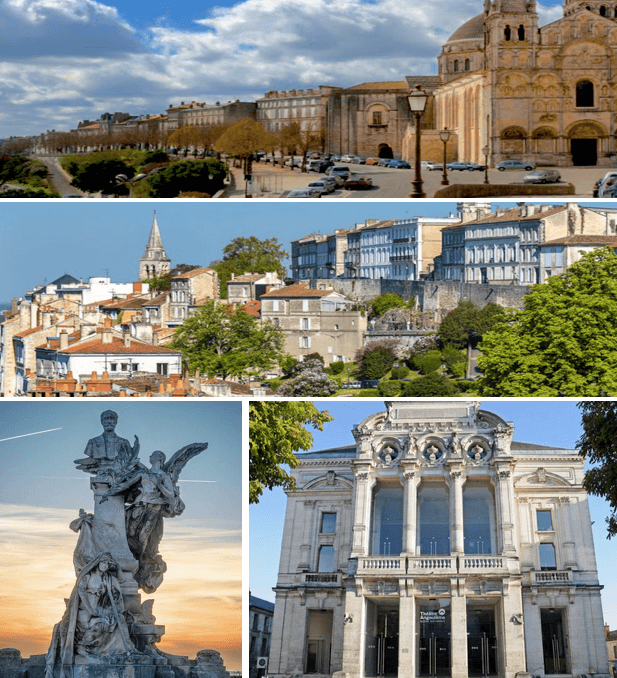
Ramparts, Cathedral, Old AngoulêMe District, Charente River, Plateau Overlooking the River
Engoulaeme, Engoleime, Montagne-Charente, New AngoulêMe
Saint Ausone of AngoulêMe, Turpion, Guillaume I, Isabella of AngoulêMe, Honoré De Balzac, Giovanni Da Verrazzano, John Calvin, Charles Ix, Coligny, Henry Iii, FrançOis I, Louis D'OrléAns, Jean D'OrléAns, Wes Anderson
- Siege By Clovis In 507-508
- Sacked By Viking Chief Hastein In 848
- Commune Charter Signed In 1204
- Passed To English Hands In 1360
- Reconquered By French Troops In 1373
- Attack On Jewish Communities By Crusaders In 1236
- Revolt of the Pitauds Peasant Revolt In 1541-1548
- Affected By Wars of Religion, Taken By Protestants In 1568
- Rebuilt In the 19th Century
About Angoulême
Angoulême is a historic city situated in the Charente department of southwestern France, renowned for its strategic location on a plateau overlooking a dramatic meander of the Charente River, which has earned it the moniker "balcony of the southwest." Historically, it was a significant fortified town and the capital of the Angoumois region, a position that led to it enduring numerous sieges and consequently developing a rich heritage of historical, religious, and urban significance. The city's strategic importance also meant it was at the crossroads of important communication routes.
Geography and Urban Landscape
The city's topography is characterized by its Acropolis-style setting on a rocky plateau, approximately 102 meters above sea level, offering commanding views of the surrounding river valleys. While the old town, with its winding streets and small squares, retains a historical ambiance, the city center underwent significant rebuilding in the 19th century. Surrounding the core are historical faubourgs, some of which developed around early abbeys or ports, reflecting the city's long-standing connection to trade and industry.
Historical Development and Heritage
Angoulême's history stretches back to antiquity, with evidence of an oppidum and early fortifications. Its administrative importance grew with the establishment of a County in the 6th century and the implementation of a bishopric. The Middle Ages saw periods of control by Visigoths and Franks, as well as Viking incursions, and the strengthening of its defenses by various counts. The signing of a commune charter in 1204 marked a significant step in its civic development. During the Hundred Years' War, Angoulême briefly fell under English control before being recaptured by Charles V.
Modern Significance
In the modern era, Angoulême has evolved into a dynamic urban center that balances its industrial base, including a long tradition in paper manufacturing, with a vibrant cultural life. It is particularly celebrated for hosting major international events such as the Angoulême International Comics Festival, the Angoulême Francophone Film Festival, and the Musiques Métisses Festival. The city is also a significant hub for animation and video game production, earning it the title "Ville de l'Image" (City of the Image). Despite significant rebuilding in parts, its historical ramparts remain a protected monument, drawing visitors interested in its enduring legacy.
Source: Wikipedia ↗
Frequently Asked Questions
What is Angoulême known for today?
Angoulême is recognized as a significant industrial region, with a history in paper production and more recent developments in foundry and electromechanical engineering. Culturally, it is famous for its international comics festival, Francophone film festival, and music festival, and it hosts a large number of animation and video game studios.
What is the historical significance of Angoulême?
Angoulême served as a fortified town and the capital of Angoumois for a long period, strategically important due to its central location on communication routes. It endured numerous sieges and has a rich heritage that reflects its varied history, from Roman times through the Middle Ages and into the modern era.
What architectural features can be found in Angoulême?
The city boasts a significant historical, religious, and urban heritage. Key features include ramparts, which have been classified as historical monuments, and the cathedral. Old Angoulême, with its winding streets and small squares, retains a historic character, though the city center was largely rebuilt in the 19th century.
What is the geographical setting of Angoulême?
Angoulême is situated on a plateau overlooking a meander of the Charente River, leading to its nickname 'balcony of the southwest'. It is an Acropolis city, built on a rocky outcrop that provides strategic advantages, with its old town perched at an altitude of 102 meters.
What are some of the historical events that shaped Angoulême?
The city has a history marked by sieges, including those by Clovis in the 6th century and Viking attacks in the 9th century. It passed into English hands during the Hundred Years' War and experienced peasant revolts and religious wars in the 16th century. The city's development was also influenced by the creation of its commune charter in 1204 and the expansion of its port in 1280.
Related Monasteries
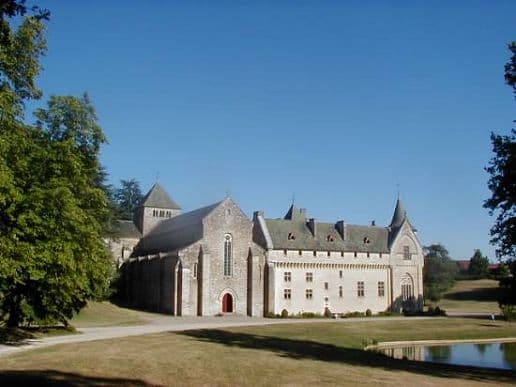
Abbey of Loc-Dieu
Abbey of Loc-Dieu is a Cistercian abbey situated in Aveyron, France, founded in 1123 on a site historically known as "devil's place" before being renamed "place of God" by its monastic inhabitants. Despite facing destruction and rebuilding, it became a significant Gothic architectural site and, during World War II, served as a safe haven for artworks from the Louvre, including the Mona Lisa. Today, the abbey and its park are open to the public.

Abbey of Saint-Germain-des-Prés
The Abbey of Saint-Germain-des-Prés, originally a Benedictine abbey founded in 558, is one of the oldest churches in Paris. It served as a significant center for scholarship, producing illuminated manuscripts, and was a royal necropolis. Despite destruction by Vikings and damage during the French Revolution, the church has undergone numerous rebuilds and restorations, incorporating Romanesque, Gothic, and later decorative styles, and remains an active Catholic parish church.

Abbey of Sénanque
Sénanque Abbey is a Cistercian monastery founded in 1148 in Provence, France, renowned for its remarkably preserved Romanesque architecture. Initially thriving, it experienced decline and was suppressed during the French Revolution, only to be re-established in 1854 and later reactivated in 1988. Today, it houses an active monastic community and is known for its lavender fields and spiritual retreats.