
Alchi
Tibetan Buddhism·India·Monastic complex·12th century
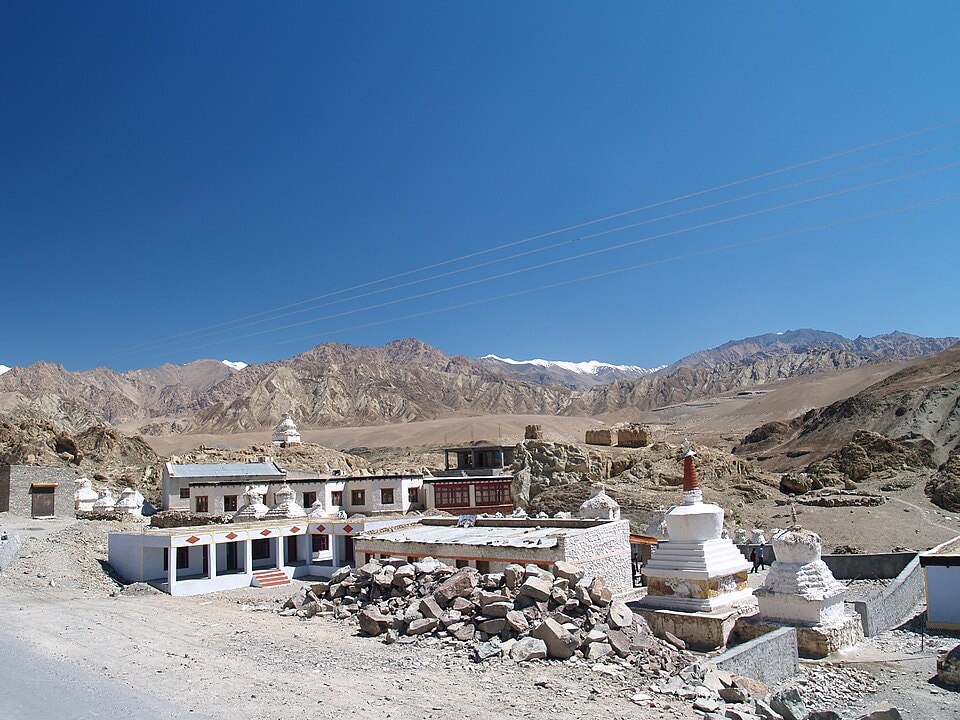
Alchi Monastery is a significant monastic complex located in the Leh District of Ladakh, India, renowned for its ancient temples and unique artwork. It is considered one of the oldest and most famous monastic sites in the region, distinguished by its Kashmiri architectural style and wall paintings that reflect both Buddhist and Hindu influences from the period. Administered by Likir Monastery, Alchi is part of a group of monuments in lower Ladakh known for their distinctive style and workmanship.
Key Facts
- ›Alchi Monastery is a monastic complex comprising four separate temple settlements in Alchi village.
- ›Its main temples, the Dukhang, Sumtseg, and Manjushri Temple, date from the early 12th to early 13th centuries.
- ›The complex features some of the oldest surviving wall paintings in Ladakh, blending Tibetan and Kashmiri artistic styles.
- ›While traditionally attributed to Guru Rinchen Zangpo, inscriptions suggest the Dukhang was founded by an uncle of patron Tsültrim Ö around 1140 CE.
- ›It is located 65 kilometers west of Leh on the Leh-Kargil Highway.
- ›Alchi is part of the 'Alchi group of monuments' which includes the villages of Mangyu and Sumda Chun.
Kashmiri, Tibetan, Baroque
- Ancient Wall Paintings Reflecting Buddhist and Hindu Influences
- Elaborate Wood Carvings
- Sumtseg
- Dukhang
- Manjushri Temple
- Chortens
Alchi Gompa, Alci
Rinchen Zangpo, TsüLtrim ö, Kal-Dan Shes-Rab, Jigten Gonpo
- Possible Founding By An Uncle of TsüLtrim ö Around 1140 Ce.
- Worship Ceased In the 15th Century.
About Alchi
Alchi Monastery
Alchi Monastery, also known as Alchi Gompa, is a significant monastic complex located in the Leh District of Ladakh, India. It comprises four distinct temple settlements within Alchi village, distinguished by their unique art and architecture, and is administered by the Likir Monastery. The complex is celebrated for housing some of the oldest surviving paintings in Ladakh, which exhibit a fascinating blend of Tibetan and Kashmiri artistic styles, alongside influences from Hindu art of the period.
History and Construction
While local tradition ascribes the founding of Alchi to the renowned translator Guru Rinchen Zangpo between the 10th and 11th centuries, inscriptions within the monuments suggest a later origin. Evidence points to the Dukhang, the main assembly hall, being constructed by an unnamed uncle of the patron Tsültrim Ö, likely around 1140 CE. The Sumtseg, a notable three-storied temple, is believed to have been built around the early 13th century, with its creation linked to the Drigungpa school. The monasteries in this period were not affiliated with established Tibetan schools and later came under the administration of the Gelugpa order.
Architectural and Artistic Significance
The architectural style of the Dukhang and Sumtseg temples is characterized by Kashmiri influences, while the interior features elaborate woodwork and art comparable to the baroque style. The wall paintings are a major highlight, depicting Buddhist deities, mandalas, and scenes from the life of Buddha, rendered with exceptional detail and vibrant colors. The Sumtseg, in particular, is noted for its interior woodwork, clay images, and paintings, created by Kashmiri artisans. The Manjushri Temple, dated to around 1225 AD, also contains significant imagery and painted wooden ceilings.
Location and Visitor Information
Alchi Monastery is situated on the south bank of the Indus River, at an altitude of 3,100 meters (10,200 ft), approximately 65 kilometers west of Leh. It is part of a group of three villages, including Mangyu and Sumda Chun, known collectively as the 'Alchi group of monuments,' celebrated for their unique style and craftsmanship. The monastic complex itself is a jewel of colors and forms, offering a glimpse into the rich artistic and spiritual heritage of the Ladakh region.
Source: Wikipedia ↗
Frequently Asked Questions
When was Alchi Monastery founded?
Local tradition attributes the founding of Alchi Monastery to the translator Guru Rinchen Zangpo between 958 and 1055 CE. However, inscriptions within the complex suggest the Dukhang, and thus the complex, was built by an unnamed uncle of patron Tsültrim Ö around 1140 CE, making it no earlier than that date.
What is the architectural style of Alchi Monastery?
The Dukhang and Sumtseg temples are built in a Kashmiri style. The complex also features elaborate wood carvings and art comparable to the baroque style, with an eclectic mix of Tibetan and Kashmiri influences in its art and depictions.
What are the main structures within Alchi Monastery?
The monastery complex includes three major shrines: the Dukhang (Assembly Hall), the Sumtseg (a three-storied temple), and the Manjushri Temple. It also features chortens and other temples like the Translator's temple (Lotsawa Lakhang) and a new temple (Lakhang Soma).
What is significant about the art at Alchi Monastery?
The wall paintings at Alchi are among the oldest surviving in Ladakh, reflecting the artistic and spiritual details of both Buddhist and Hindu kings of Kashmir and Himachal Pradesh. The complex also boasts huge statues of the Buddha and exquisite wood carvings.
Who administered Alchi Monastery?
Alchi Monastery is administered by the Likir Monastery. Historically, after worship ceased in the 15th century, it came under the control of the Gelugpa sect.
Where is Alchi Monastery located?
Alchi Monastery is situated in Alchi village in the Leh District of Ladakh, India, on the south bank of the Indus River, approximately 65 kilometers west of Leh.
Related Monasteries

Key Monastery
Key Monastery is a prominent Tibetan Buddhist monastery of the Gelugpa sect, perched atop a hill in the Spiti Valley of Himachal Pradesh, India. As the largest monastery in the region, it serves as a vital religious training center for lamas and houses a significant collection of ancient murals and books. Despite enduring numerous historical plunders and natural disasters, the monastery has been repeatedly rebuilt and remains an active spiritual hub.

Pemayangtse Monastery
Pemayangtse Monastery, founded in 1647 by Lama Lhatsun Chempo, is one of Sikkim's oldest and most significant Nyingma Buddhist monasteries. It holds a prominent position in the state's religious landscape, controlling other Nyingma monasteries and traditionally responsible for the consecration of Sikkimese monarchs. The monastery is renowned for its architectural beauty, religious significance, and its role in preserving the Nyingma tradition.

Tabo
Tabo Monastery, also known as Tabo Chos-Khor, is a significant Buddhist enclave in the Spiti Valley of Himachal Pradesh, India. Founded in 996 CE, it is renowned as the oldest continuously operating Buddhist site in India and the Himalayas, housing a vast collection of ancient frescoes, thankas, manuscripts, and statues. The monastery has undergone several renovations and reconstructions, notably after a 1975 earthquake, and continues to be a vital center for Buddhist practice and learning, attracting visits from the Dalai Lama.