
Tara
Tara is a prominent goddess in the Shaivism and Shaktism traditions of Hinduism, particularly within the Mahavidya pantheon. She is considered a tantric manifestation of Parvati and is known for her fierce yet protective nature, offering solace and knowledge to her devotees. Her most famous forms include Ekajaṭā, Ugratara, and Nīlasarasvatī, with Tarapith in West Bengal being a major center of her worship.
Key Facts
- ›Tara is the second of the ten Mahavidyas, a group of tantric goddesses.
- ›She is considered a form of Ādishakti, the primordial cosmic energy.
- ›Her most renowned forms are Ekajaṭā, Ugratara, and Nīlasarasvatī.
- ›Her primary center of worship is the temple and cremation ground of Tarapith in West Bengal, India.
- ›Tara's worship likely emerged from an amalgamation of beliefs in Oḍḍiyāna, influenced by both Hindu and Buddhist traditions.
- ›She is often depicted as a fierce deity with specific iconographic elements and a terrifying laugh.

Ugratara, Nīlasarasvatī, Neelasaraswati, Neela Saraswati, Neelsaraswati, Ekajaṭā, Tīkṣṇakāntā
- Holding Kartrī
- Holding KhaḍGa
- Holding Chamara
- Holding Indivara
- Single Matted Braid Over Her Head
- Dark Complexion
- Tall Stature
- Bulging Belly
- Wears Tiger Pelts
- Left Foot On the Chest of A Corpse
- Right Foot On A Lion Or Between the Thighs of the Corpse
- Terrifying Laugh
- Wears A Crown Made of 5 Skulls Connected With Plates of Bone
- Garland of Severed Human Heads
- Lolling Tongue
- Blood Oozing From Mouth
- Pratyalidha Stance
RudrayāMala, Svatantratantra, śAktisaṅGamatantra, MāYāTantra, TāRāTantra, BrahmayāMala, NīLatantra/BṛHannīLatantra, NīLasarasvatīTantra, Tantrasara, PrāṇAtoṣIṇī, TāRāBhaktisudhāRṇAva, TāRāRahasya, Devi Bhagavata Purana, Kalika Purana
- Form of āDishakti, Tantric Manifestation of Parvati
Tarapith, West Bengal, India
Kartrī, KhaḍGa
Lion
About Tara
Tara: The Second Mahavidya
In the Shaivism and Shaktism traditions of Hinduism, Tara stands as the second of the ten Mahavidyas, a group of powerful tantric goddesses. She is considered a tantric manifestation of Ādishakti, the primordial cosmic energy, and is often seen as a fierce yet compassionate protector of her devotees. Tara is known for her ability to grant knowledge, protection from dangers, and liberation.
Legends and Origins
The origin of Tara's worship is often traced to the sage Vasiṣṭha's attempts to invoke her, as described in the Rudrayāmala. His initial efforts were unsuccessful until he encountered Vishnu in the form of Buddha in Mahācīna (Tibet). Through specific kaula rites, Vasiṣṭha eventually succeeded in worshipping Tara. Her association with the Atharvaveda and her protective nature against difficult dangers have earned her the epithet Ugratara.
Historical and Iconographic Context
Tara's historical roots likely lie in the syncretism of beliefs from the Oḍḍiyāna region, which experienced significant Buddhist influence. This fusion of Shaivist and Buddhist cults facilitated the development of Tara's traditions, which are found in both Hindu and Buddhist systems. Her iconography is striking and often fierce, depicting her as dark-complexioned, wearing tiger pelts, and standing upon a corpse, sometimes identified with Shiva. She holds attributes like a knife and sword, and her terrifying laugh contributes to her formidable presence.
Scriptures and Devotional Practices
Numerous tantric scriptures detail the worship of Tara, including the Tārātantra, Rudrayāmala, and Nīlatantra. She is also mentioned in the Devi Bhagavata Purana and the Kalika Purana. In modern times, devotional poets like Ramprasad Sen and figures like Sadhak Bamakhepa have contributed to a more public and motherly understanding of Tara, emphasizing her nurturing aspect alongside her fierce power.
Source: Wikipedia ↗
Frequently Asked Questions
Who is the goddess Tara in Hinduism?
Tara is a significant goddess in the Shaivism and Shaktism traditions, particularly as one of the ten Mahavidyas. She is viewed as a tantric manifestation of Parvati and is revered for her protective power and esoteric knowledge.
What are the main forms of Tara?
The three most famous forms of Tara are Ekajaṭā, Ugratara, and Nīlasarasvatī. Other forms include Mahogra, Kameshvari-Tara, Chamunda, Vajra-Tara, and Bhadrakali, totaling eight attested forms in some tantric traditions.
Where is Tara primarily worshipped?
The most famous center for Tara's worship is the temple and cremation ground of Tarapith in West Bengal, India. This location is deeply associated with her devotional practices.
What is the origin story of Tara?
A commonly known origin involves the sage Vasiṣṭha's unsuccessful attempts to worship Tara, followed by a meeting with Vishnu in the form of Buddha in Mahācīna (Tibet). His eventual success came through kaula rites, as described in the Rudrayāmala.
How is Tara depicted in iconography?
Tara is often described as a fierce deity, dark in complexion, and tall with a bulging belly. She typically holds a knife, sword, fly-whisk, or lotus, wears tiger pelts, and stands with her left foot on a corpse and her right foot on a lion or between the corpse's thighs. She is also known for her terrifying laugh.
What scriptures mention Tara?
Tara is prominently mentioned in tantric scriptures such as the Tārātantra, Brahmayāmala, Rudrayāmala, and Nīlatantra. She is also attested in the Devi Bhagavata Purana and the Kalika Purana.
Related Hindu deities
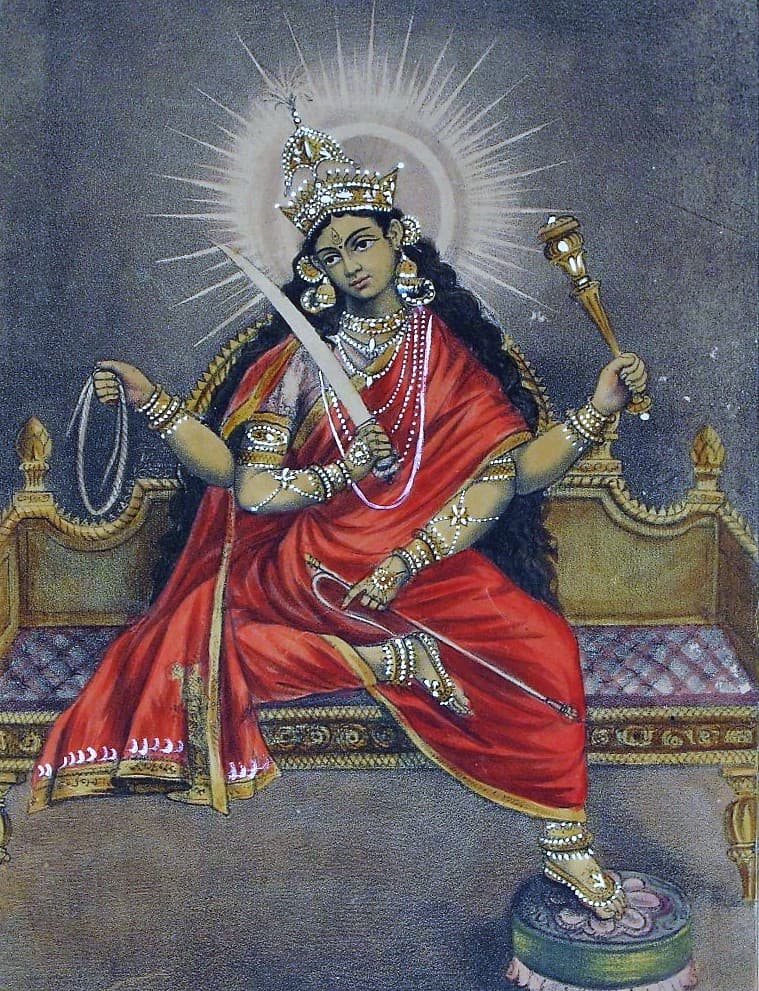
Matangi
Matangi is a significant Hindu goddess, revered as one of the Mahavidyas, a group of ten Tantric goddesses. She is considered a Tantric manifestation of Sarasvati, the deity of knowledge, music, and the arts, and is believed to govern speech, knowledge, and artistic expression. Her worship is sought for acquiring supernatural powers, controlling enemies, attracting others, and attaining supreme knowledge.
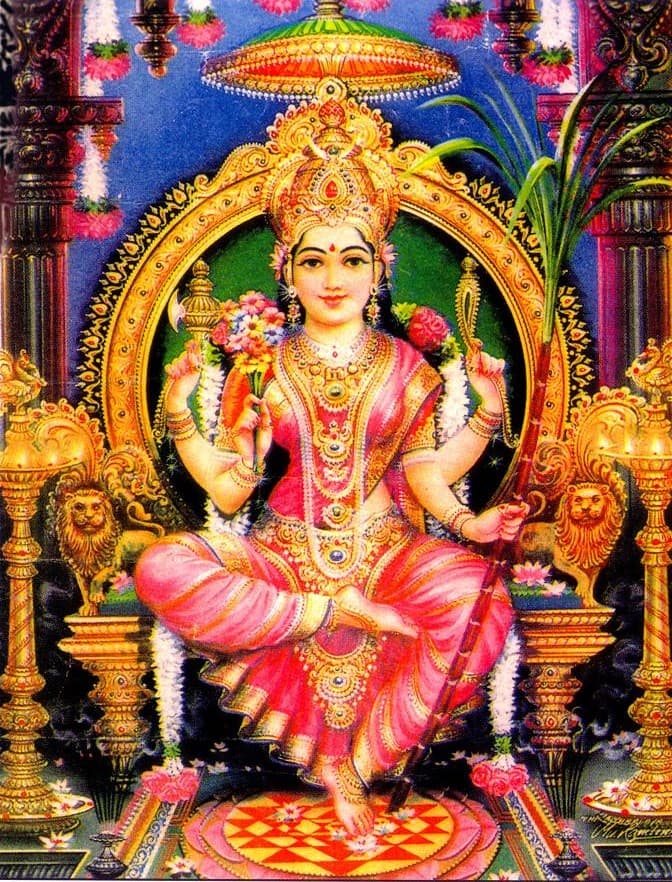
Tripura Sundari
Tripura Sundari, also known as Lalita, is a prominent Hindu goddess revered in the Shaktism tradition as one of the ten Mahavidyas and the supreme divinity. She embodies the essence of Mahadevi, representing beauty, creation, preservation, and dissolution across the three worlds. Central to Shakta texts like the Lalita Sahasranama, she symbolizes the triumph of good over evil and is considered the ultimate Shakti.

Chamunda
Chamunda is a fierce and formidable form of the Hindu mother goddess, Mahadevi, and is counted among the seven Matrikas (mother goddesses). Her name derives from the demons Chanda and Munda, whom she vanquished. She is known for her terrifying iconography and is often associated with cremation grounds and fierce rituals.