
Siddhidhatri
Siddhidhatri is a form of the Hindu goddess Mahadevi, revered as the bestower of siddhi, or spiritual perfections and powers. She is the ninth and final of the Navadurga, worshipped on the ninth day of Navaratri, and is associated with the act of creation. According to legend, she emerged from the left half of Shiva and granted him the eight principal spiritual powers.
Key Facts
- ›Siddhidhatri is a form of the goddess Mahadevi.
- ›She is the goddess of siddhi (spiritual attainments and powers).
- ›She is the ninth and last of the Navadurga.
- ›She is worshipped on the ninth day of Navaratri.
- ›Legend states she emerged from the left half of Shiva.
- ›She is believed to have conferred the ashta siddhi (eight spiritual attainments) upon Shiva.

Siddhidatri
- Depicted With Four Hands
- Holds A Chakra
- Holds A Shankha
- Holds A Mace
- Holds A Lotus
- Seated On A Fully Bloomed Lotus
- Seated On A Lion
- Sometimes Flanked By Gandharvas, Yakshas, Siddhas, Asuras, and Devas Paying Obeisance
Navaratri
Chakra, Shankha, Mace
About Siddhidhatri
Siddhidhatri, also known as Siddhidatri, is a significant form of the Hindu goddess Mahadevi, revered as the bestower of siddhi, which translates to spiritual attainments and powers. She holds a prominent place as the ninth and final of the Navadurga, a group of nine manifestations of the goddess Durga. Her worship is particularly emphasized on the ninth day of Navaratri, a major festival dedicated to the divine feminine.
Iconography and Symbolism
Siddhidhatri is typically depicted with four hands, each holding symbolic implements: a chakra (discus), a shankha (conch shell), a mace, and a lotus flower. She is often shown seated gracefully upon a fully bloomed lotus, signifying purity and spiritual elevation, or alternatively, mounted on a lion, symbolizing her power and regal authority. In some artistic representations, she is surrounded by celestial beings such as gandharvas, yakshas, siddhas, asuras, and devas, who are shown offering her reverence, highlighting her supreme status.
Mythological Origins and Significance
According to ancient legends, at the dawn of creation, Lord Shiva worshipped the unmanifest form of the great goddess, Mahadevi, to initiate the cosmic process of creation. It is believed that Siddhidhatri emerged from the left half of Shiva, thereby symbolizing her intrinsic connection with him. Furthermore, she is credited with conferring the ashta siddhi, the eight principal spiritual powers, upon Shiva. This association with Shiva's left half also links her to the composite deity Ardhanarishvara, where the left portion represents the feminine aspect, Parvati, emphasizing the divine union of masculine and feminine energies.
Source: Wikipedia ↗
Frequently Asked Questions
Who is Siddhidhatri?
Siddhidhatri is a form of the Hindu goddess Mahadevi, known as the bestower of siddhi, which translates to spiritual attainments and powers. She is the ninth and final deity in the Navadurga, a group of nine forms of Durga.
When is Siddhidhatri worshipped?
Siddhidhatri is primarily worshipped on the ninth day of Navaratri, a major Hindu festival. This day marks the culmination of the nine-day celebration dedicated to the goddess.
What is the significance of Siddhidhatri's emergence?
According to legend, Siddhidhatri emerged from the left half of Shiva at the beginning of the universe to aid in creation. This origin links her to the composite deity Ardhanarishvara, where the left side represents Parvati.
What powers is Siddhidhatri associated with?
Siddhidhatri is known as the 'giver of perfection' and is believed to have bestowed the ashta siddhi, or eight principal spiritual attainments, upon Lord Shiva. These powers are considered ultimate spiritual accomplishments.
Related Hindu deities
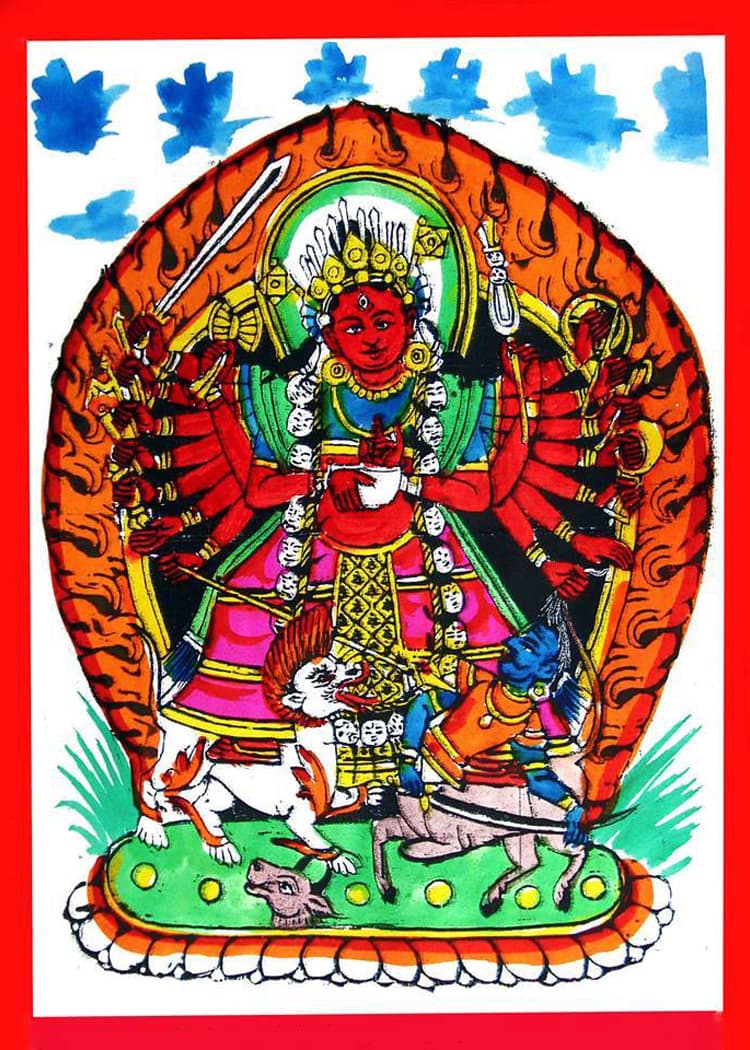
Chandi
Chandi, also known as Chandika, is a fierce Hindu goddess revered as a form of Durga and an incarnation of Chamunda. Derived from the Sanskrit word for "fierce," she is celebrated for vanquishing demons and embodying divine wrath. Chandi is particularly significant in the Shakta tradition and is widely worshipped in West Bengal and Gujarat.

Chandraghanta
Chandraghanta is a powerful form of the Hindu goddess Mahadevi, revered as the destroyer of demons and the protector of her devotees. She is the third of the Navadurga and is prominently worshipped on the third day of Navaratri. Her name, meaning 'adorned with the moon as her bell,' refers to the crescent moon on her forehead, and she is depicted with ten arms holding various weapons and a bell.

Kaushiki
Kaushiki is a Hindu goddess who emerged from the sheath of Parvati. She is primarily known for her role in defeating the asura brothers Shumbha and Nishumbha, and her emergence also led to the creation of the Matrikas. Kaushiki is considered an incarnation of Mahasaraswati and is also known by epithets such as Ambika and Chandika.