
Gurdwara Baba Atal
Gurdwara Baba Atal is a significant Sikh shrine in Amritsar, dedicated to Baba Atal Rai, the young son of Guru Hargobind. Its distinctive nine-story octagonal structure, standing around forty meters tall, commemorates his nine years of life. Located near the Harmandir Sahib, it is a site of historical and spiritual importance, known for its intricate artwork and devotional plaques.
Key Facts
- ›Dedicated to Baba Atal Rai, son of Guru Hargobind.
- ›Features a unique nine-story octagonal architectural design.
- ›Located in Amritsar, a short distance from Harmandir Sahib.
- ›Commemorates Baba Atal Rai's nine years of life and spiritual significance.
- ›Adorned with numerous mural paintings depicting Sikh history and figures.
- ›Features embossed brass plaques donated by devotees.

Guru Hargobind
- Nine-story octagonal tower
- Double-octagonal structure
- Golden dome
- Double staircase
- Four entry doors on the ground floor
- Central room on the ground floor displaying Guru Granth Sahib
- Brass and silver doors with embossed artwork
- Embossed brass plaques depicting Sikh and Hindu themes
- Construction of the nine-story tower during the era of Maharaja Ranjit Singh or between 1775-1800.
- Repairs, extensions, and renovations over time.
- Views from the top of the tower in 1903 documented various landmarks.
Baba Atal Rai, Baba Mohan, Nawab Kapur Singh, Jodh Singh, Jassa Singh Ahluwalia, Ganda Singh, Sant Singh Giani, Baba Buddha
About Gurdwara Baba Atal
Gurdwara Baba Atal is a prominent Sikh gurdwara located in Amritsar, India, dedicated to the memory of Baba Atal Rai, the young son of Guru Hargobind. The shrine is renowned for its distinctive nine-story octagonal tower, which stands approximately forty meters tall and is situated a short distance from the iconic Harmandir Sahib.
History and Dedication
The Gurdwara commemorates the nine years of Baba Atal Rai's life. According to Sikh legend, Atal Rai miraculously revived a friend bitten by a snake. His father, Guru Hargobind, admonished him for performing miracles, leading Atal Rai to voluntarily leave his earthly life on September 13, 1628, to uphold the principles against supernatural displays. The tower was erected in his honor, with each of its nine stories symbolizing one year of his life. Although he died as a child, he was given the honorific 'Baba' in recognition of his spiritual prowess.
Architecture and Artwork
The architectural design of Gurdwara Baba Atal is a striking octagonal structure, featuring a double-octagonal form with a larger external shape and a smaller internal one. The tower is ascended by 110 steps and is crowned with a golden dome. The ground floor contains four entrances, with the eastern one serving as the main entry. Intricately embossed brass and silver doors adorn the structure, along with numerous brass plaques depicting themes from Sikh and Hindu traditions.
The interior walls are covered with a rich collection of mural paintings, many of which date from the Sikh rule in the 19th century. These artworks illustrate key events and figures from Sikh history, including scenes from the life of Guru Nanak, the Sahibzadas (sons of Guru Gobind Singh), and prominent Sikh martyrs. While some of these murals have suffered damage due to neglect and restoration efforts, they remain a vital artistic and historical component of the Gurdwara.
Historical Context and Significance
Initially a small cenotaph (samadhi), the site gradually evolved into a gurdwara. The present nine-story tower was largely constructed during the time of Maharaja Ranjit Singh, with contributions from various Sikh leaders and public donations. The Gurdwara was historically known for its langar, a communal kitchen, which served a large number of pilgrims and the destitute, reflecting the Sikh principle of selfless service and equality.
Gurdwara Baba Atal holds significant spiritual and historical importance for Sikhs. It serves as a place of pilgrimage, drawing devotees who come to pay homage to Baba Atal Rai and to admire the historical and artistic heritage of the shrine. The Gurdwara continues to be an active center of worship and a testament to the devotional spirit and artistic traditions within Sikhism.
Source: Wikipedia ↗
Frequently Asked Questions
Who is Baba Atal Rai, and why is this Gurdwara dedicated to him?
Baba Atal Rai was the son of Guru Hargobind. The Gurdwara Baba Atal is dedicated to him to commemorate his young life, which lasted nine years. He is revered for his spiritual powers, even at a young age.
What is the architectural significance of Gurdwara Baba Atal?
The Gurdwara is notable for its nine-story, octagonal structure, reaching approximately forty meters in height. It features a unique double-octagonal design, with an inner and outer structure, culminating in a golden dome.
Where is Gurdwara Baba Atal located?
Gurdwara Baba Atal is situated in Amritsar, in the southern direction of the Harmandir Sahib (Golden Temple). It is a short walk from the main temple complex.
What kind of artwork can be found at Gurdwara Baba Atal?
The Gurdwara houses numerous mural paintings that depict scenes from Sikh history, including the lives of the Gurus, particularly Guru Nanak, and prominent Sikh martyrs. It also features embossed brass plaques with intricate artwork.
What is the history behind the construction of Gurdwara Baba Atal?
Initially, a small samadhi was built at the site. The present nine-story tower was constructed during the time of Maharaja Ranjit Singh, although historical accounts suggest its erection between the late 18th and early 19th centuries. The structure has undergone renovations and extensions over time.
Related Gurdwaras
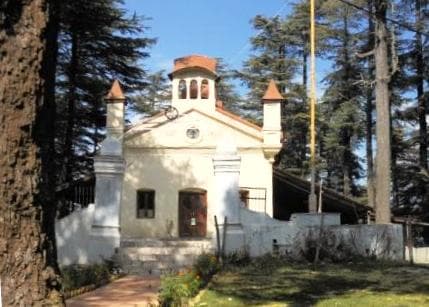
Chail Gurudwara
The Chail Gurudwara is a Sikh temple established in 1907 in Chail, Himachal Pradesh, by Maharaja Bhupinder Singh of Patiala. Its architecture, which notably resembles a church, has been preserved through renovations. After the partition of Punjab, the building came under the management of the Himachal Pradesh government and is currently overseen by the Department of Art & Culture, with support from the Chail Heritage Foundation and a Gurudwara Management Committee.

Goindwal Sahib
Goindwal Sahib, located in Punjab, India, became a significant spiritual and administrative center for Sikhism in the 16th century under Guru Amar Das Ji. It is renowned for its sacred Baoli (stepwell) with 84 steps, believed to offer liberation upon recitation of Japji Sahib after a bath, and for being the birthplace of Guru Arjan Dev Ji.

Gurdwara Baba Bakala Sahib
Gurdwara Baba Bakala Sahib is a significant Sikh pilgrimage site in Punjab, India, renowned for its association with Guru Tegh Bahadur, the ninth Sikh Guru. It marks the location where Guru Tegh Bahadur meditated in solitude for over 26 years and was later discovered by Baba Makhan Shah Lubana, who proclaimed him the true Guru. The complex houses several important shrines, including where he meditated and where his Guruship was formally conferred.