
Goindwal Sahib
India·Goindwal·16th century·Historic Pilgrimage
Goindwal Sahib, located in Punjab, India, became a significant spiritual and administrative center for Sikhism in the 16th century under Guru Amar Das Ji. It is renowned for its sacred Baoli (stepwell) with 84 steps, believed to offer liberation upon recitation of Japji Sahib after a bath, and for being the birthplace of Guru Arjan Dev Ji.
Key Facts
- ›Founded in 1551 by Guru Amar Das Ji.
- ›Features a sacred Baoli (stepwell) with 84 steps.
- ›Believed to be the first center of Sikhism.
- ›Birthplace of Guru Arjan Dev Ji.
- ›Emperor Akbar visited and partook in the Langar in 1569.
- ›A significant pilgrimage destination for Sikhs.

Goindwal
Guru Angad Dev Ji, Guru Amar Das Ji, Guru Ram Das Ji, Guru Arjan Dev Ji, Guru Hargobind Ji, Guru Tegh Bahadur Ji, Guru Har Rai Ji
- Baoli with 84 steps
- Domed entrance decorated with frescoes
- Large dome tipped with a gold pinnacle
- Four cupolas
- Facade of turrets
- Elliptical cornices
- Projected windows
- Murals describing Sikh history at the entrance
- Founded by Guru Amar Das Ji in 1551.
- Guru Amar Das Ji established Sikh headquarters here.
- Emperor Akbar visited and dined in the langar .
- Guru Arjan Dev Ji was born here .
- Guru Hargobind and Guru Tegh Bahadur visited.
- Guru Har Rai met Dara Shikoh here .
Bhai Gurdas
Vaisakhi festival, Recitation of Japji Sahib at the Baoli, Partaking in langar
About Goindwal Sahib
Goindwal Sahib, situated in the Majha region of Punjab, India, rose to prominence in the 16th century as a pivotal spiritual and administrative hub for the nascent Sikh faith. Its establishment in 1551 by Guru Amar Das Ji, the third Sikh Guru, marked a significant step in consolidating Sikh teachings and practices. The town is most famously associated with the sacred Baoli, a stepwell featuring 84 steps, which holds profound spiritual meaning for Sikhs. Tradition dictates that reciting Japji Sahib at each step after bathing in the Baoli leads to liberation from the cycle of rebirth.
Historical Context and Development
The location of Goindwal Sahib was strategically chosen on the banks of the Beas River, at a historical transit point connecting Delhi and Lahore. Initially envisioned by a trader named Goinda, the habitation was established with the blessing of Guru Angad Dev Ji and overseen by his devoted follower, Amar Das. After his anointment as Guru in 1552, Guru Amar Das Ji shifted the Sikh headquarters from Khadur to Goindwal, residing there for 33 years. During this period, he initiated the construction of the Baoli and fostered the integral practice of Langar, or the community kitchen, emphasizing equality and service with the proverb 'Pehlay Pangat tay picchhay Sangat' (First sit in the Community of Feet, then join the Company of Singers).
Key Figures and Events
Goindwal Sahib is the birthplace of Guru Arjan Dev Ji, the fifth Sikh Guru, born on April 15, 1563. The site witnessed significant interactions with Mughal rulers, notably Emperor Akbar's visit in 1569, where he partook in the Langar and was so impressed that he granted land for the future city of Amritsar. The town also served as a meeting point for Guru Har Rai Ji and Dara Shikoh, the eldest son of Emperor Shah Jahan. While Guru Amar Das Ji faced a moment of personal trial when struck by Dattu, the son of Guru Angad, his steadfastness and the devotion of his followers, such as Baba Budha, reaffirmed the sanctity of Goindwal.
Architectural and Spiritual Significance
The architecture of Goindwal Sahib reflects traditional Sikh styles, with the main Gurdwara featuring a prominent dome, cupolas, and decorative elements. The Baoli itself is a remarkable structure, with its descending steps leading to sacred waters, interspersed with resting places conducive to spiritual discourse. Today, Goindwal Sahib remains a prime pilgrimage destination, drawing devotees who seek spiritual solace and wish to connect with the historical roots of Sikhism. The massive Langar continues to serve a large number of pilgrims daily, embodying the core Sikh values of selfless service and community.
Source: Wikipedia ↗
Frequently Asked Questions
What is the significance of the 84 steps at the Goindwal Baoli?
Sikh tradition holds that reciting Japji Sahib at each of the 84 steps after bathing in the Baoli grants Moksha, or liberation from 84 lakh (8.4 million) cycles of life, leading to unity with God.
Who founded Goindwal Sahib and when?
Goindwal Sahib was founded by Guru Amar Das Ji, the third Sikh Guru, in 1551. It was established on the site of an important ferry crossing on the Beas River.
Which Sikh Gurus are associated with Goindwal Sahib?
Guru Amar Das Ji made Goindwal his spiritual headquarters for 33 years. Guru Ram Das Ji, Guru Arjan Dev Ji, Guru Hargobind Ji, Guru Tegh Bahadur Ji, and Guru Har Rai Ji also have associations with Goindwal Sahib.
What historical events took place at Goindwal Sahib?
Emperor Akbar visited Goindwal Sahib in 1569 and dined in the Langar, impressed by the practice. Guru Amar Das Ji also faced an incident where he was kicked by Dattu, Guru Angad's son, leading to a temporary departure.
What architectural features are notable at Goindwal Sahib?
The main gurdwara exhibits typical Sikh architecture with a large dome, cupolas, turrets, and projected windows. The Goindwal Baoli itself is a significant architectural structure with a domed entrance decorated with frescoes and 84 covered steps.
Is Goindwal Sahib a birthplace of any Sikh Gurus?
Yes, Guru Arjan Dev Ji, the fifth Sikh Guru, was born in Goindwal Sahib on April 15, 1563.
Related Gurdwaras
Chail Gurudwara
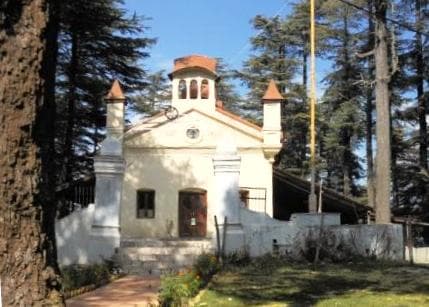
The Chail Gurudwara is a Sikh temple established in 1907 in Chail, Himachal Pradesh, by Maharaja Bhupinder Singh of Patiala. Its architecture, which notably resembles a church, has been preserved through renovations. After the partition of Punjab, the building came under the management of the Himachal Pradesh government and is currently overseen by the Department of Art & Culture, with support from the Chail Heritage Foundation and a Gurudwara Management Committee.

Gurdwara Baba Atal
Gurdwara Baba Atal is a significant Sikh shrine in Amritsar, dedicated to Baba Atal Rai, the young son of Guru Hargobind. Its distinctive nine-story octagonal structure, standing around forty meters tall, commemorates his nine years of life. Located near the Harmandir Sahib, it is a site of historical and spiritual importance, known for its intricate artwork and devotional plaques.

Gurdwara Baba Bakala Sahib
Gurdwara Baba Bakala Sahib is a significant Sikh pilgrimage site in Punjab, India, renowned for its association with Guru Tegh Bahadur, the ninth Sikh Guru. It marks the location where Guru Tegh Bahadur meditated in solitude for over 26 years and was later discovered by Baba Makhan Shah Lubana, who proclaimed him the true Guru. The complex houses several important shrines, including where he meditated and where his Guruship was formally conferred.