
Chail Gurudwara
India·Chail·20th century·Historic
The Chail Gurudwara is a Sikh temple established in 1907 in Chail, Himachal Pradesh, by Maharaja Bhupinder Singh of Patiala. Its architecture, which notably resembles a church, has been preserved through renovations. After the partition of Punjab, the building came under the management of the Himachal Pradesh government and is currently overseen by the Department of Art & Culture, with support from the Chail Heritage Foundation and a Gurudwara Management Committee.
Key Facts
- ›Established in 1907 by Maharaja Bhupinder Singh of Patiala.
- ›Architecture is designed to resemble a church.
- ›Managed by the Government of Himachal Pradesh and the Department of Art & Culture.
- ›Renovated in phases, with the first phase completed in 2007.
- ›Offers free dormitory and guest rooms for visitors.
- ›Regularly organizes celebrations for Baisakhi and Gurupurab.
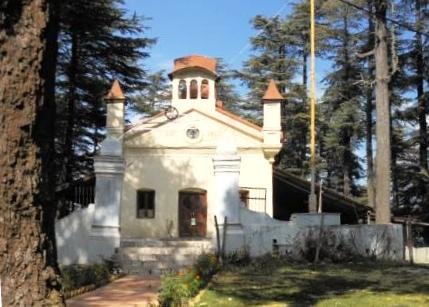
Church-Like Architecture, Preserved Original Design, Renovated Doors, Windows, Roof, and Floor
- Construction by Maharaja Bhupinder Singh of Patiala
- Taken over by the Government of Himachal Pradesh after the Partition of Punjab
Baisakhi, Gurupurab, Guru Nanak Jayanti
About Chail Gurudwara
The Chail Gurudwara is a significant Sikh place of worship located in the hill station of Chail, Himachal Pradesh, India. Established in 1907 by Maharaja Bhupinder Singh of Patiala, its construction is notable for its unique architecture, which closely resembles that of a church. This distinctive design has been a key aspect of its preservation and renovation efforts.
Historical Context and Management
Following the partition of Punjab, the building housing the Gurudwara was transferred to the government of Himachal Pradesh. Since then, the Department of Art & Culture has been responsible for overseeing its affairs. In recent times, the Chail Heritage Foundation, an organization comprising former students of the Chail Military School, has played a crucial role in its renovation and upkeep. The first phase of extensive renovation work was completed in time for the Gurudwara's centenary, culminating in its refurbishment and inauguration on Guru Nanak Devji's Gurupurab in 2007. The management is currently vested with the Government of Himachal Pradesh, with a Gurudwara Management Committee working in coordination with the Shiromani Gurudwara Parbandhak Committee (SGPC) and the Himachal Pradesh Government.
Facilities and Visitors
Despite its location in a relatively small area, the Chail Gurudwara attracts a modest number of devotees, primarily consisting of local residents, tourists, and cadets from the Chail Military School. The Gurudwara complex includes a dormitory and several smaller guest rooms available for visitors, offering free overnight accommodation. A Langar hall is situated at the rear of the main building, providing community meals. Due to the limited Sikh population in the region, volunteer contributions are actively encouraged to ensure the Gurudwara's smooth functioning and to support necessary repairs and upgrades to its facilities.
Celebrations and Renovations
Key religious festivals such as Baisakhi and Gurupurab are regularly organized at the Chail Gurudwara, often in collaboration with the Chail Military School administration. These celebrations have drawn significant numbers of devotees from across North India. The Gurudwara has also expanded its celebrations to other occasions, owing to consistent efforts by the management committee and through media outreach. Renovations have been an ongoing process, with the first phase in 2007 focusing on replacing elements like doors, windows, the roof, and the floor while preserving the overall church-like architectural style. Future renovation phases are planned, contingent on the collection of adequate funds for the restoration of attached and adjacent buildings.
Source: Wikipedia ↗
Frequently Asked Questions
When was the Chail Gurudwara established?
The Chail Gurudwara was established in 1907. It was constructed by Maharaja Bhupinder Singh of Patiala.
Who manages the Chail Gurudwara today?
The Chail Gurudwara is currently managed by the Government of Himachal Pradesh through its Department of Art & Culture. A Gurudwara Management Committee also oversees its affairs in cooperation with the SGPC and the Himachal Pradesh Government.
What is notable about the Chail Gurudwara's architecture?
A distinctive feature of the Chail Gurudwara's architecture is its resemblance to a church. This original design has been preserved during renovation efforts.
What facilities are available at the Chail Gurudwara?
The Gurudwara provides a dormitory and several smaller guest rooms for visitors seeking overnight stays, free of charge. It also has a Langar hall for community meals.
What major events are celebrated at the Chail Gurudwara?
The Gurudwara management committee, in collaboration with the Chail Military School, regularly organizes celebrations for Baisakhi and Gurupurab. These events attract devotees from across North India and beyond.
Related Gurdwaras

Gur Sikh Temple
The Gur Sikh Temple in Abbotsford, British Columbia, is the oldest existing Sikh gurdwara in North America and a National Historic Site of Canada. Established in 1911, it holds significant historical and cultural importance as a testament to the early Sikh diaspora's establishment on the continent.
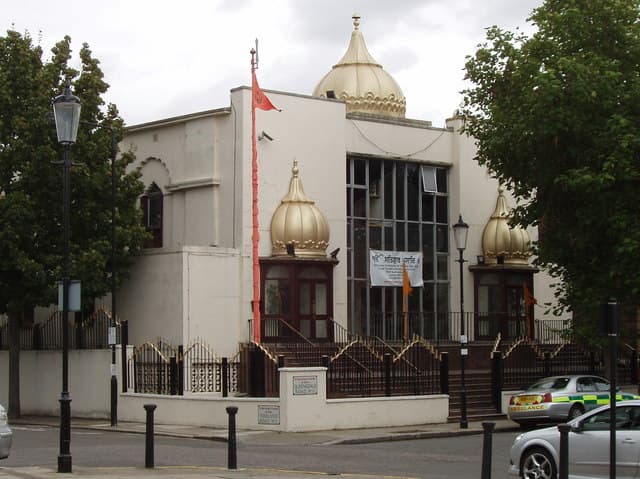
Central Gurdwara (Khalsa Jatha) London
The Central Gurdwara (Khalsa Jatha) London is the oldest Sikh place of worship in the United Kingdom and Europe, established in 1908. It is affiliated with the Chief Khalsa Dewan of Amritsar and maintains traditional Khalsa practices, including displaying the original Sikh flag symbol. The gurdwara moved to its current Queensdale Road location in 1969.

Gurdwara Baba Atal
Gurdwara Baba Atal is a significant Sikh shrine in Amritsar, dedicated to Baba Atal Rai, the young son of Guru Hargobind. Its distinctive nine-story octagonal structure, standing around forty meters tall, commemorates his nine years of life. Located near the Harmandir Sahib, it is a site of historical and spiritual importance, known for its intricate artwork and devotional plaques.