
Ukobach
Demonology·Demonology·French·Demon
Ukobach is a demon described in Jacques Collin de Plancy's Dictionnaire Infernal, a comprehensive work on demonology first published in 1818. This demon is notable for its depiction in the illustrated editions of the Dictionnaire Infernal, which influenced later occult literature and iconography.
Key Facts
- ›Ukobach is a demon featured in Jacques Collin de Plancy's Dictionnaire Infernal.
- ›The Dictionnaire Infernal is a demonological dictionary that describes demons organized in hierarchies.
- ›The 1863 edition of the Dictionnaire Infernal included illustrations by Louis Le Breton, depicting various demons.
- ›Many of the illustrations from the Dictionnaire Infernal were later used in S. L. Macgregor Mathers's edition of the Lesser Key of Solomon.
- ›The Dictionnaire Infernal underwent several revisions and editions between 1818 and 1863.
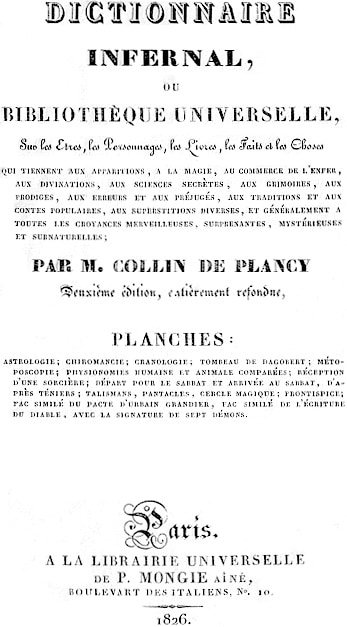
Dictionnaire Infernal
Jacques Collin De Plancy, Louis Le Breton, S. L. Macgregor Mathers
About Ukobach
Ukobach is a demonic entity documented within the pages of the Dictionnaire Infernal, a significant work on demonology compiled by Jacques Collin de Plancy. First published in 1818, the Dictionnaire Infernal aimed to catalog and describe a vast array of supernatural beings, including demons, often organizing them into hierarchical structures.
Role and Attestation
Ukobach's presence is primarily established through its inclusion in the Dictionnaire Infernal. While the text itself provides descriptions of numerous demons, Ukobach is notable for its visual representation. The 1863 edition of de Plancy's work, perhaps its most famous iteration, featured sixty-nine illustrations by artist Louis Le Breton, many of which depicted the supposed appearances of various demons. These striking images contributed to the enduring legacy of the Dictionnaire Infernal and its influence on later occult literature and iconography.
Influence and Legacy
The illustrations from the Dictionnaire Infernal, including those of demons like Ukobach, found their way into other important occult texts. Notably, many of these depictions were later incorporated into S. L. MacGregor Mathers's edition of The Lesser Key of Solomon, a foundational grimoire in Western esotericism. This cross-pollination of imagery solidified the visual identity of certain demons for subsequent generations of occultists and enthusiasts.
The Dictionnaire Infernal itself underwent several revisions and expansions between its initial publication in 1818 and its final illustrated edition in 1863. This evolution reflects de Plancy's own shifting perspectives, moving from an initial skepticism towards superstition to a greater engagement with Roman Catholic theology, which influenced the later editions of his work. Consequently, Ukobach, along with many other figures, is presented within a framework that attempts to reconcile or catalog supernatural beliefs.
Source: Wikipedia ↗
Frequently Asked Questions
What is the Dictionnaire Infernal?
The Dictionnaire Infernal is a book on demonology written by Jacques Collin de Plancy, first published in 1818. It attempts to detail knowledge concerning superstitions and demonology, describing demons organized in hierarchies.
Who illustrated the demons in the Dictionnaire Infernal?
The most famous edition of the Dictionnaire Infernal, published in 1863, featured sixty-nine illustrations by Louis Le Breton, which depicted the appearances of several of the demons.
What is Ukobach's role or significance?
Ukobach is listed and depicted as a demon within the Dictionnaire Infernal. Its significance primarily lies in its inclusion and illustration within this influential demonological text.
Did the Dictionnaire Infernal change over time?
Yes, the Dictionnaire Infernal was published in several editions between 1818 and 1863. The content and illustrations, particularly in the later editions, were revised and expanded.
Related Demons
Leonard
The Dictionnaire Infernal is a foundational book on demonology, first published in 1818 by Jacques Collin de Plancy. It details various demons, often organized by hierarchy, and is notable for its illustrated editions, particularly the 1863 version featuring sixty-nine depictions of demons by Louis Le Breton. The book reflects the author's evolving views on superstition and the supernatural, moving from initial skepticism to a later embrace of Roman Catholic theology.
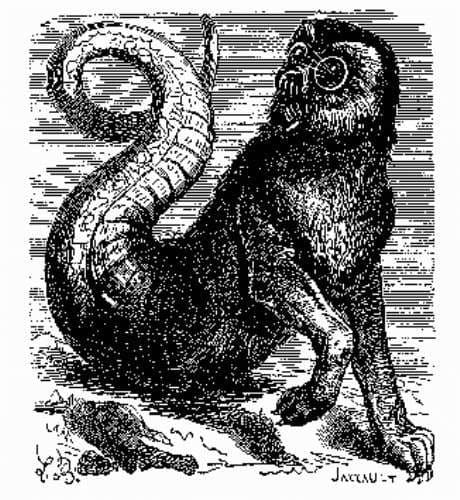
Aamon/Amon
Aamon, also known as Amon, is a Grand Marquis of Hell in demonology, commanding 40 infernal legions according to the Ars Goetia. He is notable for his knowledge of the past and future, his ability to reconcile friends and foes, and his association with life and reproduction. His origins are linked to ancient Libyan and Punic deities.
Alloces/Allocer
Alloces is a demon described in various demonological grimoires as a duke with the power to teach astronomy and liberal sciences. He is notably depicted as a lion-headed soldier riding a horse, commanding legions of demons. His role and appearance can vary between different texts, with some sources attributing different ranks and abilities.