
Qin
In Mandaeism, Qin is a prominent figure in the World of Darkness, known as the "queen of darkness." She is the mother of the demons Ruha and Zahreil and the grandmother of Ur. Her lineage places her as a significant matriarch within Mandaean cosmology's underworld.
Key Facts
- ›Qin is identified as the "queen of darkness" in Mandaean texts.
- ›She is the mother of the demons Ruha and Zahreil.
- ›Qin is the grandmother of Ur, who resides in the World of Darkness.
- ›Her husband is the demon Anathan.
- ›One of her epithets is Sumqaq, which also denotes a polluted well in the underworld.
- ›In Book 5 of the Right Ginza, she gives her daughter Zahreil to Hibil for marriage.
Queen of Darkness, Sumqaq
World of Darkness, Underworld
Right Ginza
Ruha, Zahreil, Ur, Anathan, Hibil
Darkness, Pollution
Polluted Water Well
About Qin
Qin: Queen of Darkness in Mandaeism
In the complex cosmology of Mandaeism, Qin holds a significant position as a matriarch within the "World of Darkness" (alma ḏ-hšuka), often referred to as the underworld. She is consistently depicted as the "queen of darkness," a title that underscores her dominion over this malevolent realm.
Lineage and Relationships
Qin's genealogical importance is emphasized by her role as the mother of the demons Ruha and Zahreil. Furthermore, she is the grandmother of Ur, another entity associated with the World of Darkness. Her consort is the demon Anathan, solidifying her place within the demonic hierarchy. The Mandaean text, Book 5 of the Right Ginza, highlights her active participation in the affairs of the underworld by detailing her arrangement for her daughter Zahreil to marry Hibil.
Epithets and Symbolism
One of Qin's notable epithets is Sumqaq. This name is not solely a descriptor for her but also refers to a well of polluted water situated within the World of Darkness. This association links Qin directly to the themes of impurity and corruption that characterize the underworld in Mandaean belief.
Source: Wikipedia ↗
Frequently Asked Questions
Who is Qin in Mandaeism?
Qin is a significant figure in Mandaean cosmology, particularly within the World of Darkness. She is known as the "queen of darkness" and is a matriarch of several demonic beings.
What is Qin's relationship to other Mandaean demons?
Qin is the mother of the demons Ruha and Zahreil, and the grandmother of Ur. Her husband is identified as the demon Anathan.
What does the epithet Sumqaq refer to?
Sumqaq is an epithet for Qin, and it also refers to a well of polluted water located within the World of Darkness in Mandaean lore.
What role does Qin play in Mandaean texts like the Right Ginza?
In Book 5 of the Right Ginza, Qin is depicted as arranging a marriage for her daughter, Zahreil, giving her to Hibil to marry.
Related Demons
Legion
Legion is a collective of demons described in the New Testament's synoptic Gospels, notably in the exorcism of the Gerasene demoniac. This multitude of spirits shares a single mind and will, famously identified themselves to Jesus as 'Legion' when asked for their name. The name is significant, potentially referencing the Roman military to symbolize overwhelming power or simply indicating an immeasurable number of demonic entities.
Shaitan
Shaitan, also known as Iblis, is the leader of devils (shayāṭīn) in Islam. He is primarily known for his refusal to prostrate before Adam, leading to his expulsion from heaven. In Islamic theology, he embodies disobedience and serves as a tempter, while in Sufism, he can represent the cosmic veil separating divine love from wrath, or paradoxically, a "truest monotheist" who bows only to God. Shaitan is notable for his prominent role in Islamic scripture and subsequent extensive depiction in art and literature.
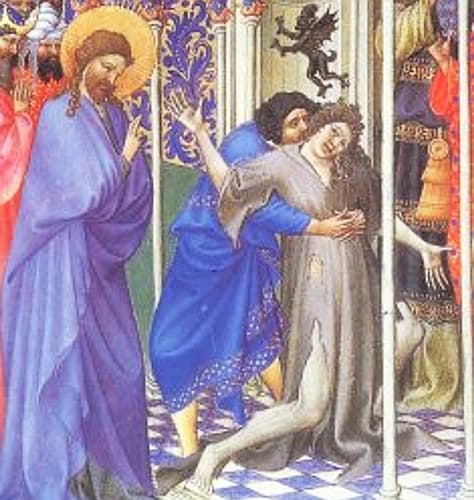
Unclean spirit
Unclean spirit is a term used in biblical translations to describe a malevolent spiritual entity, stemming from Hebrew and Greek phrases signifying impurity. Commonly associated with demonic possession, these spirits are depicted as adversaries to divine will and human well-being, often linked to physical and spiritual defilement. Their presence is a recurring theme in the New Testament, particularly in accounts of Jesus's miraculous healings and exorcisms.