
Mephistopheles
Faust legend / German folklore·Demonology / Folklore / Literary Tradition·German·Demon
Mephistopheles is a prominent demon in German folklore, most famously known as the devil's agent in the Faust legend. Originating in Renaissance humanist thought and popularized by Johann Wolfgang von Goethe, he is depicted as a cunning, ironic, and often charming figure who negotiates for souls. Mephistopheles is notable for his complex characterization, serving as a foil to Faust's ambition and representing themes of temptation, corruption, and the nature of evil.
Key Facts
- ›Mephistopheles is a demon primarily associated with the Faust legend, originating in German folklore.
- ›His name is derived from a corrupted Greek compound, possibly meaning 'not loving light' or 'not a friend of light'.
- ›He acts as the devil's agent, negotiating deals for souls and serving as a trickster, liar, and cheater.
- ›Mephistopheles is capable of shapeshifting through magic and illusion.
- ›He is depicted as an opponent of beauty and freedom, causing death and working to ruin lives.
- ›Goethe's portrayal of Mephistopheles in 'Faust' significantly influenced subsequent interpretations of the character.

Mephostophilis, Mephisto, Mephistophilus
Temptation, Corruption, Ruin of Lives, Death
Magic, Illusion, Shapeshifting
Historia Von D. Johann Fausten, Doctor Faustus, Faust
Johann Georg Faust, Doctor Faustus, Johann Wolfgang Von Goethe, Christopher Marlowe, Satan, Lucifer
Evil, Corruption, Temptation, Opponent of Beauty, Opponent of Freedom
About Mephistopheles
Mephistopheles is a prominent figure in German folklore and literature, most famously known as the devil's agent in the legend of Faust. His character emerged from Renaissance humanist thought and gained widespread recognition through the influential works of writers like Christopher Marlowe and Johann Wolfgang von Goethe.
Origins and Etymology
The name Mephistopheles is believed to be derived from a corrupted Greek compound, potentially meaning 'not loving light' or 'not a friend of light.' The name first appeared in the late 16th-century chapbooks detailing the life of the historical alchemist Johann Georg Faust, with variations like Mephostophiles and Mephistophilis appearing in early texts. Goethe's popularization of the name Mephistopheles solidified its modern usage.
Role in the Faust Legend
In the Faust legend, Mephistopheles serves as the intermediary between the ambitious scholar Faust and the Devil. He is depicted as a cunning, ironic, and often charming character who negotiates Faust's pact, promising knowledge and worldly pleasures in exchange for his soul. Mephistopheles embodies trickery, lies, and deception, acting as a constant tempter and agent of corruption. He is described as an opponent of beauty and freedom, whose actions lead to ruin and death.
Literary and Artistic Depictions
Mephistopheles' character has been interpreted in various ways across different literary and theatrical productions. In Marlowe's 'Doctor Faustus,' he is sometimes portrayed with a degree of introspection and regret, lamenting his separation from God. Goethe's 'Faust' presents a more complex Mephistopheles, characterized by his intelligence, humor, and a constant internal conflict between his role as a servant of evil and his perception of the world. This complexity has made the role a significant challenge for actors, requiring them to embody a figure that is both charming and destructive, embodying a sense of 'nothingness' that contrasts with the material world.
Interpretations also explore Mephistopheles as a nature spirit ('Naturgeist'), a sexual voyeur, or even a homoerotic character, adding further layers to his enigmatic persona. Despite his demonic nature, Mephistopheles is sometimes shown warning Faust of the consequences of his choices, leading to debates about his true intentions and the nature of good versus evil. He has become a stock character, appearing in numerous adaptations, musical works, and even modern popular culture, often symbolizing temptation and the darker aspects of human ambition.
Source: Wikipedia ↗
Frequently Asked Questions
What is the origin of the name Mephistopheles?
The name Mephistopheles is believed to be a corrupted Greek compound. It is thought to combine the Greek particle 'mē' (not) with 'philos' (loving), possibly suggesting 'not loving light' or 'not a friend of light'. Other etymologies link it to Hebrew words for 'destroyer' and 'slanderer'.
What is Mephistopheles' role in the Faust legend?
In the Faust legend, Mephistopheles acts as the devil's agent, facilitating Faust's pact with the devil in exchange for his soul. He serves as Faust's companion and tempter, embodying trickery, deception, and the pursuit of earthly desires.
How is Mephistopheles different from the traditional Devil?
While the Devil is seen as the chief adversary of God and ruler of Hell, Mephistopheles is often depicted as Hell's messenger and a servant of the Devil. He is characterized by his intelligence, irony, and charm, making him a more complex and sometimes even sympathetic figure than a purely malevolent entity.
What are Mephistopheles' key characteristics?
Mephistopheles is known for being a cunning trickster, a liar, and a cheater, but also intelligent, ironic, and charming. He can shapeshift and uses magic and illusion. He is portrayed as an opponent of beauty and freedom, and his actions lead to destruction and ruin.
Which literary works are most famous for featuring Mephistopheles?
Mephistopheles is most famously featured in Johann Wolfgang von Goethe's 'Faust' and Christopher Marlowe's 'Doctor Faustus'. The character also appears in numerous other literary and artistic adaptations of the Faust legend.
Related Demons

Abyzou
Abyzou is a female demon prominently featured in the folklore and demonological texts of the Near East and Europe, especially known for causing miscarriages and infant mortality. Driven by envy due to her own infertility, she is depicted as a malevolent entity with numerous names and forms. Her fullest depiction is in the Testament of Solomon, and she is also associated with figures like Gylou and Alabasandria, appearing on ancient magical amulets.
Aswang
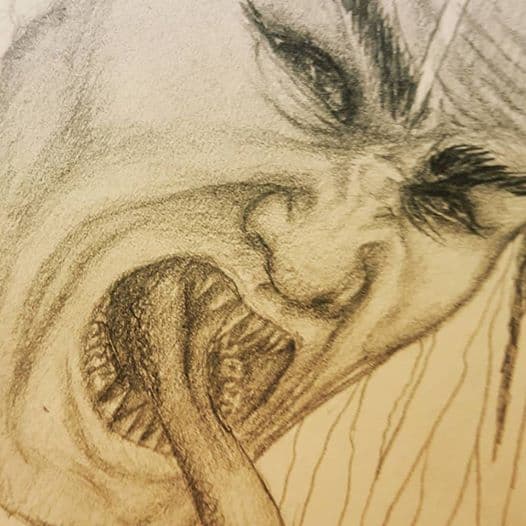
The Aswang is a broad category of malevolent, shape-shifting creatures in Filipino folklore, encompassing beings akin to vampires, ghouls, witches, and human-beast hybrids. These entities are deeply ingrained in Philippine mythology and are notorious for their predatory nature, often targeting vulnerable individuals and even fetuses. The Aswang is particularly feared for its ability to infiltrate human society and its behavior, which is seen as a stark inversion of traditional Filipino values.
Azi Dahaka/Dahak
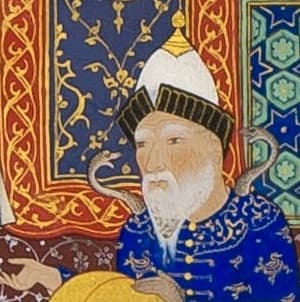
Aži Dahāka, also known as Zahhāk, is a prominent figure of evil in Iranian mythology and Zoroastrian tradition, often depicted as a monstrous serpent or dragon. He is notable for his role as a tyrannical king who ruled for a thousand years, feeding human brains to two snakes that grew from his shoulders, and for his eventual defeat and imprisonment by the hero Fereydun.