
Demogorgon
Classical scholarship and late antiquity demonology·Demonology, Mythology, Literary Tradition·Greco-Roman and European·Deity, Demon, Primordial Being
Demogorgon is a figure whose name likely originated from a scribal error in ancient commentary, leading to its association with an underworld deity or demon. Though often linked to Greek mythology, its true origins are debated, with scholarly consensus pointing to a misreading of the term "demiurge." This enigmatic entity has been interpreted variously as a primal god, a terror-demon, and a powerful demonic prince, appearing in classical literature, Renaissance texts, and modern fantasy.
Key Facts
- ›The name Demogorgon likely stems from a misreading of the Greek word 'Dēmiourgón' (demiurge) in ancient manuscripts.
- ›It is first explicitly mentioned in a commentary on Statius's Thebaid, attributed to Lactantius Placidus (circa 4th century AD).
- ›Demogorgon has been interpreted as a primal god, a terror-demon, and a lesser superbeing responsible for creating Earth.
- ›In Renaissance texts, it was sometimes glossed as 'Demon-Gorgon,' meaning 'Terror-Demon' or 'God of the Earth.'
- ›Demogorgon appears in notable literary works by authors such as Marlowe, Milton, Spenser, Ariosto, and Shelley.
- ›In Dungeons & Dragons, Demogorgon is a prominent demon prince known as the 'Prince of Demons.'

Demoirgon, Emoiregon, Demogorgona, Demon-Gorgon, Demiurge
Underworld, Fate, Chaos, Darkness, Earth, Demons
Dethroning Other Deities, Summoning Fates and Genii, Commanding Infernal Realms
- Commentary On Statius's Thebaid
- Boccaccio's Genealogia Deorum Gentilium
- Christopher Marlowe's Doctor Faustus
- Johann Weyer's Demonological Works
- Ariosto's I Cinque Canti
- Philippe Quinault's Libretto For Jean-Baptiste Lully's Opera Roland
- Bernardo De Balbuena's El Bernardo
- Edmund Spenser's the Faerie Queene
- Voltaire's "Plato's Dream"
- Vincenzo Righini's Opera Il Demogorgone
- Johann Karl August MusäUs' "Rolands Knappen"
- Herman Melville's Moby-Dick
- Percy Bysshe Shelley's Prometheus Unbound
- áLvaro De Campos' Poem 'Demogorgon'
- Carlo Gozzi's Il Re Cervo
- Dungeons & Dragons Game Materials
Lactantius Placidus, Boccaccio, Theodontius, Pronapides the Athenian, Plato, Jupiter, Thetis, Fates, Genii, Alcina, Mephistopheles, Satan
Terror, Primordial Power, Unknown Divine Power, Revolutionary Populace
- In Ariosto's Work, the Fates and Genii Are Summoned To A Temple Palace of Demogorgon Every Five Years.
- In Spenser's Work, the 'Hideous Chaos' Dwells In the Abyss Where Demogorgon Is Pent.
Cocytus and Styx
- In Some Interpretations, Demogorgon Is Linked To Plato's Demiurge, the 'Craftsman' Or 'Maker' of the Universe.
- Shelley Alludes To A Revolutionary Populace Through Demogorgon, Potentially Connecting To Political Upheaval Like the French Revolution.
Darkness, Abyss, Terror, Fate
About Demogorgon
Demogorgon is an enigmatic figure whose name is believed to have originated from a scribal error in ancient commentary, leading to its association with an underworld deity or demon. While often linked to Greek mythology, its true origins are debated, with scholarly consensus pointing to a misreading of the Greek term 'dēmiourgón,' meaning 'demiurge.' This interpretation suggests Demogorgon is not an original deity but a textual corruption that gained a life of its own.
Origins and Early Mentions
The name Demogorgon first appears explicitly in a commentary on Statius's Thebaid, attributed to Lactantius Placidus, a text dating to approximately the 4th century AD. Prior to this commentary, no historical or mythological texts mention a figure named Demogorgon. The commentary itself appears to have been written by a Mithraic scholar, not the Christian author Lactantius.
Literary and Scholarly Interpretations
Over centuries, Demogorgon evolved in interpretation. In the Middle Ages, it was noted in brief annotations to Lucan's Pharsalia. By the Renaissance, figures like Boccaccio, in his Genealogia Deorum Gentilium, cited earlier authorities to describe Demogorgon as a primal god, the antecedent of all deities. Renaissance scholars sometimes glossed the name as 'Demon-Gorgon,' implying a 'Terror-Demon' or 'God of the Earth.' Art historian Jean Seznec concluded that Demogorgon was essentially a grammatical error that became personified as a god.
Demogorgon in Literature and Art
Demogorgon transitioned into literary works, often depicted as a powerful entity of the underworld or a primordial force. Christopher Marlowe invoked the name in Doctor Faustus, and Edmund Spenser featured Demogorgon in The Faerie Queene as a being dwelling in the deep abyss, associated with Chaos and dark night. Ariosto, in I Cinque Canti, described Demogorgon as having a splendid temple where the Fates and genii convened. Later, in the opera Roland, Demogorgon was king of the fairies. Percy Bysshe Shelley's Prometheus Unbound presents Demogorgon as a dark, shapeless spirit who ultimately dethrones Jupiter, with the name possibly alluding to a revolutionary populace.
Modern Popular Culture
In the realm of modern fantasy, Demogorgon has achieved significant prominence, most notably in the Dungeons & Dragons role-playing game. Here, Demogorgon is a formidable demon prince, widely recognized as the 'Prince of Demons' due to his immense power and influence. This iconic character has appeared in numerous editions of the game and has inspired other media, including being the namesake for creatures in the television series Stranger Things.
Source: Wikipedia ↗
Frequently Asked Questions
What is the origin of the name Demogorgon?
The most prevalent scholarly view suggests the name Demogorgon arose from a copyist's misreading of the Greek term 'dēmiourgón,' meaning 'demiurge.' Other theories connect it to Greek words for 'spirit' or 'people' and 'quick' or the Gorgon monsters.
When was Demogorgon first mentioned?
Demogorgon is first explicitly mentioned in a commentary on Statius's Thebaid, attributed to Lactantius Placidus, dating to approximately the 4th century AD. Prior to this, no writer mentions such a figure.
How has Demogorgon been interpreted in literature?
Demogorgon has been depicted in literature as a supreme god whose name is not permitted to be known, a demon of Hell, a master of fate, the god of fairies, and a dark, shapeless spirit who dethrones Jupiter. It has also been associated with primordial chaos and the underworld.
What is Demogorgon's role in Dungeons & Dragons?
In the Dungeons & Dragons game, Demogorgon is a powerful demon prince and is self-proclaimed as the 'Prince of Demons.' This title is widely acknowledged due to his immense power and influence within the game's cosmology.
Is Demogorgon considered a Greek deity?
While sometimes ascribed to Greek mythology, the name Demogorgon likely originated from a textual error rather than being an original Greek deity. Its concept is more directly traced to the misread term 'demiurge.'
Related Demons
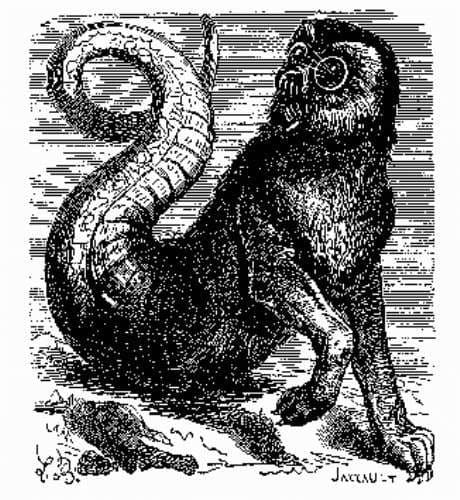
Aamon/Amon
Aamon, also known as Amon, is a Grand Marquis of Hell in demonology, commanding 40 infernal legions according to the Ars Goetia. He is notable for his knowledge of the past and future, his ability to reconcile friends and foes, and his association with life and reproduction. His origins are linked to ancient Libyan and Punic deities.
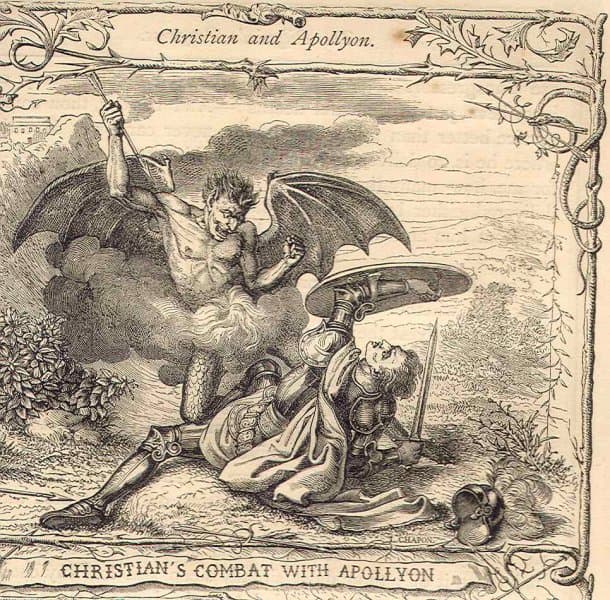
Abaddon/Apollyon
Abaddon, also known as Apollyon in Greek, is a figure appearing in biblical texts as both a place of destruction and a powerful angel associated with the abyss. Primarily recognized from the Hebrew Bible and the New Testament's Book of Revelation, Abaddon is often depicted as a destroyer or the king of a demonic army. Its significance lies in its multifaceted interpretations across various religious and literary traditions, evolving from a concept of ruin to a specific angelic or demonic entity.

Abyzou
Abyzou is a female demon prominently featured in the folklore and demonological texts of the Near East and Europe, especially known for causing miscarriages and infant mortality. Driven by envy due to her own infertility, she is depicted as a malevolent entity with numerous names and forms. Her fullest depiction is in the Testament of Solomon, and she is also associated with figures like Gylou and Alabasandria, appearing on ancient magical amulets.