
Archon
Gnosticism·Demonology·Greco-Roman·Ruler
Archons are malevolent spiritual rulers in Gnosticism and related traditions, responsible for creating the physical universe and preventing souls from ascending to the divine realm. They are often associated with the seven planets and are depicted as demonic entities with bestial, androgynous appearances. Their role as builders and jailers of the material world makes them significant figures in Gnostic cosmology and eschatology.
Key Facts
- ›Archons are rulers of the physical universe in Gnosticism, actively preventing souls from leaving the material realm.
- ›They are often associated with the seven planets, with each archon linked to a specific celestial sphere.
- ›Notable archons include Yaldabaoth (also known as Saklas and Samael), Yao, Sabaoth, Adonaios, Astaphaios, Elaios, and Horaios.
- ›Their physical appearance is described as androgynous with beast-like faces.
- ›In Manichaeism, archons are rulers within the 'Kingdom of Darkness' and constitute the Prince of Darkness.
- ›Their origins are linked to planetary deities in Babylonian astrology and possibly to the concept of hostile powers in Zoroastrianism.
Archontes, Hebdomad
Physical Universe, Material Realm, Ignorance, Reincarnation
Creation of the Physical Universe, Prevention of Soul Ascension, Imparting Ignorance, Inciting Passions and Vices
Hypostasis of the Archons, Apocryphon of John, On the Origin of the World, Pistis Sophia, Origen's Contra Celsum, Epiphanius' Works, Bundahishn
Sophia, Barbelo, Yaldabaoth, Saklas, Samael, Abraxas, Ptahil-Uthra, Namrus, Ur
Rejection of Flawed Governmental Systems, Materialism, Ignorance, Temptation, Vices
Gnosis
- In Mandaism, the Seven Are Planets Belonging To the World of Darkness, Later Pardoned and Appointed Rulers of the World.
- In Manichaeism, Archons Are Evil Beings Forming the Prince of Darkness.
- In Zoroastrianism, Hostile Powers Captured and Set As Constellations In the Heavens Are Comparable.
- In Later Greek Philosophy , Archons Are Placed In A Hierarchy of Invisible Beings Below Gods and Daemons.
Planets, Seven, Beast Faces
About Archon
Archons
The Archons are a significant class of malevolent spiritual rulers in Gnosticism and closely related religious and philosophical systems. Their primary role is the creation and governance of the physical universe, which they construct to trap souls and prevent their ascent to the divine Pleroma. This cosmic imprisonment is a central theme in Gnostic cosmology, where the Archons represent the forces that bind humanity to the material world and its cycle of ignorance and suffering.
Role in Gnostic Cosmology
Archons are typically depicted as the builders of the seven planetary spheres, which form the structure of the material cosmos. Each Archon is often associated with one of the seven classical planets, acting as a warden or jailer within their respective celestial domain. This association draws from earlier astrological and cosmological traditions, reinterpreting planetary powers as demonic entities. Their existence is well-documented in key Gnostic texts such as the Hypostasis of the Archons, the Apocryphon of John, and the Pistis Sophia.
Nature and Appearance
In terms of their nature, Archons are fundamentally opposed to the true, transcendent God of Gnosticism. They are often described as ignorant, proud, and envious, acting out of a misguided sense of creation or a desire to maintain their dominion. Their physical appearance is frequently described as androgynous, possessing the faces of beasts, with the chief Archon, Yaldabaoth, often characterized by a lion-like countenance. This bestial imagery underscores their chaotic and untamed nature.
Variations and Associations
While the Gnostic concept is primary, the idea of Archons has seen variations in related traditions. In Manichaeism, they are rulers within the 'Kingdom of Darkness.' Mandaeism presents a different conception where the 'Seven' are planets associated with the World of Darkness but are later pardoned and appointed rulers. The term 'Archon' itself, derived from Greek for 'ruler' or 'prince,' also appears in later Greek philosophy, though with different connotations. The Archons are notable for their role in the Gnostic narrative of creation and salvation, serving as the primary antagonists to the divine spark within humanity.
Source: Wikipedia ↗
Frequently Asked Questions
What are Archons in Gnosticism?
In Gnosticism, Archons are the builders of the physical universe and rulers of the material world. They are depicted as malevolent entities who prevent souls from escaping the cycle of reincarnation and ascending to the divine realm.
What is the Hebdomad?
The Hebdomad refers to the group of seven world-creating Archons in Gnostic systems. These seven are typically seen as semi-hostile powers, each associated with one of the seven planets.
What are some prominent Archons?
Some of the most well-known Archons include Yaldabaoth, who is often considered the chief Archon and Demiurge, as well as Yao, Sabaoth, Adonaios, Astaphaios, Elaios, and Horaios. Different Gnostic texts may list variations or additional Archons.
What is the origin of the Archons' association with planets?
The association of Archons with planets likely stems from earlier beliefs, particularly Babylonian astrology, where planetary deities held significant power. Gnosticism adapted these concepts, reinterpreting them as demonic rulers of the material spheres.
How are Archons depicted in terms of appearance?
The physical appearance of Archons is described as androgynous, with their faces resembling those of beasts. Specific descriptions sometimes mention a lion-like face for the chief Archon, Yaldabaoth.
Are Archons considered fallen angels?
Some traditions suggest that Archons may be related to the concept of fallen angels, particularly in texts like On the Origin of the World, where they are described as impregnating Eve, an idea possibly derived from Genesis and Enochian writings.
Related Demons
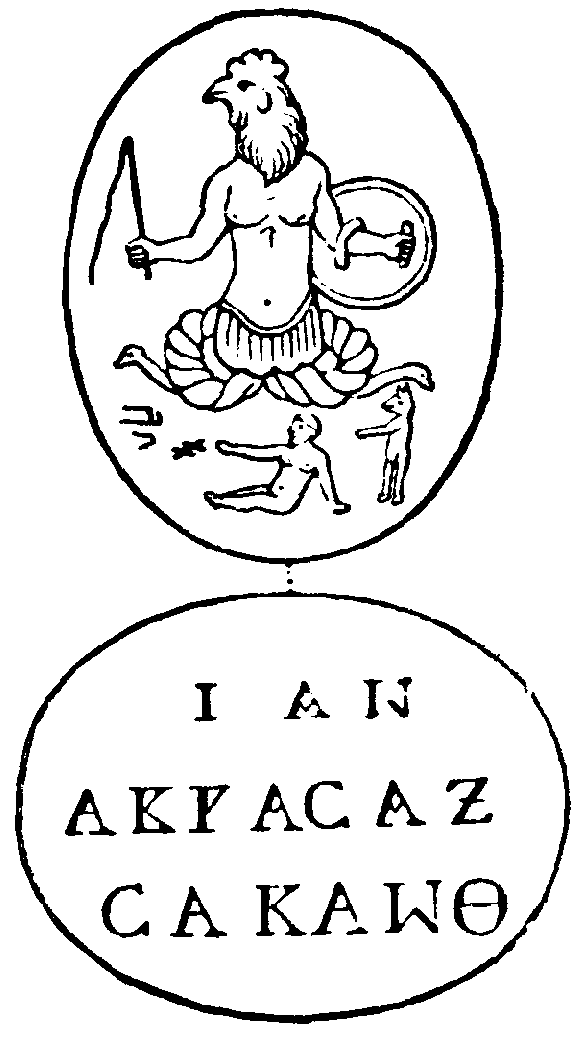
Abraxas
Abraxas, also known as Abrasax, is a significant figure in Gnostic Christianity, often referred to as the "Great Archon." His name appears in key Gnostic texts and ancient magical papyri, and he is notably associated with engraved gemstones known as Abraxas stones, which were used as amulets. The precise origin and meaning of his name are debated, with theories linking it to Egyptian, Hebrew, and Greek etymologies, and his role varies from a supreme deity to a cosmic ruler within Gnostic cosmology.
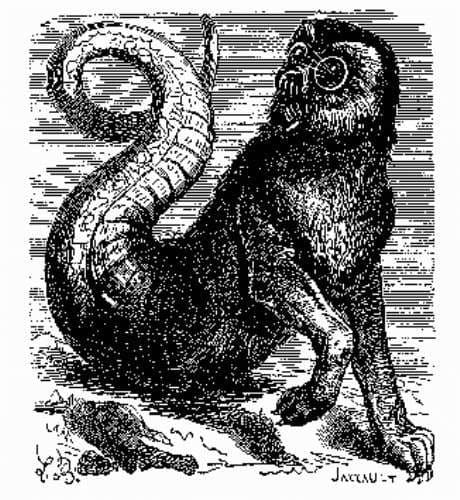
Aamon/Amon
Aamon, also known as Amon, is a Grand Marquis of Hell in demonology, commanding 40 infernal legions according to the Ars Goetia. He is notable for his knowledge of the past and future, his ability to reconcile friends and foes, and his association with life and reproduction. His origins are linked to ancient Libyan and Punic deities.
Agaliarept
Agaliarept is a demon featured in occult texts like the Grimoirium Verum and The Grand Grimoire, where he is described as a high-ranking general directly under Lucifer. He is noted for his ability to uncover secrets and is associated with governing matters related to water. Agaliarept has also been adapted into various modern fictional works, particularly video games and novels.