
York Minster
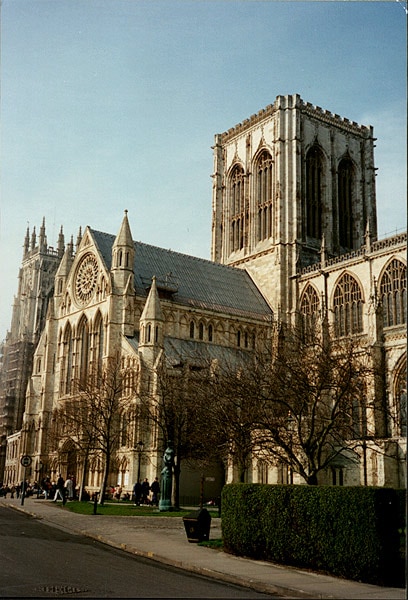
York Minster, formally the Cathedral and Metropolitical Church of St Peter in York, is an Anglican cathedral in York, England. It serves as the seat of the Archbishop of York and is the mother church for the Diocese and Province of York. Constructed primarily between 1220 and 1472, it is renowned for its significant medieval stained glass, including the world's largest expanse of medieval stained glass in its East Window.
Key Facts
- ›The first recorded church on the site dates back to 627, built for the baptism of Edwin, King of Northumbria.
- ›The current structure was largely built between 1220 and 1472, showcasing Early English, Decorated, and Perpendicular Gothic architectural styles.
- ›York Minster houses the largest expanse of medieval stained glass in the world in its Great East Window.
- ›The five Sisters window in the north transept is a notable example of grisaille glass, consisting of five lancets.
- ›The cathedral suffered significant damage from fires in 1829, 1840, and a major blaze in the south transept in 1984, all of which have been followed by restoration efforts.
- ›It is the second-largest Gothic cathedral in Northern Europe and the largest completed during the Gothic period.
- Great East Window
- Five Sisters Window
- Octagonal Chapter House
- 15th-Century Choir Screen With Sculptures of English Kings
- West Towers With Battlements and Pinnacles
- Undercroft With Re-Used Fabric From C. 1160
About York Minster
York Minster, formally known as the Cathedral and Metropolitical Church of St Peter in York, stands as a preeminent Anglican cathedral in the city of York, North Yorkshire, England. It holds the significant position of being the seat of the Archbishop of York, the second-highest office within the Church of England, and functions as the mother church for both the Diocese of York and the Province of York. The administration of the Minster is overseen by its dean and chapter.
History and Construction
The earliest recorded Christian presence on the site dates back to 627 when a wooden church was hastily constructed to baptise Edwin, King of Northumbria. While earlier structures existed, the foundations of the present building were laid in 1220, with construction continuing until 1472. This extensive period of building allowed for the clear charting of the development of English Gothic architecture, progressing from the Early English period through the Decorated period and culminating in the Perpendicular style.
Architectural Significance
York Minster is recognized as the second-largest Gothic cathedral in Northern Europe and is notable for being the largest cathedral completed during the Gothic period of architecture itself. Its cruciform plan is complemented by an octagonal chapter house, a central tower, and two imposing towers at the west front. The cathedral is primarily constructed from magnesian limestone, a creamy-white rock quarried locally.
Notable Features
The Minster is particularly celebrated for its exceptional stained glass. It retains a vast majority of its medieval glass, a rare survival among European churches. The Great East Window stands as the largest expanse of medieval stained glass in the world, depicting the Last Judgment. The north transept features the Five Sisters window, a striking composition of grisaille glass across five tall lancets. The chapter house is unique for its octagonal design and the absence of a central column to support its innovative wooden roof. The 15th-century choir screen, set against a red background with gilded canopies, displays sculptures of English kings from William the Conqueror to Henry VI.
Incidents and Restoration
Throughout its history, York Minster has faced challenges, including damage from fires and periods of neglect. Significant fires occurred in 1829, 1840, and most notably in 1984, which severely damaged the south transept. Each incident has prompted extensive restoration efforts, with the 1984 fire leading to a significant repair and restoration project completed in 1988. More recent extensive renovations on the east front and the Great East Window were completed in 2018.
Source: Wikipedia ↗
Frequently Asked Questions
When was York Minster built?
The bulk of the current building was constructed between 1220 and 1472. While earlier churches existed on the site from 627, the present structure represents a long period of development and completion.
What is significant about the stained glass at York Minster?
York Minster retains a significant amount of its medieval stained glass, a rarity among European churches. The Great East Window is the largest expanse of medieval stained glass in the world, and the Five Sisters window is a remarkable example of grisaille glass.
Has York Minster ever been damaged by fire?
Yes, York Minster has experienced several fires. Notable incidents occurred in 1829 and 1840, causing significant damage. A major fire in the south transept in 1984 necessitated extensive restoration.
What architectural styles can be seen at York Minster?
The cathedral showcases the evolution of English Gothic architecture. It features Early English Gothic in the transepts, Decorated Gothic in the nave and chapter house, and Perpendicular Gothic in the eastern arm and central tower.
What is the size of York Minster?
The Minster is approximately 159.9 meters (524.5 feet) long. The central tower reaches a height of 72 meters (235 feet), and the choir has an interior height of 31 meters (102 feet).
Related Cathedrals
Hexham Abbey
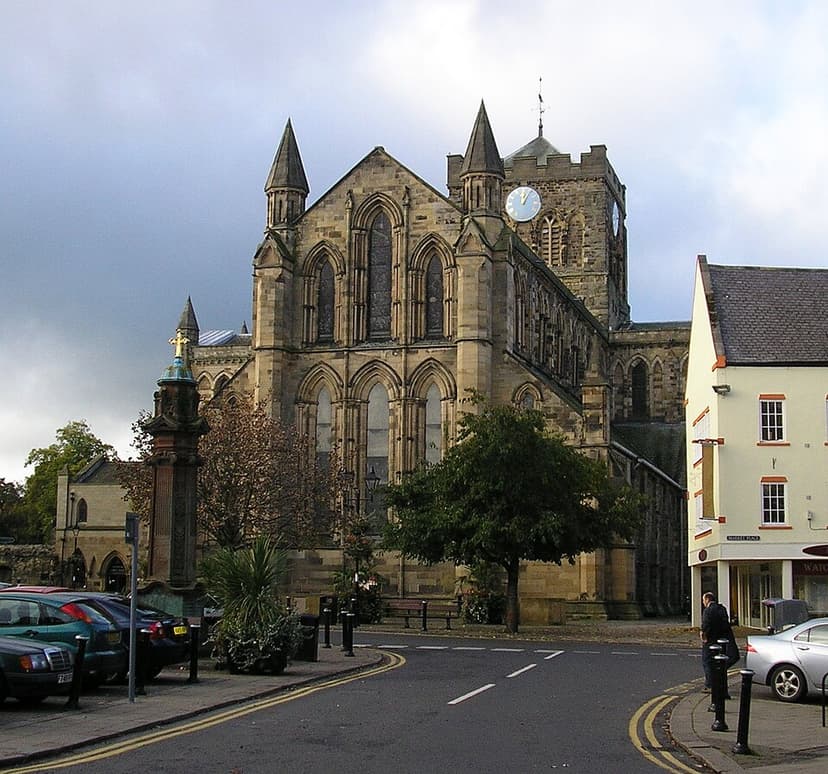
Hexham Abbey is a historic church in Hexham, Northumberland, England, with a history stretching back over 1300 years. Originally founded as a Benedictine abbey in AD 674, it was rebuilt as an Augustinian priory in 1113, and its current structure largely dates from the 12th to 13th centuries. Since the dissolution of the monasteries in 1537, it has served as the parish church for Hexham.

Chester Cathedral
Chester Cathedral is the mother church of the Diocese of Chester, located in Chester, England. Originally the abbey church of a Benedictine monastery dedicated to Saint Werburgh, it is now dedicated to Christ and the Blessed Virgin Mary and has served as the seat of the bishop of Chester since 1541. The cathedral showcases a rich history of architectural styles, from Norman to Perpendicular Gothic, and has undergone significant restoration throughout its existence.

Wells Cathedral
Wells Cathedral, formally the Cathedral Church of St Andrew, is a Church of England cathedral in Wells, Somerset, England, and the seat of the Bishop of Bath and Wells. It is renowned for its status as potentially the world's first truly Gothic structure, largely constructed between the late 12th and mid-14th centuries, and features a significant collection of medieval stained glass and sculpted figures on its west front.