
Hexham Abbey
Hexham Abbey is a historic church in Hexham, Northumberland, England, with a history stretching back over 1300 years. Originally founded as a Benedictine abbey in AD 674, it was rebuilt as an Augustinian priory in 1113, and its current structure largely dates from the 12th to 13th centuries. Since the dissolution of the monasteries in 1537, it has served as the parish church for Hexham.
Key Facts
- ›Founded in AD 674 by St. Wilfrid, originally as a Benedictine abbey.
- ›The Saxon crypt and a 7th/8th-century 'frith stool' (throne) are surviving remnants of Wilfrid's original construction.
- ›Rebuilt as an Augustinian priory in 1113, with the current church largely dating from C.1170–1250 in the Early English style.
- ›Suffered significant damage and rebuilding throughout its history, including a major restoration of the nave and choir around the turn of the 20th century.
- ›The tombstone of Flavinus, a 1st-century Roman cavalry officer, is displayed within the Abbey and is a significant Roman find in Britain.
- ›Serves as the parish church of Hexham since the dissolution of the monasteries in 1537.
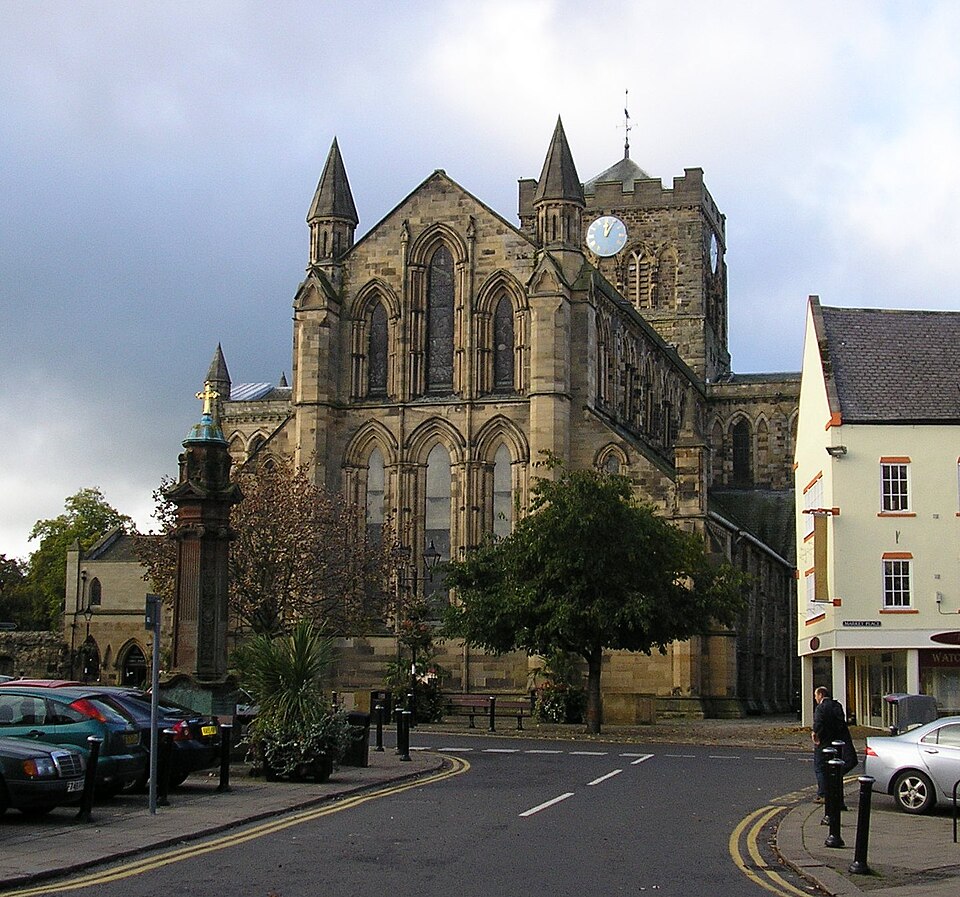
Saxon Crypt, Frith Stool, Tombstone of Flavinus, Stained Glass By Henry Thomas Bosdet, Hexham Hoard
About Hexham Abbey
Hexham Abbey is a significant historic church located in the town of Hexham, Northumberland, in North East England. Its origins trace back to AD 674 with the founding of a Benedictine abbey by St. Wilfrid, making it a site of continuous religious importance for over 1300 years. The Abbey is dedicated to St Andrew and is a Grade I listed building.
History and Architecture
The earliest structure on the site, founded by St. Wilfrid, was largely constructed using materials salvaged from Roman ruins. Of this original Benedictine abbey, the Saxon crypt and a 7th/8th-century 'frith stool' (a type of episcopal throne) still survive. The abbey suffered destruction in 875 during Danish invasions. Around 1050, rebuilding efforts began, likely in the Norman style. In 1113, the site transitioned to an Augustinian priory.
The current church's primary construction phase took place between approximately 1170 and 1250, exhibiting the Early English Gothic architectural style. This period saw the construction of the choir, north and south transepts, and cloisters. The east end of the Abbey underwent rebuilding in 1858, and a substantial restoration and rebuilding project of the nave and choir occurred between 1898 and 1919.
Significance and Features
Since the dissolution of the monasteries in 1537, Hexham Abbey has served as the parish church for Hexham. In recent years, the Abbey has reacquired and developed former monastic buildings into a visitor centre and exhibition space detailing its long history. Notable features within the Abbey include the ancient Saxon crypt, the frith stool, and the tombstone of Flavinus, a 1st-century Roman cavalry officer, which is a significant Roman artifact displayed within the church. The Abbey also features stained glass by artist Henry Thomas Bosdet, with the east window installed around 1907 and the west window in 1918. The Abbey has a notable musical tradition, with active boys' and girls' choirs.
Bishopric of Hexham
Historically, Hexham served as the seat of a bishopric within the Diocese of York during the late 7th and early 8th centuries. Several bishops were associated with Hexham during this period, including saints such as Eata, Cuthbert, and Wilfrid. The bishopric eventually merged back into the See of Lindisfarne and later moved to Durham. The monastic community was reconstituted as an Augustinian priory in 1113 and continued until its dissolution under Henry VIII.
Source: Wikipedia ↗
Frequently Asked Questions
When was Hexham Abbey founded?
Hexham Abbey's origins date back to AD 674, when Queen Etheldreda granted lands to St. Wilfrid for the establishment of a Benedictine abbey. This site has maintained a continuous church presence for over 1300 years.
What is the architectural style of Hexham Abbey?
The current church largely dates from the period c.1170–1250 and is built in the Early English style of architecture. Earlier structures, such as the Saxon crypt, exhibit different architectural characteristics.
What are the oldest parts of Hexham Abbey?
The oldest surviving parts of Hexham Abbey are the Saxon crypt and the 'frith stool', a 7th/8th-century cathedra or throne, both remnants of St. Wilfrid's original Benedictine abbey.
Has Hexham Abbey always been a parish church?
No, Hexham Abbey was originally a monastic institution. Since the dissolution of the monasteries in 1537, it has served as the parish church for the town of Hexham.
What is significant about the crypt of Hexham Abbey?
The crypt is notable for its construction using Roman workmanship, with many carved stones and inscriptions. It once housed relics and features a tombstone of Flavinus, a Roman standard-bearer.
What historical events affected Hexham Abbey?
Hexham Abbey was plundered and burnt to the ground in 875 by Halfdan Ragnarsson. It underwent significant rebuilding in the 12th century after being replaced by an Augustinian priory and experienced major restoration work around the turn of the 20th century.
Related Cathedrals
York Minster
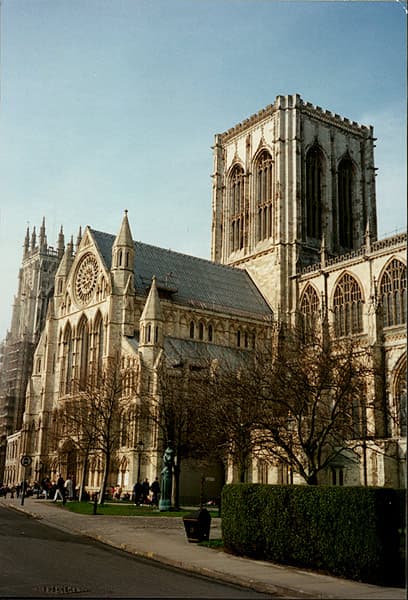
York Minster, formally the Cathedral and Metropolitical Church of St Peter in York, is an Anglican cathedral in York, England. It serves as the seat of the Archbishop of York and is the mother church for the Diocese and Province of York. Constructed primarily between 1220 and 1472, it is renowned for its significant medieval stained glass, including the world's largest expanse of medieval stained glass in its East Window.

Sherborne Abbey
Sherborne Abbey, also known as the Abbey Church of St. Mary the Virgin, is a historic Church of England church in Sherborne, Dorset. It holds significance as a former Saxon cathedral and a Benedictine abbey before becoming a parish church, earning a rare five-star rating in Simon Jenkins' "England's Thousand Best Churches."

Gloucester Cathedral
Gloucester Cathedral, officially the Cathedral Church of St Peter and the Holy and Indivisible Trinity, originated as an abbey founded in 679. It is renowned for its significant architectural history, including the earliest surviving example of structural fan vaulting in its cloisters. The cathedral also holds the shrine of Edward II and has been a prominent filming location.