
Wells, Somerset
Wells, Somerset, is a historic cathedral city in England, renowned for its magnificent cathedral and its status as one of the country's smallest cities. It holds significant historical importance, tracing its origins to a Roman settlement and later becoming a key center under the Anglo-Saxons, with its growth deeply intertwined with the presence of its cathedral and bishopric.
Key Facts
- ›Founded as a minster church by King Ine of Wessex in 704 AD and became the seat of the bishopric of Wells in 909 AD.
- ›The Diocese of Bath and Wells was formed in 1245, with Wells becoming the principal seat with the construction of the current cathedral and bishop's palace in the 13th century.
- ›The city was recognized as a free borough by a Royal charter from King John in 1201.
- ›Wells experienced significant events during the English CIVIL War and the Monmouth Rebellion, with damage sustained by the cathedral.
- ›Historically a center for cloth making and later the largest cheese market in the west of England.
- ›The city's historic architecture has made it a popular filming location for numerous films and television programs.
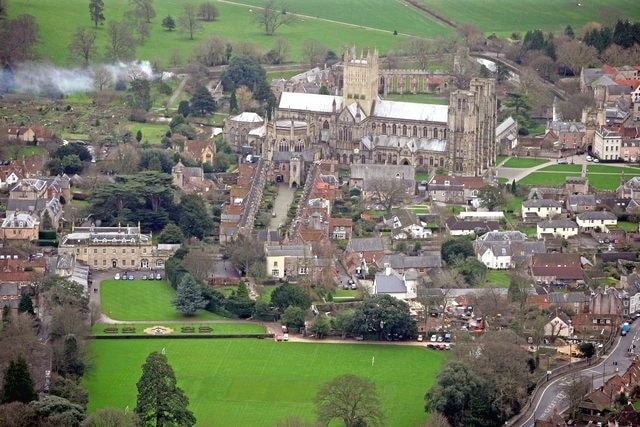
Seven Sisters Statue, Chapter House, Chain Gate, Bishop's Palace, Vicar's Close, Penniless Porch, Bishop's Eye, Brown's Gatehouse
About Wells, Somerset
Wells is a historic cathedral city located in Somerset, England, nestled on the southern edge of the Mendip Hills. Renowned for its magnificent medieval cathedral, it is also recognized as one of England's smallest cities. The city's name derives from three holy wells dedicated to Saint Andrew, which are situated within the grounds of the Bishop's Palace and the cathedral.
History and Foundation
The area was settled by Romans and later became an important center under the Anglo-Saxons. King Ine of Wessex established a minster church here in 704 AD, marking an early significant religious foundation. Two centuries later, in 909, Wells became the seat of a newly formed bishopric. Following a period where the bishop's seat was moved to Bath, a significant dispute between the canons of Wells and the monks of Bath was resolved in 1245. The bishopric was then renamed the Diocese of Bath and Wells, with elections to be held by both religious houses. The construction of the current cathedral and the Bishop's Palace in the first half of the 13th century, under the direction of Bishop Reginald and later Bishop Jocelin, solidified Wells as the principal seat of the diocese.
Architectural Significance
Wells Cathedral is a prime example of Gothic architecture, with construction and significant additions occurring between the 13th and 15th centuries. The cathedral precinct, known as the Liberty of St Andrew, is a walled enclosure that includes the cathedral, the Bishop's Palace, the Vicar's Close, and clergy residences. Notable entrances to this precinct, built around 1450, include the Penniless Porch, the Bishop's Eye, and Brown's Gatehouse.
Historical Events and Economy
Wells experienced notable events during the English Civil War, where the cathedral was damaged by Parliamentarian troops. Later, during the Monmouth Rebellion in 1685, the cathedral again suffered damage. Historically, the city was a center for cloth making, and in the 16th and 17th centuries, it retained its importance as a market town, eventually hosting the largest cheese market in the west of England in the 19th century. Today, Wells is a popular tourist destination, attracting visitors with its historical sites and proximity to other notable locations. Its unique historic architecture has also led to the city being frequently used as a filming location for films and television programs.
Governance and Status
Wells holds city status, a designation most recently confirmed by Queen Elizabeth II in 1974. The city is governed by Wells City Council. Historically, it was recognized as a free borough by a charter from King John in 1201. The city's administrative history involves several changes, including its incorporation as a municipal borough and its eventual transformation into a civil parish with city status.
Source: Wikipedia ↗
Frequently Asked Questions
What is Wells, Somerset known for?
Wells, Somerset, is primarily known for its stunning medieval cathedral, its historic city status, and its charming architecture. It is also recognized as one of England's smallest cities and has a rich history dating back to Roman times.
What is the history of Wells Cathedral?
The origins of religious presence in Wells date back to 704 AD with a minster church. The current cathedral and bishop's palace began construction in the first half of the 13th century under Bishops Reginald and Jocelin, making Wells the principal seat of the newly renamed Diocese of Bath and Wells in 1245.
Why is Wells considered a city?
Wells has held city status since medieval times due to the presence of its cathedral and diocese. Its city status was most recently confirmed by Queen Elizabeth II in 1974, specifically granting it to the civil parish.
What historical events have impacted Wells?
Wells played a role in the English Civil War, during which Parliamentarian troops used the cathedral for stabling horses and damaged sculptures. It was also a site during the Monmouth Rebellion, where the cathedral suffered damage from rebels.
What is the origin of the name 'Wells'?
The name 'Wells' originates from three holy wells dedicated to Saint Andrew that are located within the grounds of the Bishop's Palace and cathedral. These wells supply water to the marketplace.
Related Cathedrals

Glastonbury Abbey
Glastonbury Abbey was a prominent Benedictine monastery in Glastonbury, Somerset, England, with ruins that are now a visitor attraction. Founded in the 8th century and significantly rebuilt after a fire in 1184, it became one of England's wealthiest and most powerful abbeys by the 14th century, playing a key role in land management and drainage projects. The abbey was dissolved by King Henry VIII in 1539, with its last abbot executed.

Wells Cathedral
Wells Cathedral, formally the Cathedral Church of St Andrew, is a Church of England cathedral in Wells, Somerset, England, and the seat of the Bishop of Bath and Wells. It is renowned for its status as potentially the world's first truly Gothic structure, largely constructed between the late 12th and mid-14th centuries, and features a significant collection of medieval stained glass and sculpted figures on its west front.

Bath Abbey
Bath Abbey, officially the Abbey Church of Saint Peter and Saint Paul, is a significant parish church and former Benedictine monastery in Bath, Somerset, England. Originally founded in the 7th century, it has undergone numerous rebuildings and restorations, most notably in the 12th and 16th centuries, with major renovations by Sir George Gilbert Scott in the 1860s. It stands as a prime example of Perpendicular Gothic architecture and once served as a cathedral for the Diocese of Bath and Wells before its consolidation at Wells.