
Southwell Minster
Southwell and Nottingham·Church of England·England
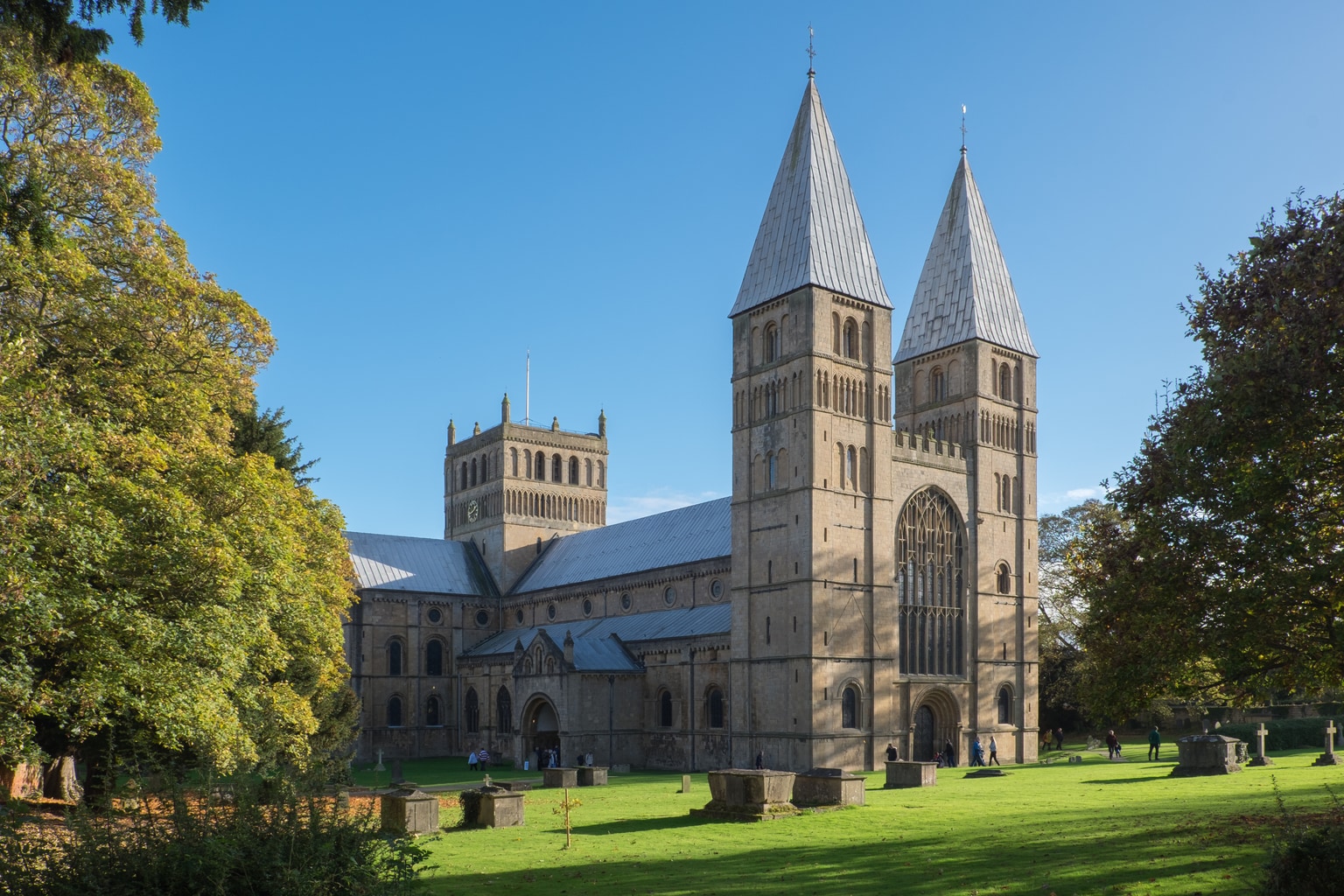
Southwell Minster, formally known as the Cathedral and Parish Church of the Blessed Virgin Mary, is a significant Church of England cathedral located in Southwell, Nottinghamshire. It serves as the seat of the bishop of Southwell and Nottingham and is a historical architectural gem, with parts dating back to the 11th century and substantial Romanesque and Gothic elements.
Key Facts
- ›The current church's majority construction dates from between 1108 and C. 1150 in the Romanesque style.
- ›The chancel was rebuilt in the Early English Gothic style between 1234 and 1251.
- ›The chapter house, built starting in 1288, is renowned for its exceptional quality carved foliage.
- ›Southwell Minster was a collegiate church until 1841 and became a cathedral in 1884.
- ›The church sustained significant damage during the English CIVIL War, with the nave reportedly used as stables.
- ›Notable architectural features include the Romanesque nave and transepts, the Early English choir, and the Decorated Gothic chapter house.
- Exceptional Foliage Carvings In the Chapter House
- Decorated Gothic Chapter House
- 14th-Century Rood Screen
- Romanesque Nave and Transepts
- Early English Gothic Chancel
- Angel Window By Patrick Reyntiens
Ewan Christian
About Southwell Minster
Southwell Minster: A Rich Tapestry of History and Architecture
Southwell Minster, formally known as the Cathedral and Parish Church of the Blessed Virgin Mary, stands as a prominent Church of England cathedral in Southwell, Nottinghamshire. It holds a significant place as the seat of the Bishop of Southwell and Nottingham and serves as the mother church for its diocese. The architectural heritage of the Minster is extensive, with its origins tracing back to a church founded in 956 by King Eadwig for Oskytel, Archbishop of York, though earlier foundations are also suggested.
History and Development
The majority of the current Minster's structure dates from a significant Romanesque reconstruction that took place between 1108 and approximately 1150. This period saw the erection of the nave, transepts, and central tower, which remain outstanding examples of severe Romanesque design. Subsequent centuries brought further architectural evolution: the chancel was rebuilt in the Early English Gothic style between 1234 and 1251, and the chapter house, renowned for its exquisite naturalistic foliage carvings, was constructed starting in 1288 in the Decorated Gothic style. The elaborately carved rood screen, also a masterpiece of the Decorated style, was added between 1320 and 1340.
During the Middle Ages, Southwell Minster functioned as a collegiate church, serving the Archbishop of York and acting as a mother church for the surrounding region. Its status evolved significantly over time. Although plans to elevate it to cathedral status were considered in the 16th century, these did not materialize until 1884. Prior to this, it was dissolved and re-founded multiple times during the English Reformation and served as a parish church from 1841.
The Minster has witnessed periods of both preservation and destruction. It suffered damage during the English Civil War, with the nave reportedly used for stabling, and the adjoining palace largely destroyed. A significant fire in 1711 necessitated repairs, which resulted in a flat panelled ceiling being added to the nave and transepts. Extensive restoration work was undertaken in the late 19th century by Ewan Christian, which included replacing the nave roof and redesigning the quire.
Architectural Significance and Notable Features
Southwell Minster is celebrated for its blend of architectural styles. The Romanesque nave and transepts are characterized by their sturdy construction and early decorative elements. The choir, in contrast, showcases the elegance of the Early English Gothic period with its pointed arches and ribbed vaulting. The octagonal chapter house is a particular highlight, noted for its astonishingly detailed and naturalistic stone carvings of leaves, which botanists have even been able to identify. The 14th-century rood screen is another significant piece of medieval art, showcasing intricate tracery and decorative niches. More contemporary additions include the striking 'Angel Window' by Patrick Reyntiens, installed in 1996.
Legacy
Today, Southwell Minster continues its role as an active place of worship and a vital center for the Diocese of Southwell and Nottingham. Its rich history, diverse architectural styles, and remarkable artistic treasures make it a site of immense cultural and historical importance, drawing visitors and worshippers alike to experience its enduring beauty and spiritual significance.
Source: Wikipedia ↗
Frequently Asked Questions
When was Southwell Minster founded?
The earliest church on the site is believed to have been founded in 627 by Paulinus, the first Archbishop of York. A minster church was established in 956 by King Eadwig on land given to Oskytel, Archbishop of York.
What is the architectural style of Southwell Minster?
The Minster exhibits a mix of styles, with its nave, transepts, and central tower primarily in the Romanesque style dating from the 12th century. The chancel is a notable example of Early English Gothic architecture, and the chapter house features Decorated Gothic elements.
What is the significance of the Chapter House at Southwell Minster?
The octagonal Chapter House, built starting in 1288, is celebrated for its exceptional naturalistic carvings of foliage, representing a high point of 13th-century stone carving. These detailed carvings often depict identifiable plant species and have been widely praised for their artistry.
Has Southwell Minster always been a cathedral?
No, Southwell Minster was not originally a cathedral. It functioned as a collegiate church from its foundation until 1841. It officially became the cathedral of a new diocese in 1884, over 150 years after initial plans for its elevation were considered.
What happened to Southwell Minster during the English Civil War?
During the English Civil War, Southwell Minster suffered considerable damage. The nave is said to have been used as stabling, and the adjoining Archbishop's Palace was almost completely destroyed.
Are there any notable artworks or features inside Southwell Minster?
Yes, the minster contains several notable features. These include the elaborately carved rood screen (choir screen) dating from 1320-1340, the exceptional foliage carvings in the chapter house, and the alabaster tomb of Archbishop Edwin Sandys. The 'Angel Window' by Patrick Reyntiens is a significant modern addition.
Related Cathedrals

Chester Cathedral
Chester Cathedral is the mother church of the Diocese of Chester, located in Chester, England. Originally the abbey church of a Benedictine monastery dedicated to Saint Werburgh, it is now dedicated to Christ and the Blessed Virgin Mary and has served as the seat of the bishop of Chester since 1541. The cathedral showcases a rich history of architectural styles, from Norman to Perpendicular Gothic, and has undergone significant restoration throughout its existence.

Ripon Cathedral
Ripon Cathedral, officially the Cathedral Church of St Peter and St Wilfrid, is a significant religious and architectural landmark in Ripon, North Yorkshire, England. Originally founded as a monastery in the 660s and refounded by St Wilfrid in 672, it became a collegiate church and served as a mother church for the Diocese of York. The present structure, built between the 13th and 16th centuries, became the cathedral for the Diocese of Ripon in 1836 and is now one of three co-equal cathedrals for the Diocese of Leeds.

Wells Cathedral
Wells Cathedral, formally the Cathedral Church of St Andrew, is a Church of England cathedral in Wells, Somerset, England, and the seat of the Bishop of Bath and Wells. It is renowned for its status as potentially the world's first truly Gothic structure, largely constructed between the late 12th and mid-14th centuries, and features a significant collection of medieval stained glass and sculpted figures on its west front.