
Reims Cathedral
Reims Cathedral, officially Notre-Dame de Reims, is a preeminent example of Gothic architecture and held immense historical significance as the traditional site for the coronation of French kings. Dedicated to the Virgin Mary, it has been a focal point of French monarchy and religious life for over a millennium, attracting a million visitors annually and recognized as a UNESCO World Heritage Site.
Key Facts
- ›Founded in the early 5th century by Bishop Nicasius, it was the site of Clovis I's baptism in approximately 496 AD.
- ›The current High Gothic structure began construction in the 13th century, replacing an earlier church destroyed by fire in 1210.
- ›It served as the coronation site for most French kings from Henry I in 1027 until Charles X in 1825.
- ›The cathedral was severely damaged during World War I and underwent significant restoration in the 20th century.
- ›The names of four successive master masons—Jean D'Orbais, Jean-le-Loup, Gaucher of Reims, and Bernard de Soissons—are known from a labyrinth once in the nave.
- ›Reims Cathedral was designated a UNESCO World Heritage Site in 1991.

Site of French Royal Coronations, Statues of Joan of Arc, Smiling Angel Statue, Gallery of Kings On the West Front, Labyrinth
Jean D'Orbais, Jean-Le-Loup, Gaucher of Reims, Bernard De Soissons, EugèNe Viollet-Le-Duc, Henri Deneux
About Reims Cathedral
Reims Cathedral, known officially as Notre-Dame de Reims, stands as a preeminent monument to Gothic architecture and a cornerstone of French history. Located in the city of Reims, it has served as the seat of the Archdiocese of Reims and holds profound significance as the traditional site for the coronation of the kings of France. Dedicated to the Virgin Mary, the cathedral has witnessed centuries of royal ceremonies and religious devotion, making it a vital cultural and historical landmark.
History and Construction
The origins of a Christian church at Reims date back to the early 5th century, when Bishop Nicasius founded a cathedral on the present site. A pivotal moment in its history occurred around 496 AD when Clovis I, the King of the Franks, was baptized here by Saint Remigius, establishing a long-standing tradition of royal coronations. The current High Gothic structure began to take shape in the 13th century, following the destruction of an earlier church by fire in 1210. The construction progressed with remarkable speed, incorporating standardized building materials. The nave was roofed by 1299, and the western façade's portals were completed shortly thereafter. The cathedral's structure, while largely completed by the 14th century, saw further additions and modifications over subsequent centuries, including the construction of the upper west front towers in the 15th century.
Royal Coronations and Significance
From the coronation of Henry I in 1027 until the final coronation of Charles X in 1825, Reims Cathedral was the hallowed ground where French monarchs received their crowns. This unbroken tradition cemented the cathedral's role at the heart of French national identity and monarchy. The prestige of the Holy Ampulla, a sacred vial used for anointing kings, further enhanced Reims' importance as the coronation city. Beyond coronations, the cathedral hosted other significant royal events, including the marriage of Henry I of France to Anne of Kiev in 1051.
Architectural Evolution and Notable Features
Reims Cathedral is a prime example of High Gothic architecture, characterized by its soaring vaults, intricate ribbing, and extensive stained-glass windows, including notable rose windows on the western façade. The names of four successive master masons—Jean d'Orbais, Jean-le-Loup, Gaucher of Reims, and Bernard de Soissons—who oversaw the cathedral's construction, are preserved, reflecting the rising status of architects in the medieval period. The cathedral also features iconic sculptures, such as the Smiling Angel, though many exterior statues have been moved to the Palace of Tau for preservation and replaced by copies.
Resilience and Restoration
The cathedral has endured periods of destruction and extensive damage, notably during the French Revolution and, most significantly, during World War I. Shelling in 1914 and subsequent bombardments led to the destruction of its roof, the melting of its bells, and damage to its stonework. A monumental restoration project, supported by the Rockefeller Foundation, began in 1919 and utilized both traditional methods and modern techniques to restore the structure. The cathedral reopened in 1938 and has continued to undergo restoration and maintenance to combat the effects of war and pollution.
Modern Recognition
In recognition of its exceptional architectural and historical value, Reims Cathedral, along with the former Abbey of Saint-Remi and the Palace of Tau, was inscribed as a UNESCO World Heritage Site in 1991. It remains an active place of worship and a major tourist destination, attracting approximately one million visitors annually, continuing its legacy as a symbol of faith, history, and artistic achievement.
Source: Wikipedia ↗
Frequently Asked Questions
When was Reims Cathedral built?
Construction of the present High Gothic cathedral began in the 13th century and was largely completed by the 14th century. However, work on elements like the west front towers continued until the 15th century.
Why is Reims Cathedral historically important?
Reims Cathedral is historically significant as the traditional site for the coronation of French kings, a practice that began with Clovis I's baptism there around 496 AD and continued for centuries. It is also considered a masterpiece of Gothic architecture.
What happened to Reims Cathedral during World War I?
During World War I, Reims Cathedral was severely damaged by shelling, which destroyed its roof, melted its bells, and shattered its windows. Extensive restoration efforts were undertaken in the 20th century to repair the damage.
Who were the architects of Reims Cathedral?
The names of four master masons involved in the construction of the High Gothic cathedral are known: Jean d'Orbais, Jean-le-Loup, Gaucher of Reims, and Bernard de Soissons. Later restoration work involved architects like Eugène Viollet-le-Duc and Henri Deneux.
Is Reims Cathedral a UNESCO World Heritage Site?
Yes, Reims Cathedral was designated a UNESCO World Heritage Site in 1991, recognized for its outstanding architectural significance and historical importance.
Related Cathedrals

Troyes Cathedral
Troyes Cathedral, officially the Cathédrale Saint-Pierre-et-Saint-Paul de Troyes, is a significant Catholic church in Troyes, France, serving as the episcopal seat for the Bishop of Troyes. Renowned for its Gothic architecture, it holds a rich history dating back to early Christian traditions and has been a site of pivotal historical events, including the signing of the Treaty of Troyes and the official recognition of the Knights Templar.

Toulouse Cathedral
Toulouse Cathedral, officially the Cathedral of Saint Stephen of Toulouse, is a Roman Catholic church and the seat of the Archbishop of Toulouse in France. It is a significant national monument, notable for its unique architectural blend resulting from centuries of construction and stylistic evolution, particularly the juxtaposition of southern French Gothic and northern French Gothic elements.
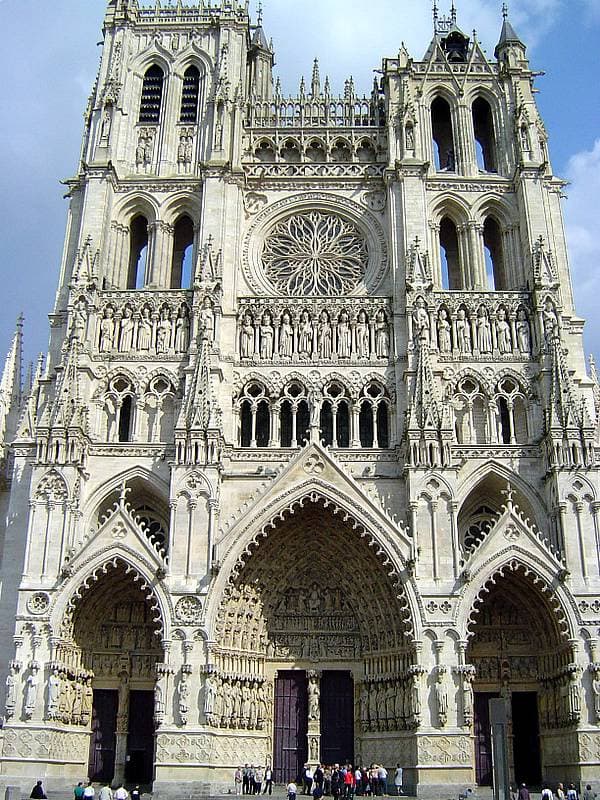
Amiens Cathedral
Amiens Cathedral, officially the Cathedral of Our Lady of Amiens, is a preeminent example of Gothic architecture and a significant religious site in France. It is renowned for its immense scale, being the largest cathedral by volume in France, and for its remarkably unified High Gothic and Rayonnant style, achieved through a swift construction period. The cathedral is also celebrated for its extensive collection of early Gothic sculpture, particularly on its west facade, and holds a UNESCO World Heritage designation.