
Pontigny Abbey
Sens·Cistercian·France
Pontigny Abbey was a significant Cistercian monastery founded in 1114 in Pontigny, France, and was the second of the four great daughter houses of Cîteaux Abbey. Though suppressed during the French Revolution and largely destroyed, its church was saved and has since served various roles, including as the cathedral of the Mission de France and a site for intellectual gatherings.
Key Facts
- ›Founded in 1114 by monks from Cîteaux Abbey, it became a major center attracting numerous monks and establishing twenty-two other Cistercian monasteries.
- ›The abbey church, begun around 1138, participated in the early development of the Gothic style.
- ›It hosted distinguished figures seeking refuge, including three Archbishops of Canterbury: Saint Thomas Becket, Stephen Langton, and Saint Edmund of Abingdon, who is buried there.
- ›The abbey was pillaged and burnt by Huguenots in 1569, and suppressed entirely during the French Revolution in 1791.
- ›In the 20th century, it became a hub for intellectual conferences known as the 'Decades of Pontigny', attracting prominent European thinkers.
- ›The monks were also involved in viticulture, establishing the vineyard from which Chablis wine originates.

- Early Gothic Architecture
- Burial Site of Saint Edmund of Abingdon and Queen AdèLe of Champagne
- Origin of the Chablis Wine Vineyard
- Site of the 'Decades of Pontigny' Intellectual Conferences
About Pontigny Abbey
Pontigny Abbey, located in Pontigny on the River Serein in modern-day Burgundy, France, was a prominent Cistercian monastery founded in 1114. It held significant historical and architectural importance, serving as the second of the four great daughter houses of Cîteaux Abbey and playing a role in the early development of Gothic architecture. Despite its suppression during the French Revolution and the subsequent destruction of most of its monastic buildings, the abbey church was preserved and has continued to serve various functions, including as a parish church and, in recent decades, as the cathedral of the Mission de France.
History and Significance
Founded by Stephen Harding, abbot of Cîteaux, Pontigny Abbey quickly gained a reputation for sanctity. Under its first two abbots, Hugh of Mâcon and Guichard, the monastery attracted numerous monks and was able to establish twenty-two other Cistercian monasteries. Situated within the County of Auxerre and sponsored by Louis VI of France, Pontigny participated in the early phase of Gothic style construction, with its abbey church likely begun around 1138. The abbey became a sanctuary for many distinguished individuals, including three Archbishops of Canterbury: Saint Thomas Becket, Stephen Langton, and Saint Edmund of Abingdon, who was buried there. The abbey's strict discipline eventually relaxed, particularly after being given in commendam in 1456. In 1569, it suffered damage from Huguenot raids, and it was ultimately suppressed during the French Revolution in 1791, with most structures demolished.
Later History and Cultural Impact
Following the Revolution, the church was repurposed as a parish church. In 1843, it was re-founded as a community of the Fathers of St. Edmund. A significant cultural revival occurred in the 20th century when the philosopher Paul Desjardins purchased a wing of the abbey and began hosting the "Decades of Pontigny" from 1910. These conferences brought together the European intellectual elite, including figures like Jean-Paul Sartre and T. S. Eliot, to discuss pressing philosophical and societal issues. From 1954, the abbey housed the Mission de France seminary before being acquired by the Regional Council of Burgundy in 2003. The monks of Pontigny were also noted for their involvement in viticulture, establishing the vineyard that is the origin of Chablis wine. The abbey remains a stopping point on one of the pilgrimage routes to Santiago de Compostela.
Source: Wikipedia ↗
Frequently Asked Questions
When was Pontigny Abbey founded?
Pontigny Abbey was founded in 1114. It was established by twelve monks sent from Cîteaux Abbey under the guidance of Hugh of Mâcon.
What is the architectural style of the abbey church?
The abbey church participated in the inception of the Gothic style, with its first phase of construction likely beginning around 1138.
Who is buried at Pontigny Abbey?
Notable burials include Adèle of Champagne, queen of Louis VII of France; Saint Edmund of Abingdon, Archbishop of Canterbury; and the philosopher Paul Desjardins.
What was the significance of the 'Decades of Pontigny'?
From 1910 to 1914, and later reorganized after World War I, these conferences brought together the intellectual elite of Europe to discuss significant philosophical and societal issues, particularly concerning the future of Europe.
Does Pontigny Abbey have any connection to wine?
Yes, the monks of Pontigny were involved in cultivating vineyards and established the original vineyard from which the present Chablis wine traces its descent.
What is the current status of Pontigny Abbey?
After being suppressed and largely destroyed, the church was saved and later served as a parish church, the mother house of the Mission de France, and a college. It was bought by the Regional Council of Burgundy in 2003.
Related Cathedrals

Angers Cathedral
Angers Cathedral, officially Cathédrale Saint-Maurice d'Angers, is a Catholic cathedral in Angers, France, serving as the seat of the Bishops of Angers. Renowned for its blend of Romanesque and Gothic architectural styles, it also features significant Baroque elements and an exceptional collection of stained-glass windows, some dating back to the late 12th century.
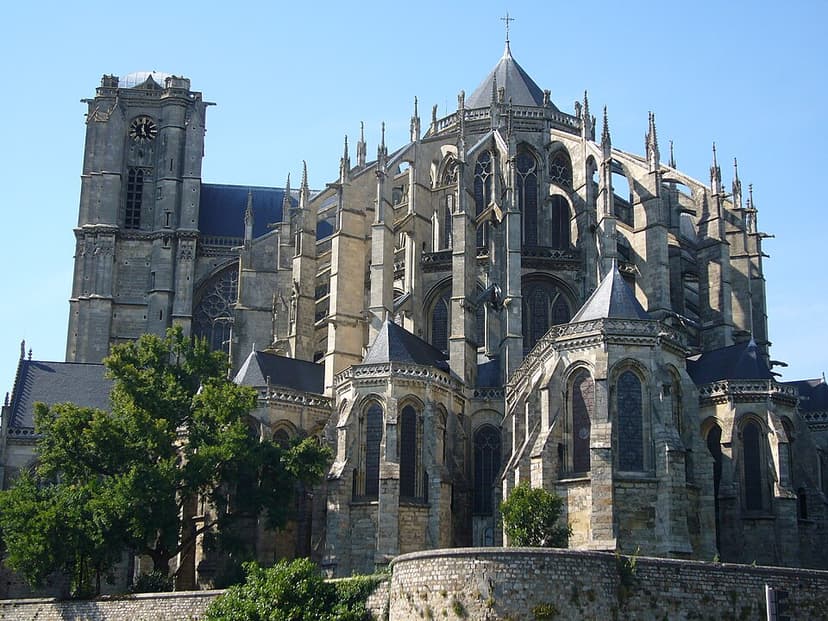
Le Mans Cathedral
Le Mans Cathedral, officially Cathédrale St-Julien du Mans, is a significant Catholic church in Le Mans, France, dedicated to Saint Julian of Le Mans. Its construction spanned from the 6th to the 15th century, resulting in a blend of Romanesque and Gothic architectural styles, and it is particularly renowned for its exceptional stained glass and unique flying buttresses.

Saint-Denis Cathedral
The Basilica of Saint-Denis, now formally the Basilica Cathedral of Saint-Denis, is a Roman Catholic cathedral in Saint-Denis, France, renowned as the birthplace of Gothic architecture. Its choir, completed in 1144, is considered the first structure to fully embody Gothic architectural principles. Historically, it served as a significant pilgrimage site and the royal necropolis for French monarchs, housing nearly every king from the 10th to the 19th century.